|
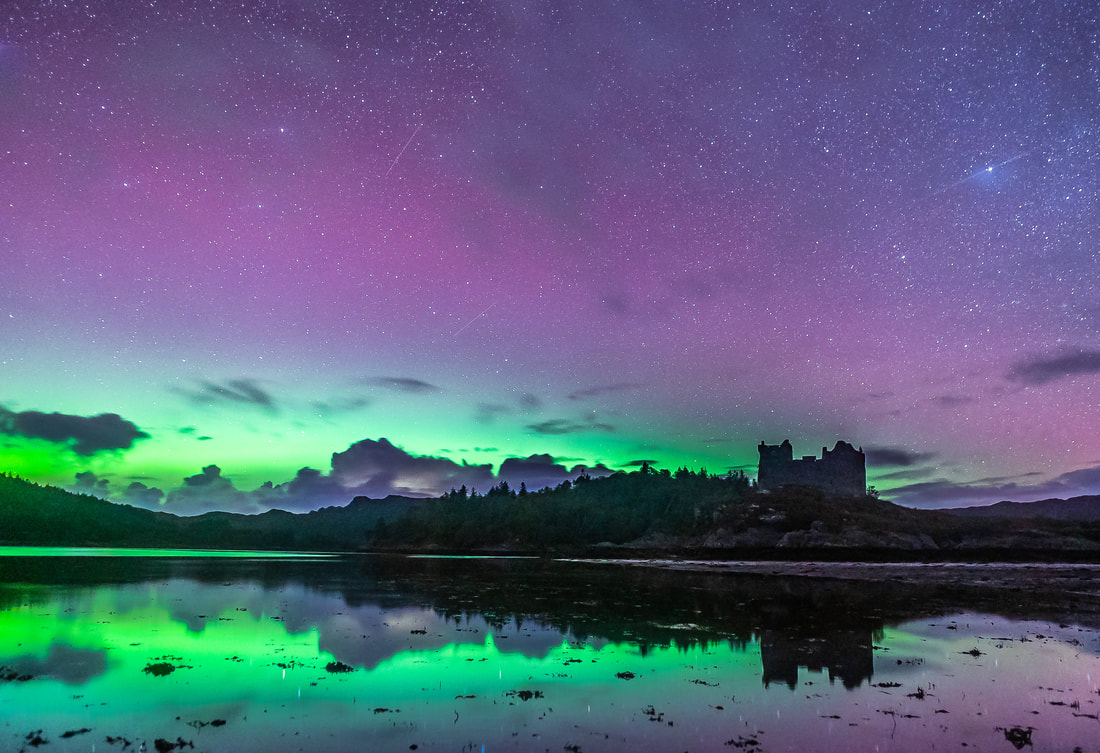
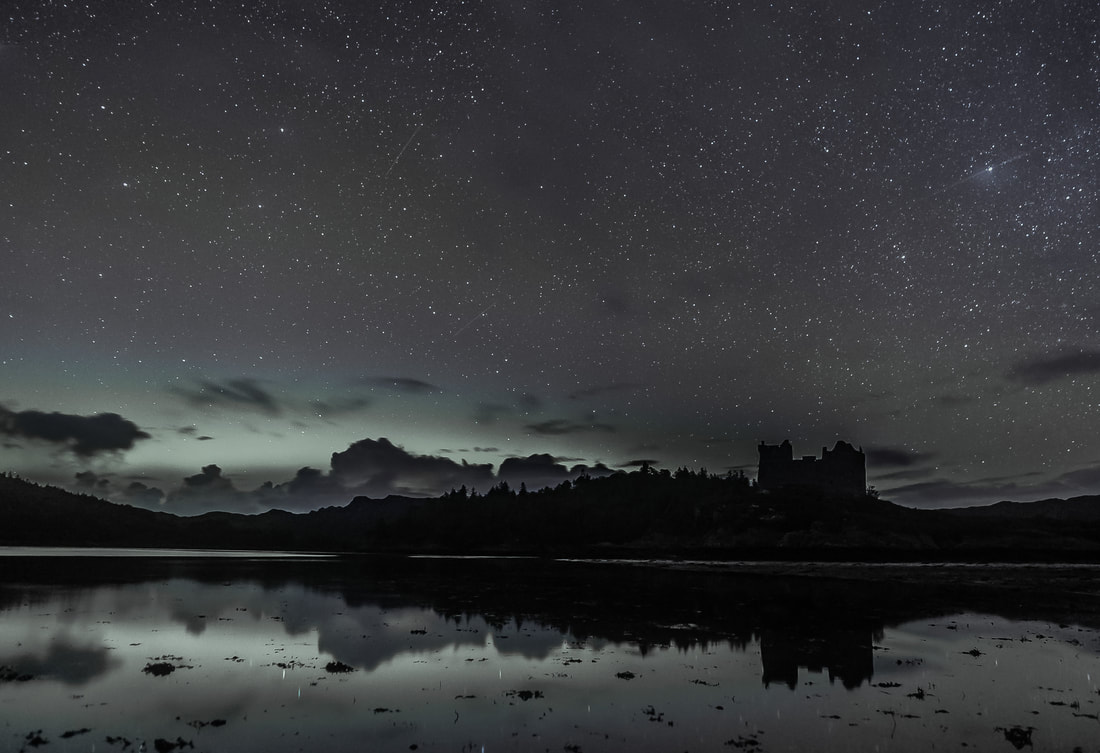
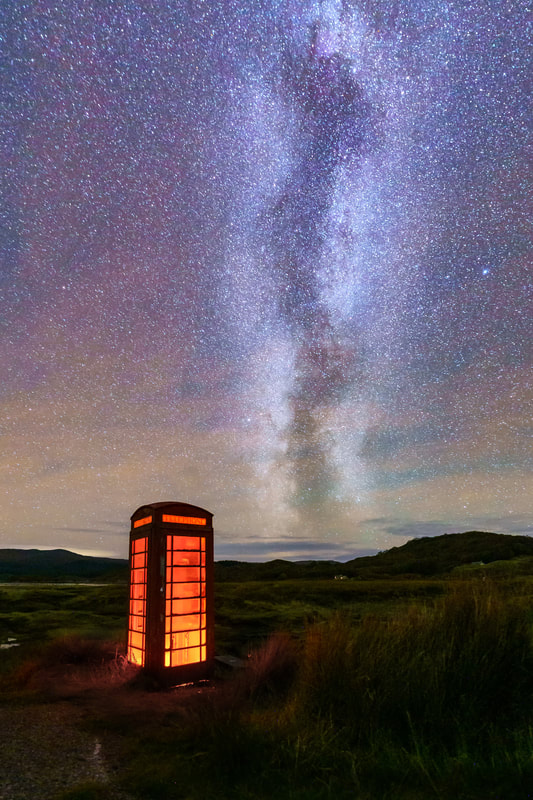
The image below was taken on a September night at the Loch Shiel jetty in Acharacle when I had a client with me for some night photography tuition. We had been photographing the Milky Way in the sky over Loch Sunart when the Aurora Alerts went off, so we decided to head over to the jetty as it has a clear view north. We had a great time photographing the Northern Lights both here and at other locations close by. Some of the images from that night hang in my Studio at Resipole and they often prompt people to ask; “Can you see the Northern Lights here and are they really that green?”. My answer is always yes, but we can only perceive the aurora as a greyish-blue light. I then go on to explain the reason why... 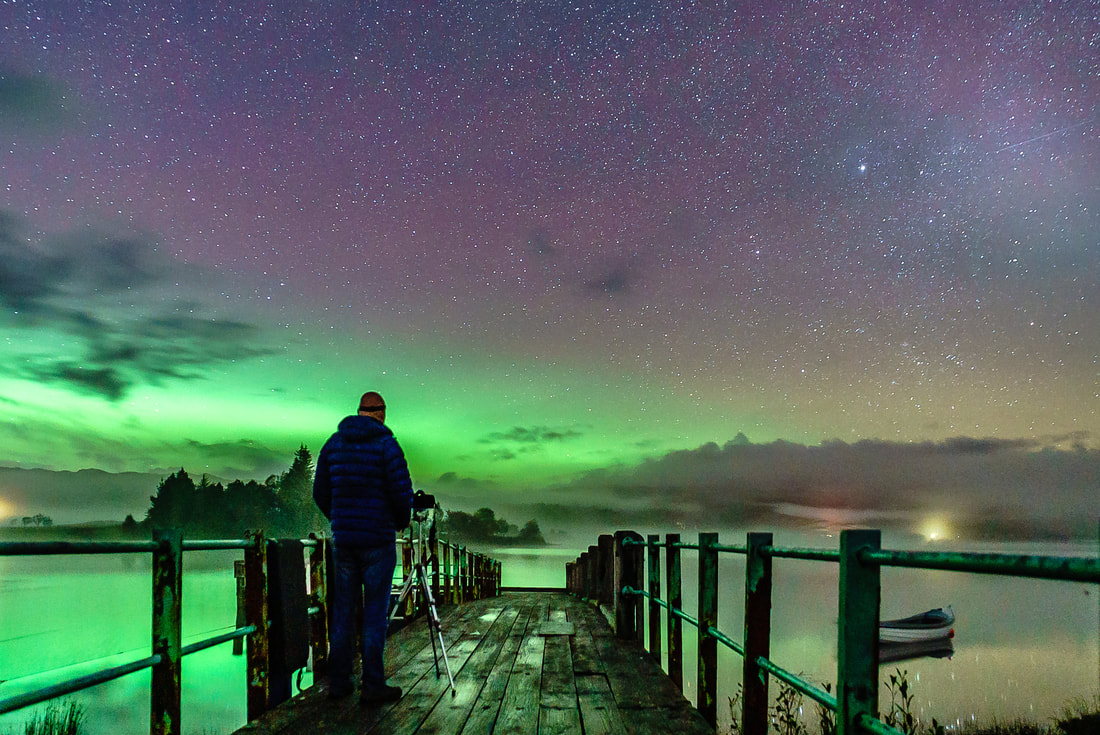 A client during his night photography lesson under the Northern Lights on the Loch Shiel Jetty at Acharacle It’s all because our eyes contain two types of photoreceptors (cones and rods) and how they work in the dark compared to how they work in daylight. Each retina has about 6 to 7 million cones and they provide the eye with the ability to distinguish colour. However, these cones only work effectively when it is light. On the other hand, there are about 120 million rods. These are far more effective at helping us to see in low light and near dark conditions, but they cannot distinguish colour. So, as it gets dark and the cones stop working, our eyes move from enabling us to see in full colour to only seeing in black and white. This means that anything we look at in the dark, including the Northern Lights, will only be seen in black, white and shades of grey. However, the sensors that you find in digital cameras do not suffer from this limitation and are extremely effective at picking up both light and colour in the dark. They can easily pick up the greens, reds, blues and purples that are present in the aurora, meaning that the colours you see in digitally taken images of the aurora are not a result of any photo editing but are, in fact, real. The auroral colours are a result of collisions between gaseous particles in the Earth's atmosphere and charged particles released from the Sun's atmosphere. The colours present in the aurora depend on the type of gas particles the charged solar particles collide with. Green is the most common because most solar particles collide with our atmosphere at an altitude of around 60 to 150 miles, where there are high concentrations of oxygen and these collisions with oxygen produce a pale yellowish-green colour. Blue and purple can also be present, but far less frequently than green because they only appear when solar activity is strong enough to cause particle collisions in our atmosphere at an altitude of 60 miles or less. At these heights, it is a reaction with nitrogen that causes the aurora to be tinged with purple or blue. On rare occasions, red can be present in the aurora, but only when the Sun’s activity causes solar particles to react with oxygen at altitudes above 150 miles or so. At this height the oxygen is less concentrated and is “excited” at a higher frequency or wavelength than the denser oxygen lower down in the atmosphere and so produces a purely red aurora. To give you an idea of the difference between what we can see and what the camera sees, I’ve prepared two versions of another image taken that night, but at Castle Tioram rather than Loch Shiel. These two versions are below, with the one on the left showing what the camera saw and the one on the right showing what I saw when I was taking the photograph.
Don’t despair though, as but there is a way you can experience the colours for yourself. Many modern phone cameras have a “Night Mode” setting that allows you to take bright, sharp and noise-free photos, even in the darkness of the night. So, the next time you hear of the aurora happening, head to a place with a clear view of the northern horizon, put you phone camera in “Night Mode” and use it to help you see the colours of the ‘Na Fir-chlis’. You will find a few more images of the Northern Lights in the “Our Night Sky” photo gallery on this website and if you’d like to arrange some night photography tuition, please feel free to get in touch.
4 Comments
It’s mid-February and the end of this last month of winter is fast approaching. The evenings are getting lighter and my thoughts are turning to Spring and the sense of renewal, hope and happiness that it brings. The image below was taken out at Smirisary, an old crofting village about two miles to the west of Glenuig, on a Spring evening and shows a tree adorned with the fresh green growth that encapsulates these “Spring” feelings for me. It was a beautiful evening and I felt a true sense of calm contentment as I sat there listening to the call of a nearby cuckoo while waiting for the right moment to press the shutter button. I was left thinking that it is little wonder that the benefits of photography on mental wellbeing have been well studied and documented. 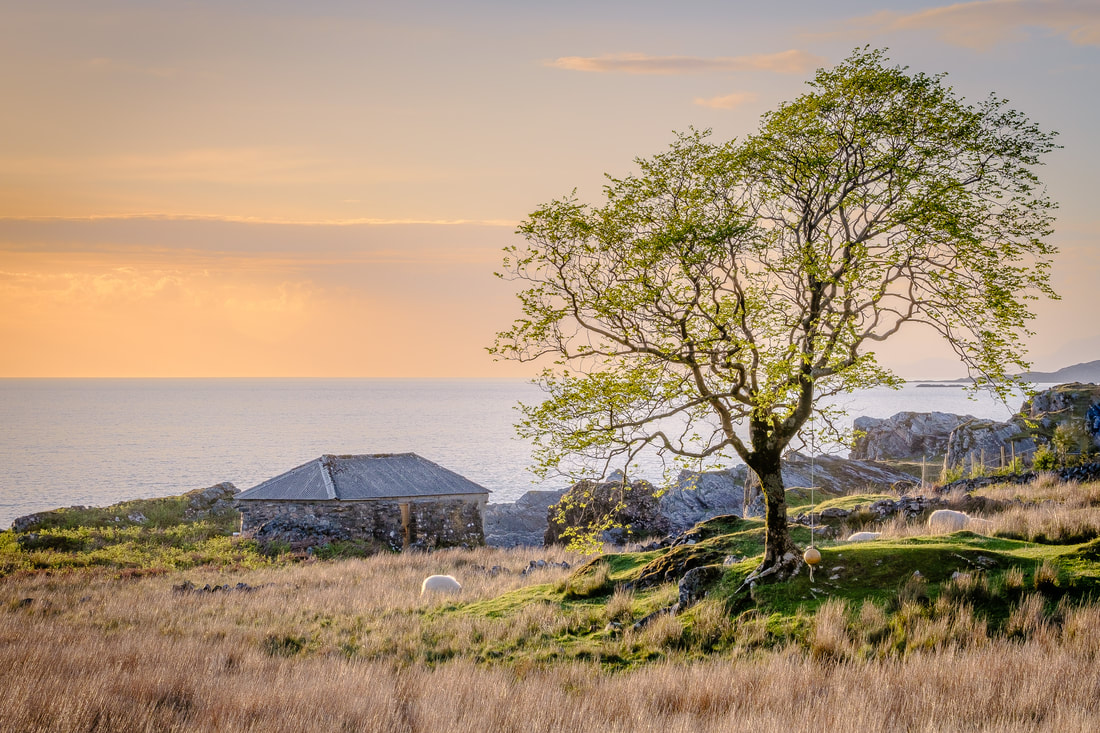 Spring Shieling - Smirisary, Glenuig, Moidart I spent much of my childhood outdoors exploring the rolling Scottish Borders countryside and have many fond memories of the adventures that this entailed. Back then, I’m sure I never gave much thought to the benefits of time outdoors and it wasn’t until I moved to Glasgow for work that I started to appreciate how differently I felt when I was in the countryside. Day trips for a walk in the hills became a welcome relief from both the pace of city centre living and the pressures of my work. A camera always accompanied me and, as the years passed, photography became a bigger and bigger part of the experience, acting as my “mind medicine”, encouraging me to slow down, look carefully and really appreciate my surroundings.
Studies by researchers at Lancaster University into the effects of photography on mental wellbeing back this up. They found that the act of finding a subject, trying different compositions and changing positions to alter the light requires such focus that it can be a meditative task, or an act of mindfulness that allows you to focus not on your outside concerns, but solely on the moment and the task at hand. I find this with landscape photography because it requires a great deal of patience to sit on a hillside, having framed a composition and wait for the right light and the perfect moment to press the shutter button. During this time, nothing else is on my mind and I feel completely detached from any stresses and pressures that life might hold. Photography can also provide an artistic outlet, which many people may not have through any other means, and other studies have found that immersing yourself in a creative activity elevates mood while lowering both anxiety and stress hormone levels. Additionally, there are the general physical benefits of going for a walk with a camera, with the desire to capture images translating into the motivation to get outdoors at times when you would otherwise remain at home. Finally, please do not think that landscape photography is limited to people with lots of expensive equipment. You will probably have a perfectly capable camera in your pocket because the quality of smartphone cameras nowadays allows almost anyone to capture some good images. So why don’t you get out into the beautiful landscape that surrounds us here on the Peninsula and try it out. With the sun still low enough in the sky to give us some lovely light, it is the perfect time of year to start. Get out there, take some pictures and feel all the better for it. When I moved away from the bright city lights of Glasgow to the unspoilt West Highland Peninsulas, one of the first things that struck me most was just how dark and clear the night sky was. I found that I could simply step out of the door of my house by the side of Loch Sunart and find myself looking up at the Milky Way and well over 7000 stars scattered across the sky above me. As my time on the Peninsula has passed, my interest in night photography has become a passion that produces some of my most popular images and I often get asked by visitors to my Studio about just how difficult night photography is. Well, the simple answer is that “It’s easier than you think” so, in this blog, I thought I’d explain why I think that this is the case. 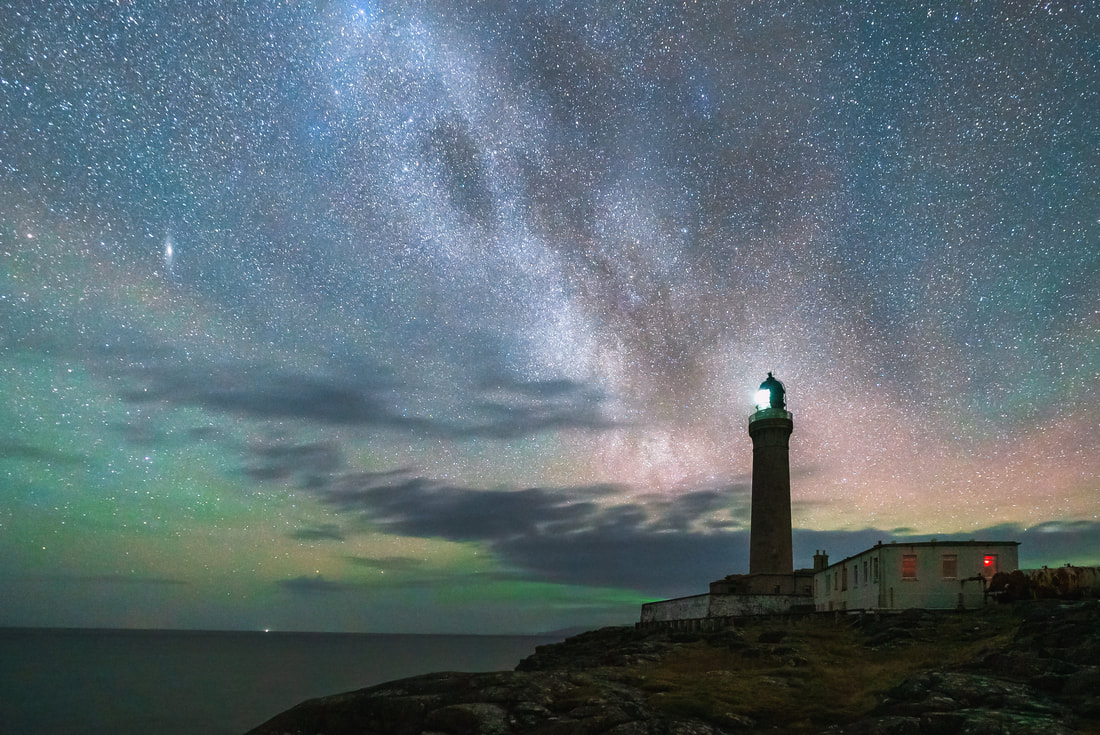 Image 1: Safe Night Passage - Ardnamurchan Lighthouse, Ardnamurchan Point, Ardnamurchan The reality is that you don’t need to buy lots of expensive equipment to capture your first images of the night sky. Any modern DSLR or mirrorless camera fitted with a wide-angle lens and mounted on a tripod will allow you to capture some lovely images of the night sky. So, if you have a full-frame sensor camera and a wide-angle lens with a focal length of about 30mm or less, you will be able to make a start at photographing the stars. Alternatively, if you have a 1.5x cropped sensor camera, a lens with a focal length of about 20mm or less will work fine. Ideally, these lenses should be able to open up to a wide aperture of f2.8 but if yours don’t, just give them a try at their widest setting and see how you get on. If you’re not happy with the results, you can always rent a lens for a little while to see if it is something you’re keen to get into, before deciding to buy a lens specifically for your night photography. 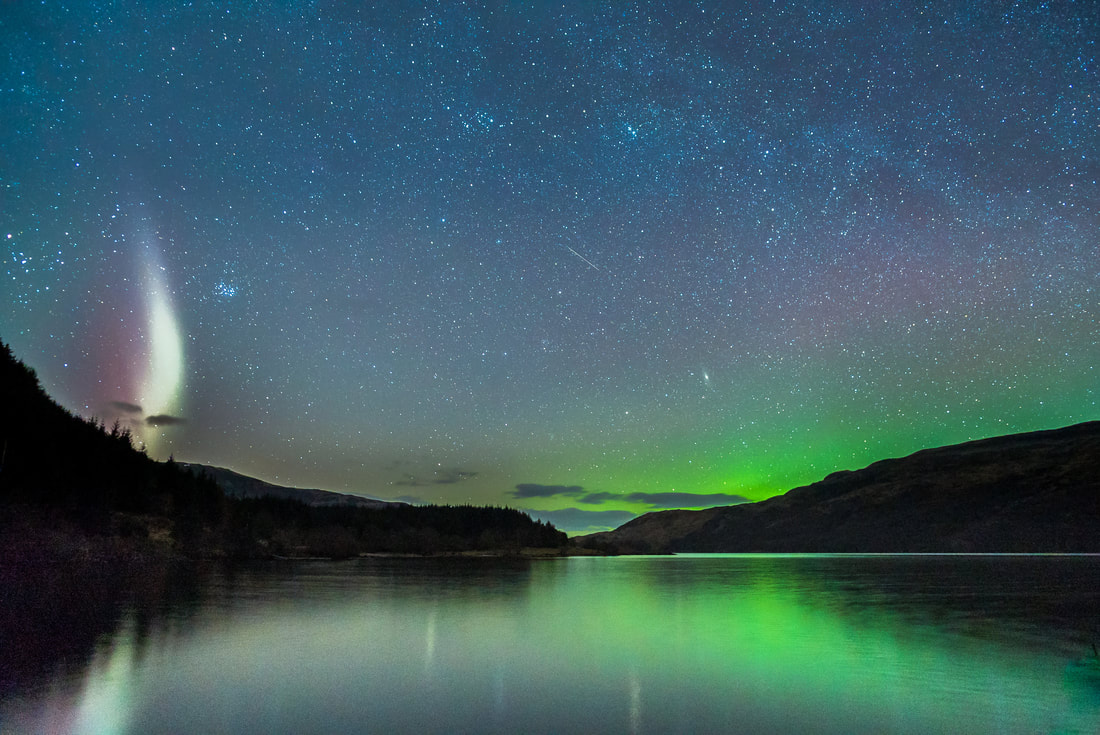 Image 2: Meet Steve - Camas Allt a’ Choire, Loch Arienas, Morvern The actual process of setting up your camera is not too difficult and in many ways, I think that it is far easier than setting it for daytime photography as there is basically only one setting to use. All you have to do is start no later than 45 minutes or so after sunset, while it is still getting dark, put your camera in manual mode, set it to capture RAW image files and then do the following:
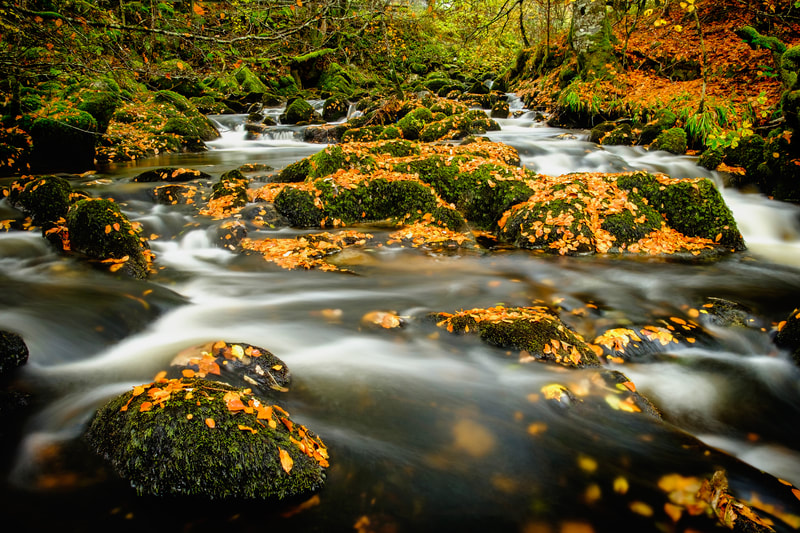
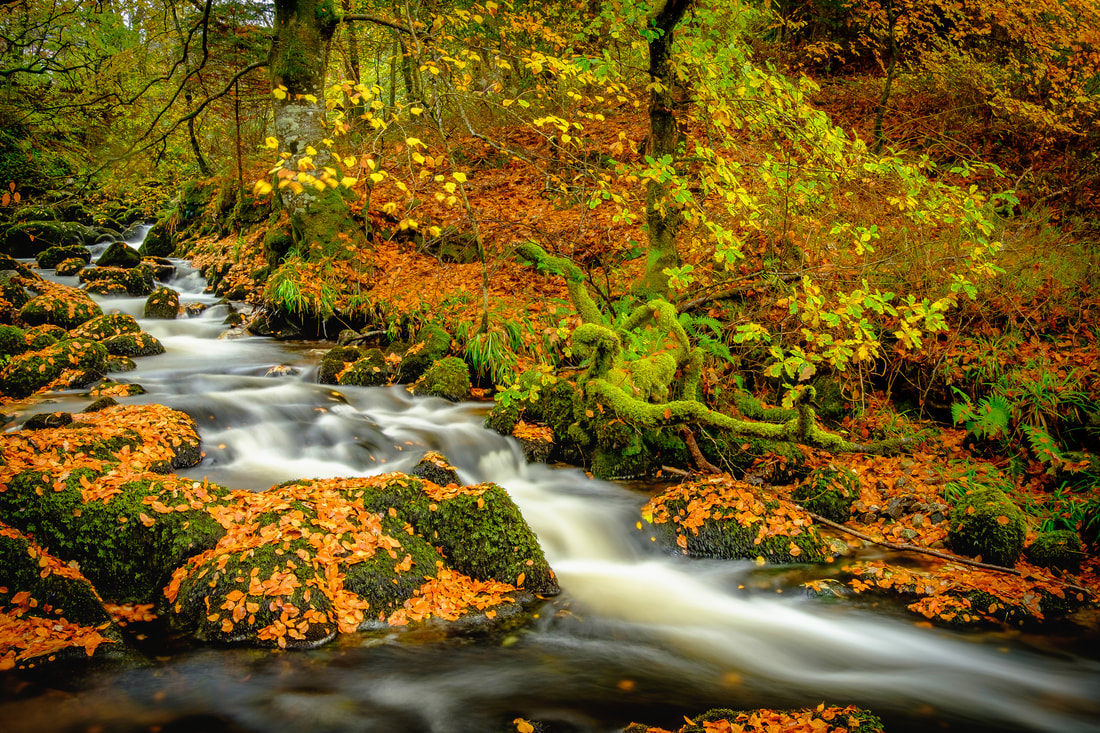
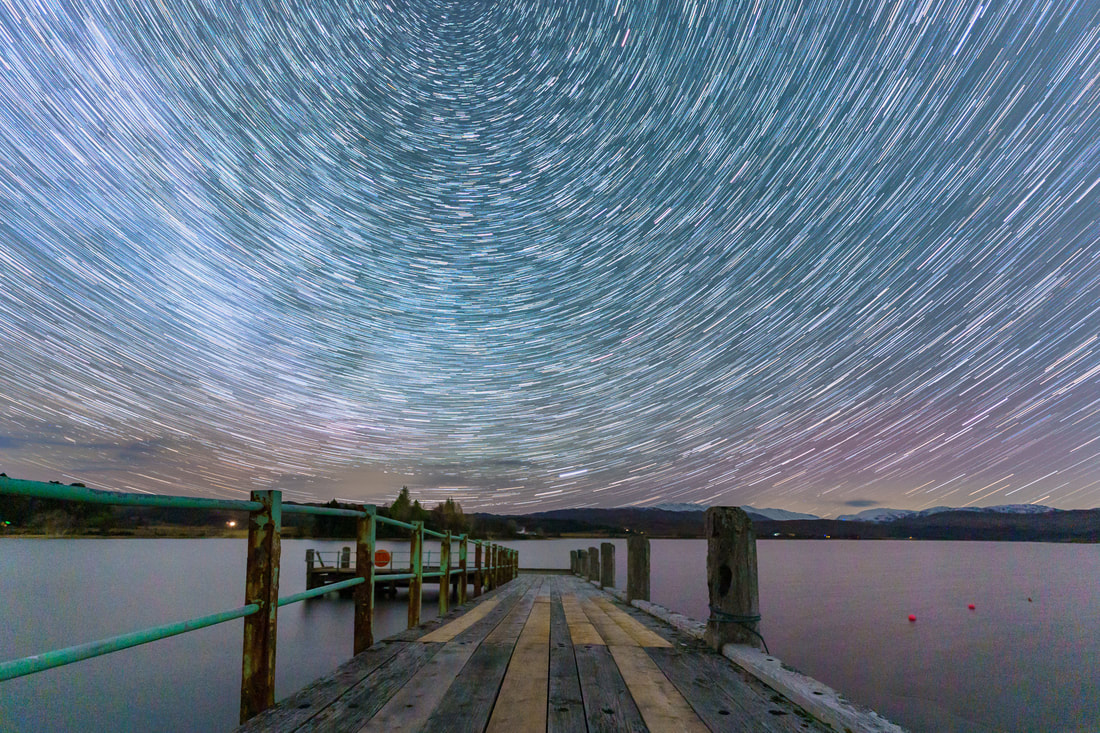 Image 4: Night Time Passing - Loch Shiel, Acharacle, Ardnamurchan You are now all set up but please be patient and wait for it to get sufficiently dark for the stars to show in your photo. This will usually be about 1½ hours after sunset. Once you think it is dark enough, select your camera’s 2 second timer and use it to avoid you pressing the shutter button during the camera exposure and causing any movement that might blur the image. Simply press the shutter button with the two second timer switched on, wait for the exposure to complete and then check the photo you have just taken. If you find it is under or over exposed, adjust your ISO accordingly, but avoid an ISO that is so high that it makes your photo’s noisy and grainy. When you have got a shot you are happy with, feel free to change the tripod location and camera position to capture a different composition, but avoid changing your aperture of focal length (dials previously taped to prevent accidental movement) as this will put your camera out of focus. Also, because It will most likely be completely dark by now, you might be best to use a torch to light your field of view while framing the new composition. 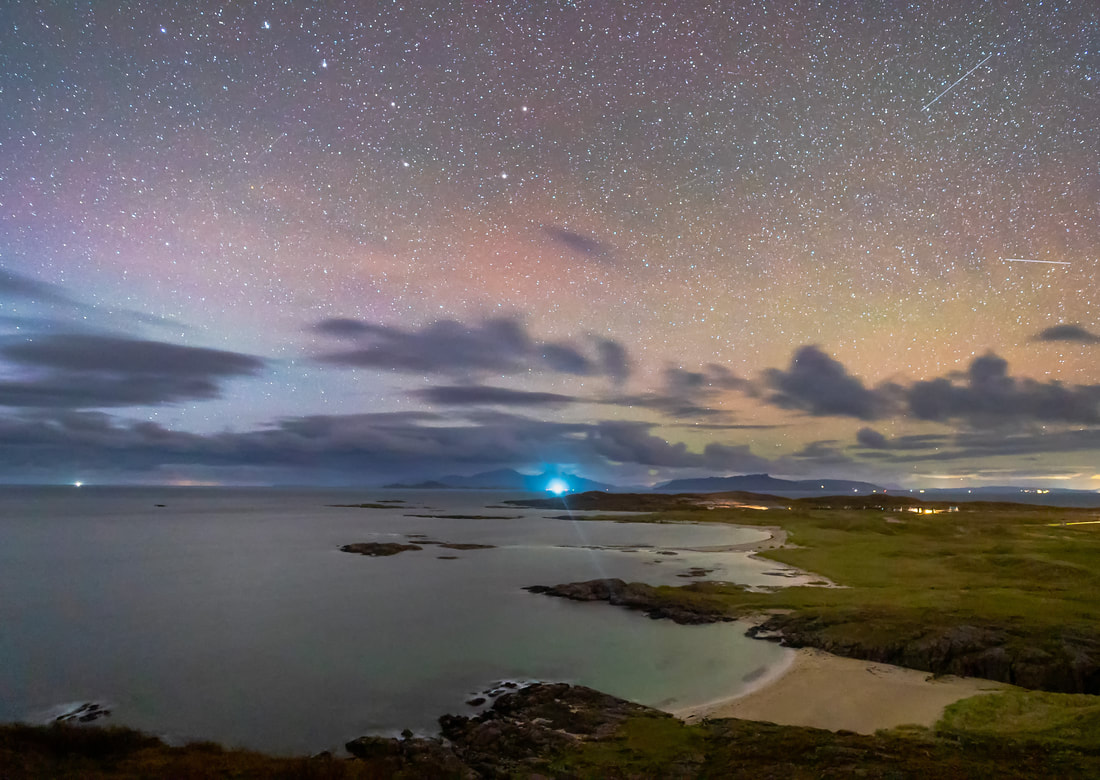 Image 5: Under the Plough I - Sanna Bay, Sanna, Ardnamurchan Most people will be aware that the moon and the sun are primarily responsible for the rising and falling of the ocean tides, with the difference in height between high and low tides varying through the month as the Moon waxes and wanes from new to full and back to new again. They’ll also be aware that spring tides are not those that occur in Spring, but instead are the highest (and lowest) tides that occur two times a month, a few days after each full Moon and each new Moon. However, fewer people will be aware of king tides and supermoons and how they may worsen the impact of storms that we often experience at this time of the year 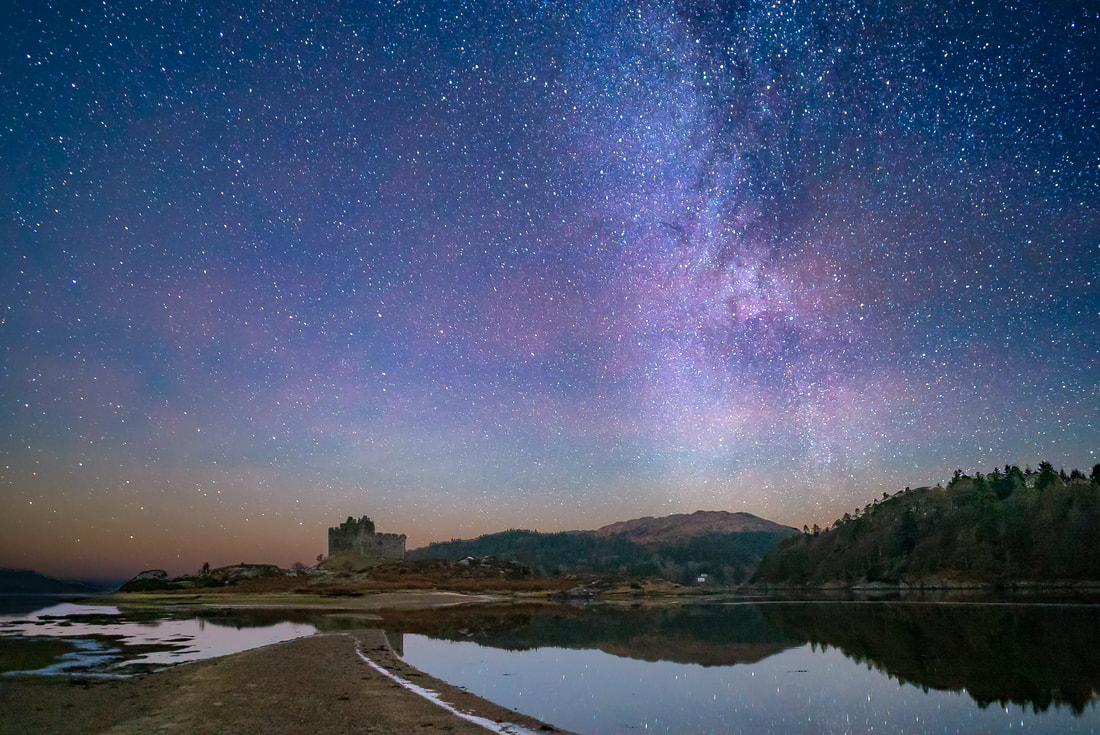 Image 1: Still Cut Off: Castle Tioram, Doirlinn, Moidart This image above was taken a couple of days after the full moon of January 2018 and shows Eilean Tioram still cut off from the mainland despite the time being a few hours since the last high tide. In fact, the high tide on that day, at over 5 metres high, was good quarter of a metre higher than what is typical for a spring tide on Loch Moidart and because this extra-high tide was only a few days after a supermoon, it was what some people call a king tide. So, what is a supermoon and why does it create an extra-large spring tide, or king tide? Well, the Moon doesn’t orbit around the Earth in a perfect circle. Instead, it has an elliptical orbit, where its centre-to-centre distance from the Earth varies throughout the month, with its closest point to Earth on this ellipse in any given month being called the perigee. When any full Moon or new Moon comes within 90% of the perigee, or within 224,791 miles (or less) of our planet, it is called a supermoon. On these occasions a full Moon will look bigger and brighter than normal and both a full and new Moon will exert a greater gravitational pull on the Earth than normal. This greater gravitational pull means that, just as a full moon gives us spring tides, a supermoon will give us extra-high spring tides, or king tides. Most of the time these king tides don’t cause too much of a problem, but shortly before this photo was taken in 2018, the supermoon of January 1-2 was closely aligned with the perigee and created especially high king tides. On the day after, Storm Eleanor hit the UK with winds of up to 100 mph (160 km/h). These high winds, combined with the extra-high tides, caused coastal flooding, hampered travel, led to loss of life and injury and left tens of thousands of homes across the UK without power. Should we expect this to happen again? Well perhaps not for the remainder of this year and the whole of next year because the predicted heights of the king tides during the UK’s storm season months (typically October to February) is lower than that of January 2018. However, in 2023 and 2024, the predicted height of the king tides are at or above those of January 2018 which, if combined with the high winds of a named storm, could lead to coastal flooding of the same level as that experienced during Storm Eleanor. 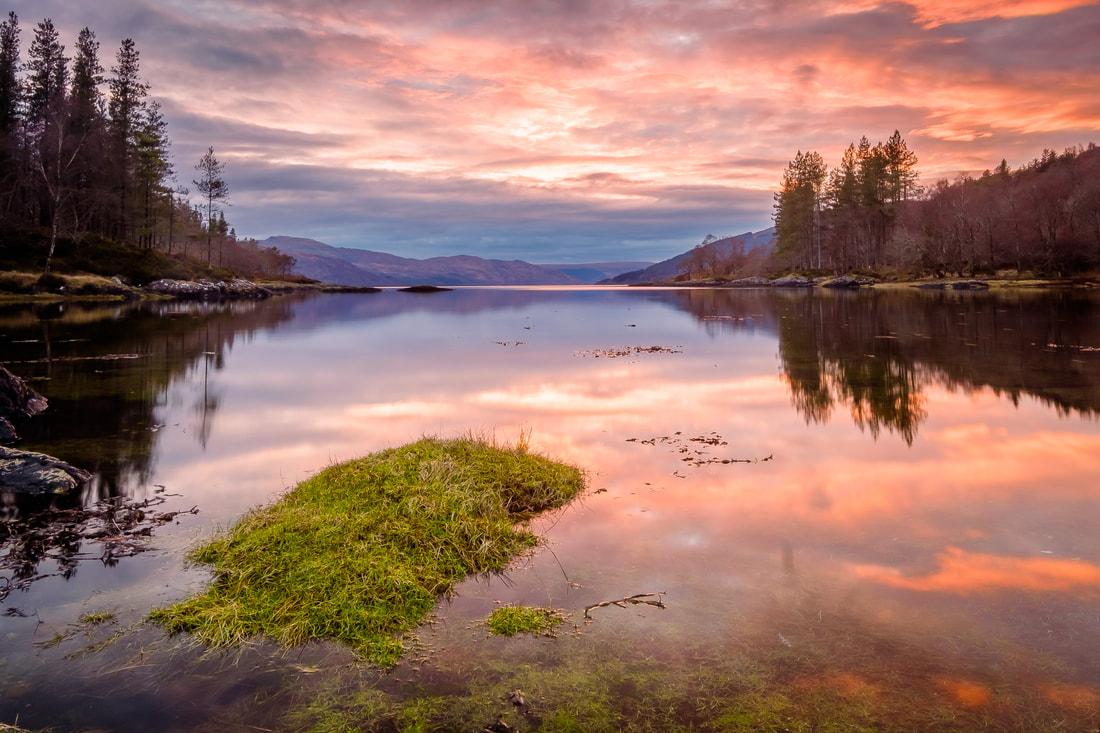 Image 2: Sunset Mirror II - Sailean nan Cuileag, Salen, Ardnamurchan As we move away from the Autumn Equinox and towards the Winter Solstice it seems to me that, along with the days getting shorter and colder, the evening skies are getting brighter and bolder. We often get brooding skies, with the oranges, pinks and reds from the setting sun breaking up the greys, blues and purples of clearing storm clouds to produce dramatic scenes such as one I witnessed at Castle Tioram on a late-November afternoon and shown the image below. This makes me beg the question: Are late autumn and winter sunsets better than those we get at other times of the year? Well, it turns out that scientific studies have confirmed this to be the case and they have discovered the reasons why 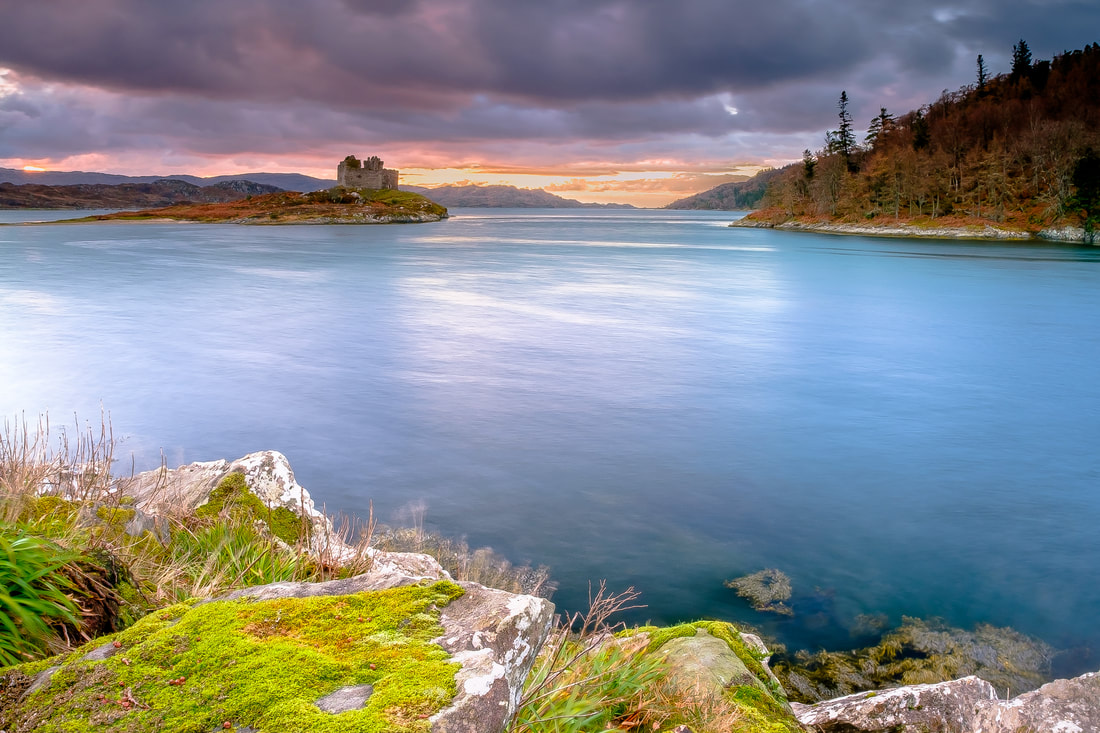 Image 1: Brooding: Castle Tioram, Loch Moidart, Doirlinn, Moidart Scientific researchers have found that the peak sunset season is from November through to February and that this is down to a combination three things. These are the type and quantity of the cloud cover, cooler air temperatures and how the Earth is tilted towards the sun at this time of the year. Contrary to what you might think, we need clouds for a good sunset and they have to be the right kind of clouds. If they are too low down on the horizon, they will block out the Sun’s rays and prevent a sunset. Instead, we need mid to high level clouds that will refract the sunlight and give us those beautiful sunset colours. This happens more in autumn and winter because the weather patterns we get then tend to bring mid and high-level altocumulus, altostratus and cirrus clouds. 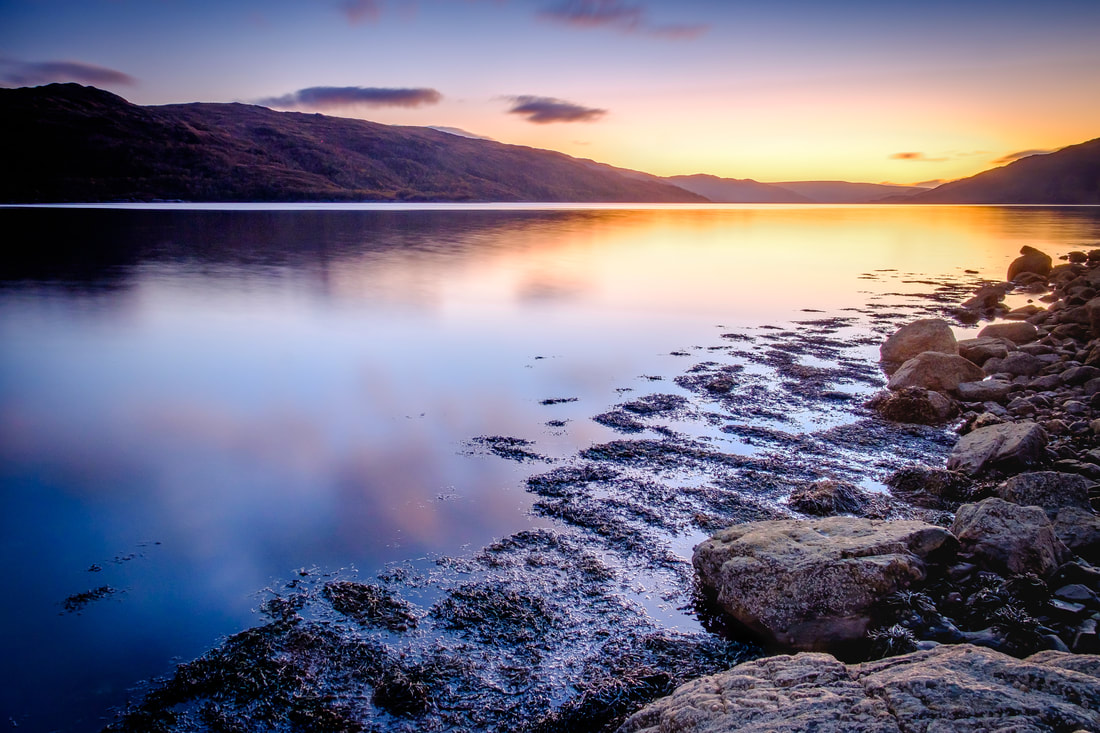 Image 2: Lilac & Gold - Morvern from Loch Sunart Shore, Rockpool House, Resipole, Sunart The cooler temperatures mean that the air is less humid and that there is less water vapour to capture dust particles that are in the air and create the haze which is often a feature of the summer months. When present, this haze scatters sunlight and reduces its intensity. So, in autumn and winter, the lower humidity means that the air is clearer and we see the colours produced by the setting sun in all their intensity. Finally, as we approach the winter solstice, the North Pole gets tilted further away from the sun, lengthening the time taken for the sun to set. This, in turn, means that the sunset colours last longer than at the equinoxes, for example, when the sun sinks very quickly towards the horizon at a 90-degree angle. The result is that we have more time to enjoy the sunset colours and the sunset colours have more time to make an impact on us. 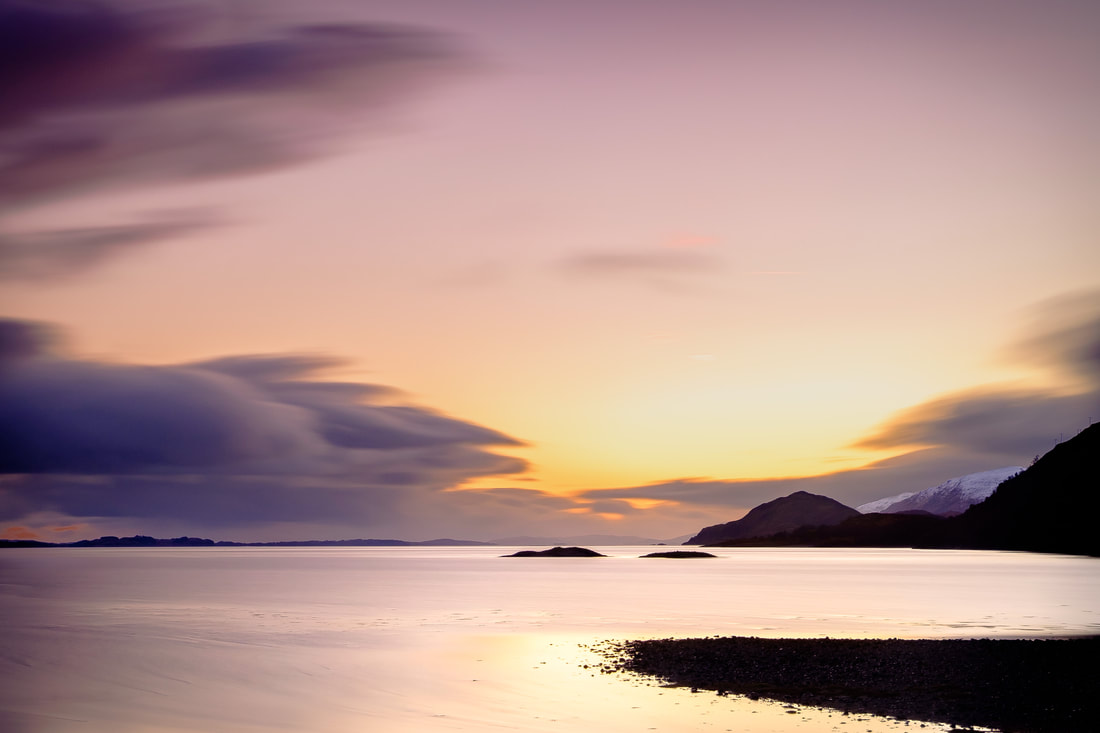 Image 3: Winter on Linnhe - Loch Linnhe from Camas Shallachain, Sallachan, Ardgour Despite all of these variables, predicting sunsets doesn’t have to be hard. All you need to do is keep an eye out for the following key indicators: Mid to high-level clouds (2km and above) Cloud coverage - 30 to 70 percent Humidity - low but not too low Clean air Prior rainfall - no less than 2 to 6 hours before Wind speed - low or non-existent There are many online forecasts for these weather conditions and the one I refer to most is windy.com. So why don’t you have a go at predicting a sunset and head west at what you think might be a good time. You never know, you may be well rewarded for your efforts! 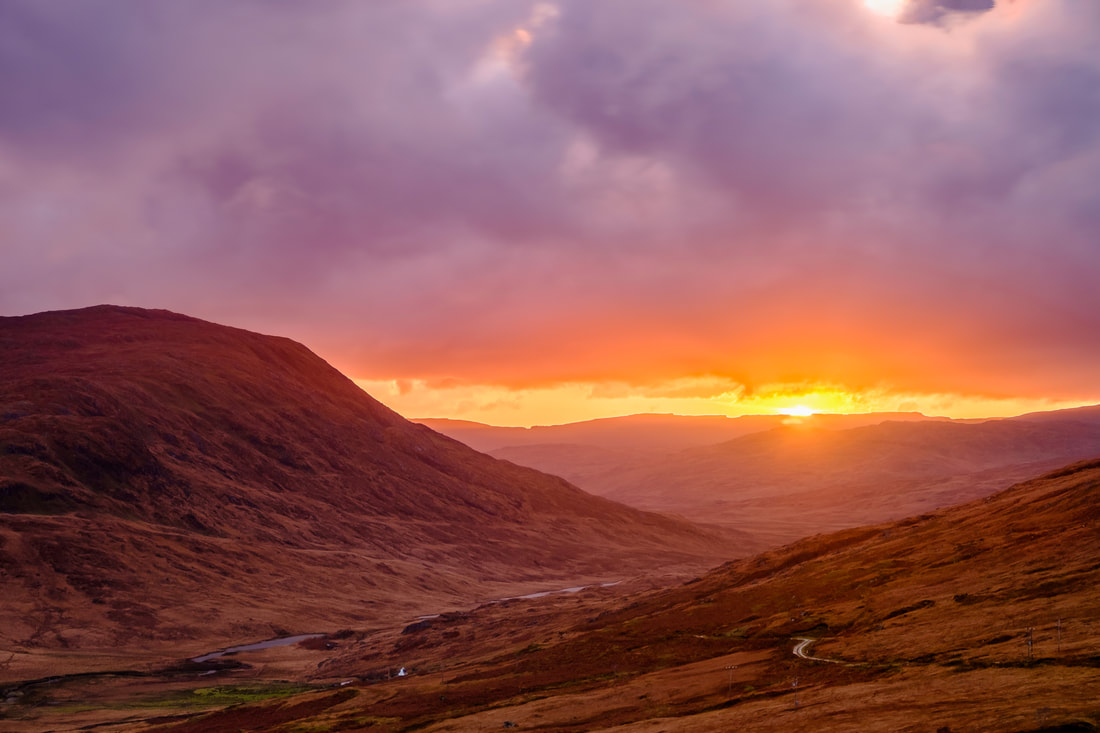 Image 4: Distant Light IV - Achagavel, Gleann Dubh, Morvern We are now in well in to October, the second month of meteorological autumn. It is when the number of visitors to the Peninsula reduces, the days become shorter, the nights become cooler, and the sun gets lower in the sky. This brings a quietness to the area and a quality of light that cannot be found at any other time of the year which, when combined with the autumn colours, makes what is a photographer’s paradise even more perfect than it already was. 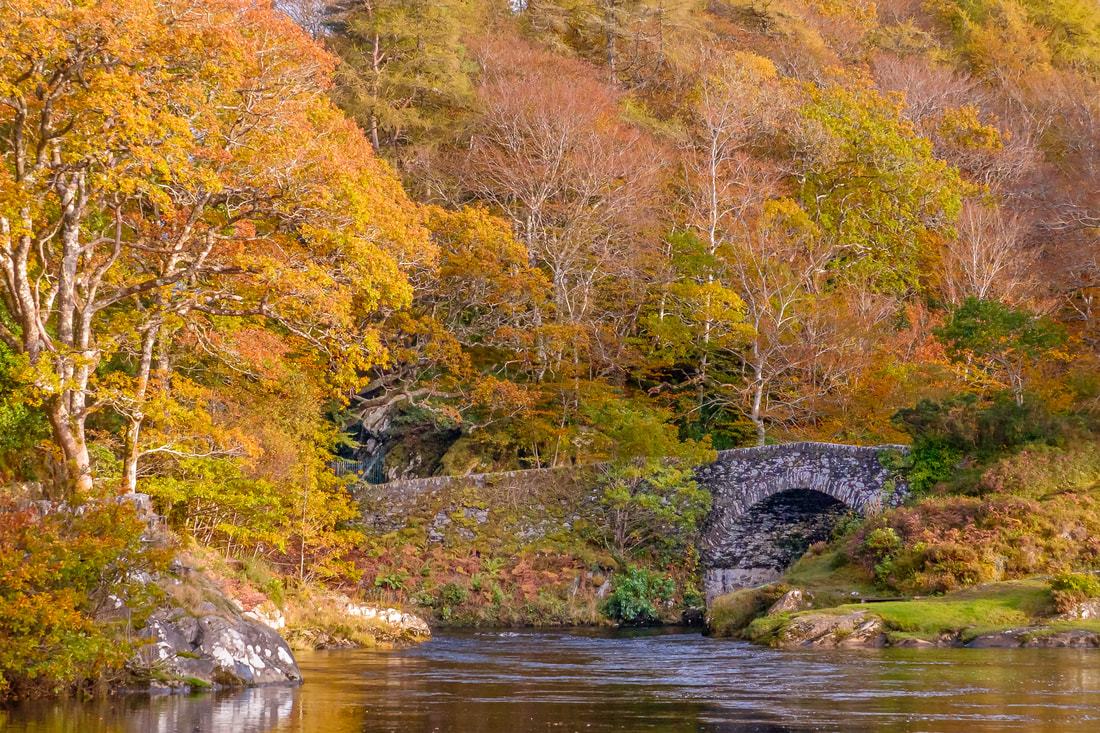 Autumn Crossing II - Old Shiel Bridge, River Shiel, Blain, Moidart By the middle of the month most of the numerous wooded areas around the Peninsula are normally at or near their “autumn peak”, having swapped canopies of green for tapestries of vibrant reds, golds and ambers. The image above was taken around this time in 2019, which was a particularly good year for the autumn colours, and it shows the trees around the Old Shiel Bridge at Blain in their full autumn splendour. The Old Bridge was built by Thomas Telford in 1804. It spans a narrow chasm through which the waters of the River Shiel pass and seem to come to the boil before they expand in the House Pool, slow down and then run both still and deep. This single span bridge provides an interesting subject that can be photographed from many different angles. This, combined with how the smooth waters of the House Pool and the river downstream of it reflect the autumn colours, make it the perfect place to capture the splendour of the trees at this time of the year. 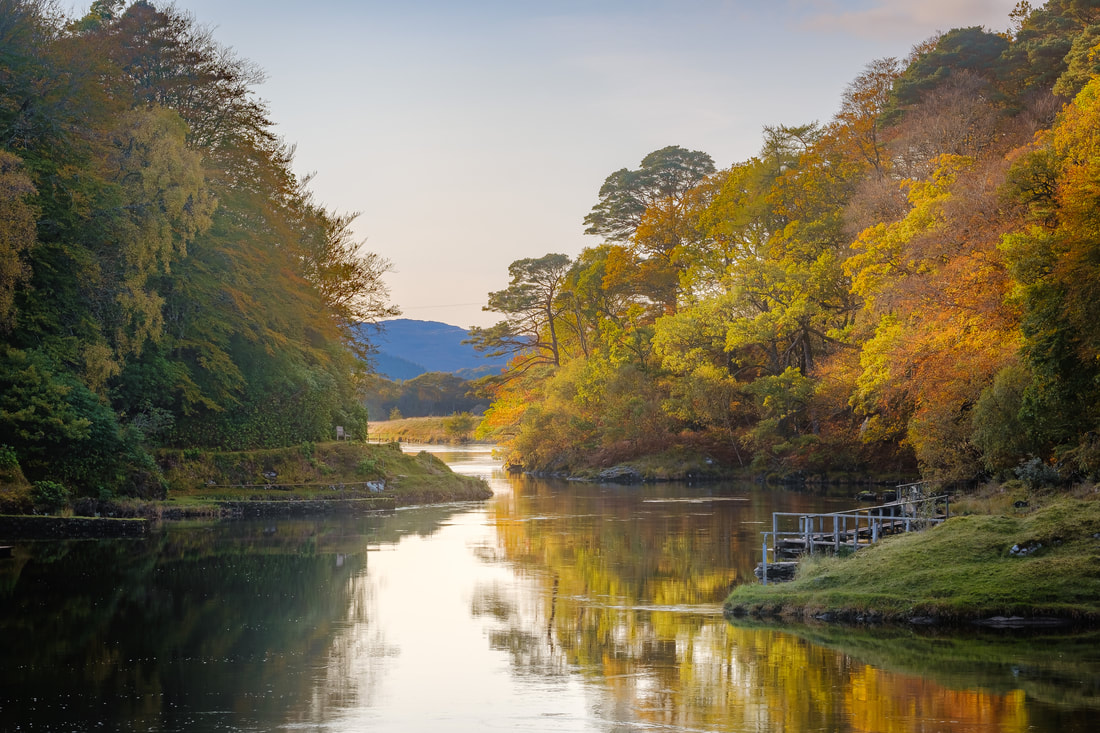 An Autumn Peace - River Shiel, Blain, Moidart I’ve visited the bridge a few times over the last week or so to find that the arrival of the autumn colours is not quite as advanced as it normally is. Indeed, I can’t help feeling it is a week or two behind and although there are now hints of golds in the landscape, I find my myself wondering if their late arrival means that there will be a poorer show this year. So, what makes for a good show of autumn colours? Well, the answer lies in the fact that leaf colour comes from pigments, which are natural substances produced by the leaf cells to help them obtain food. There are three pigments: chlorophyll (green), carotenes (yellow) and anthocyanins (reds and pinks). It is the mix of them, as influenced by the weather, that determines depth of colour we get each year:
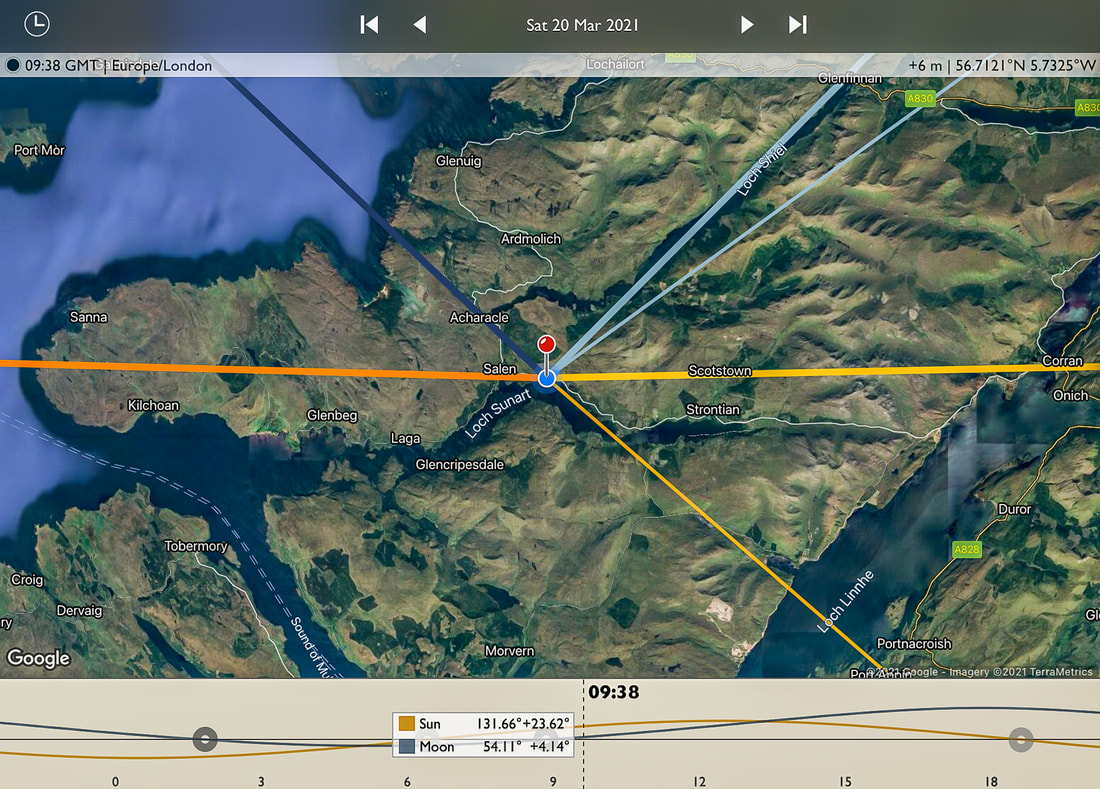
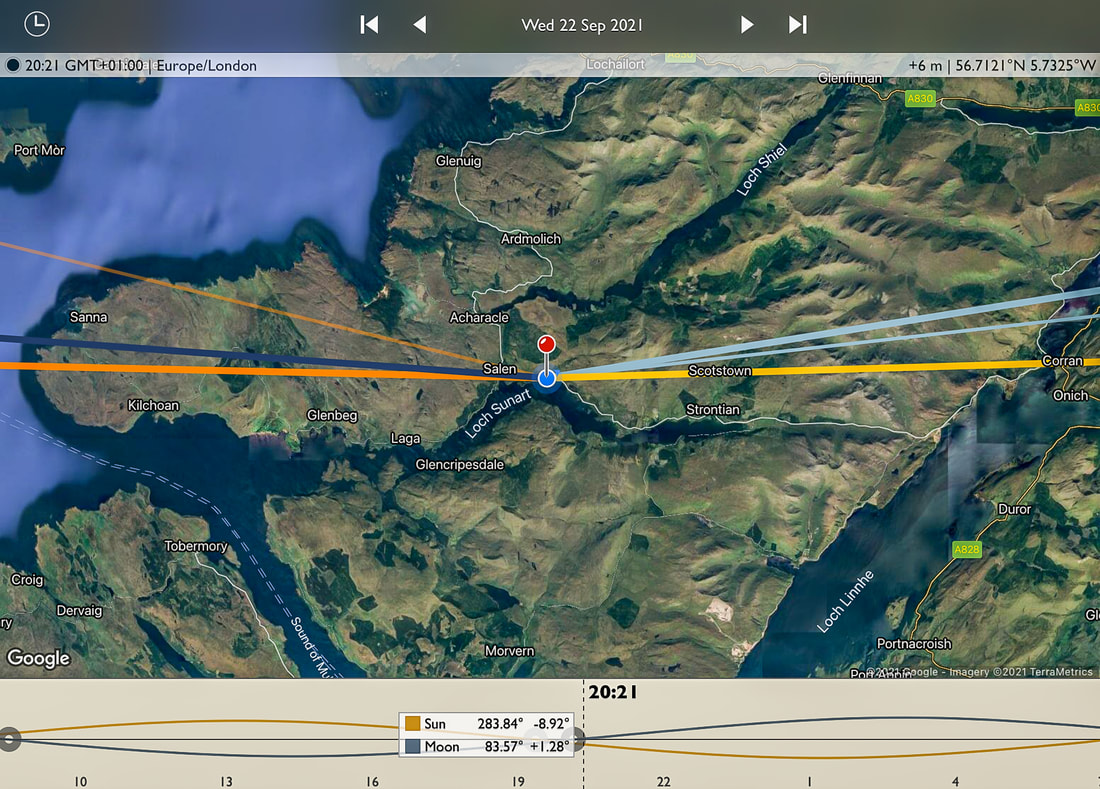
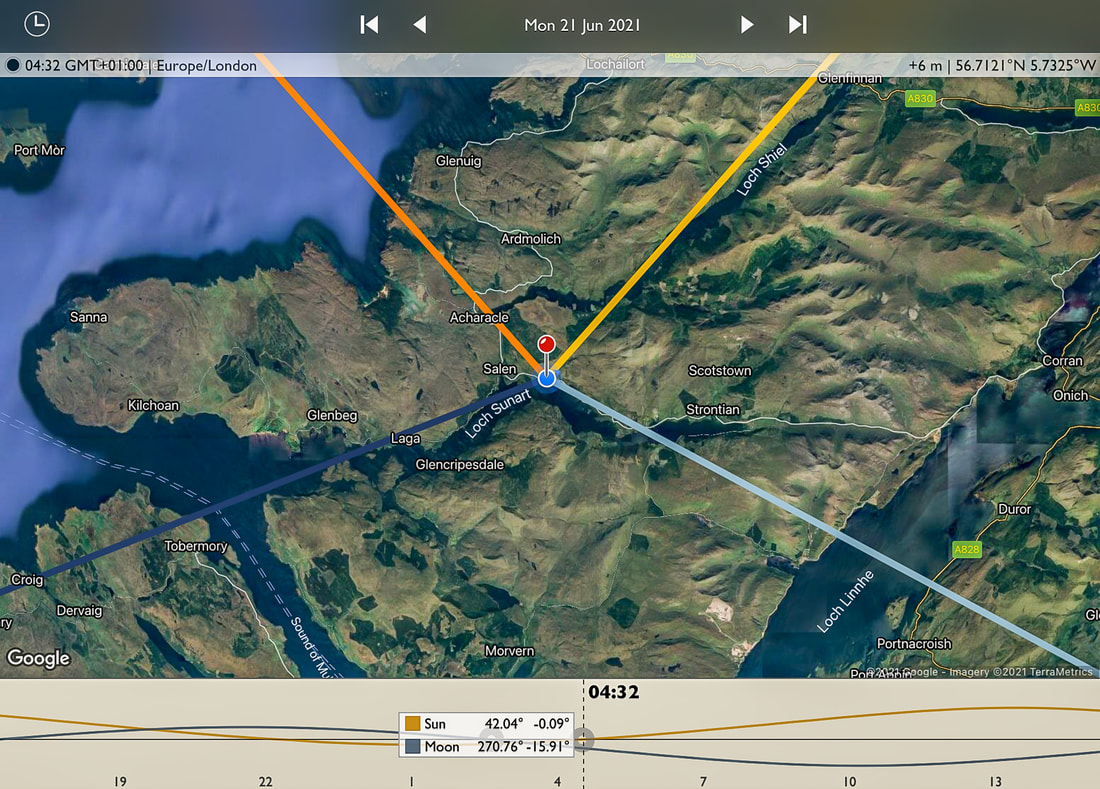
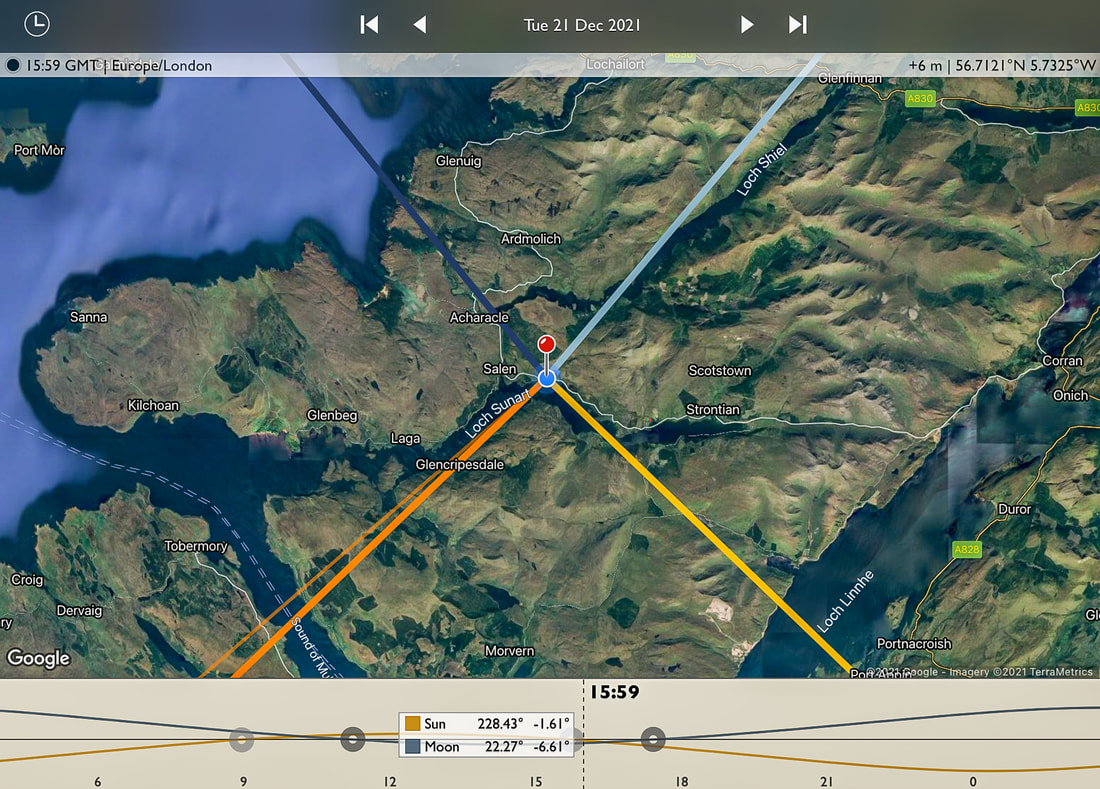
In addition to this, a warm dry 'Indian summer' is needed so that the leaves work for longer and therefore stay full of these pigments until the reducing hours of daylight and lower night temperatures trigger the colour change. So, if we’re to have another great show of autumn colours this year, let’s hope for some settled weather over the next couple of weeks, followed by some cold nights and dry, bright sunny days. 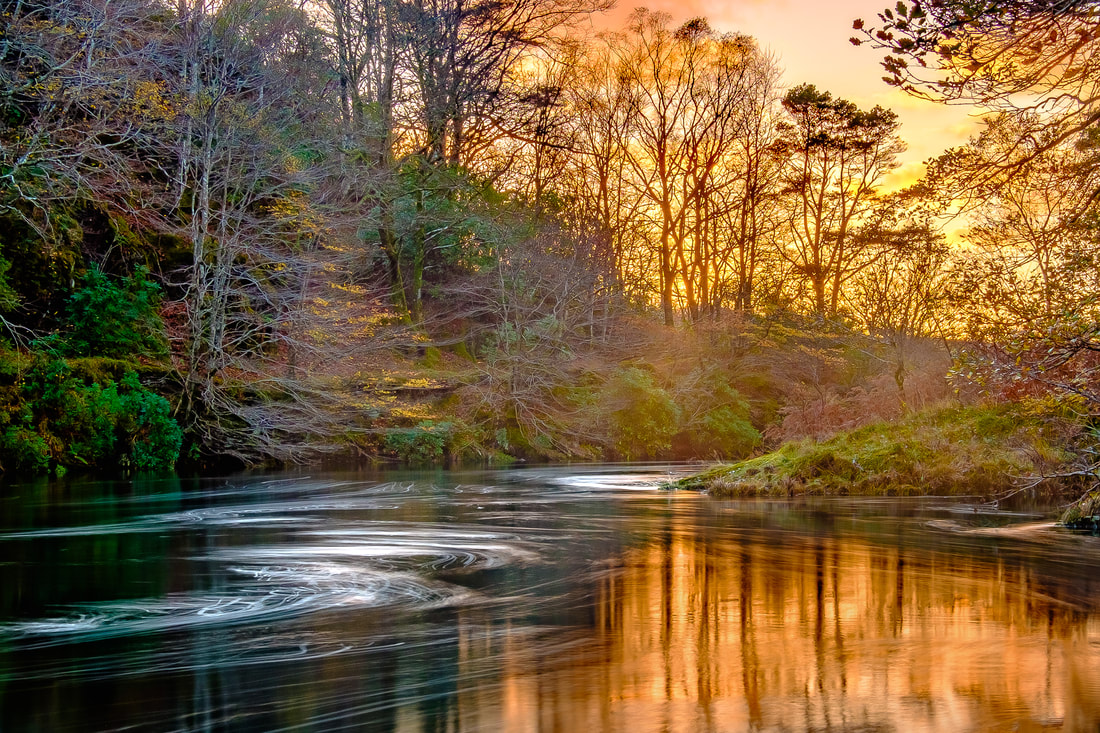 Still & Deep - River Shiel, Blain, Moidart Depending on your point of view, Autumn either starts on 1 September (meteorological autumn) or on the 23 September (astronomical autumn). The latter is when the Autumnal Equinox takes place and is when day and night are of equal length and when the Sun rises due east and sets due west. Although this means that the dark nights return, it does mark the beginning of the beautiful sunsets over Loch Sunart that we get here at Resipole during the autumn and winter months and also increased chances of seeing the Aurora Borealis.  Image 1: Sunart Sundown - Loch Sunart, Resipole, Sunart Most people know that the Sun rises in the east and sets in the west, but they may not realise that this is quite a generalisation. In fact, the Sun only rises due east and only sets due west on two days of the year; the days of the Spring Equinox and the Autumnal Equinox which, for 2021, are March 20 and September 22. To illustrate this, Figures 1 and 2 show the location of the rising and setting sun at the Spring Equinox and Autumnal Equinox, respectively.
Once it has risen due east and set due west at the Autumnal Equinox (Figure 2), the Sun rises and sets a tiny bit further south each day until the Winter Solstice, the day on which it rises as far to the southeast as it ever does and sets as far to the southwest as it ever does (See Figure 4). It then changes direction and begins moving north each day, eventually rising due east and setting due west on the Spring Equinox (Figure 1) before continuing northwards until the Summer Solstice, when it rises as far to the northeast as it ever does and sets as far to the northwest as it ever does (Figure 3). Once it has risen due east and set due west at the Autumnal Equinox (Figure 2), the Sun rises and sets a tiny bit further south each day until the Winter Solstice, the day on which it rises as far to the southeast as it ever does and sets as far to the southwest as it ever does (See Figure 4). It then changes direction and begins moving north each day, eventually rising due east and setting due west on the Spring Equinox (Figure 1) before continuing northwards until the Summer Solstice, when it rises as far to the northeast as it ever does and sets as far to the northwest as it ever does (Figure 3).
Image 1, at the top of this blog, was taken at Resipole during sunset on the day after the Autumnal Equinox of 2019, with the camera facing southwest down Loch Sunart towards the Isle of Carna and the hills of Morvern. If you look closely, you can see a patch of intense colour behind the wooded hillside on the right-hand side of the image. This was the spot where the sun was setting due west and for me, such a sight is one of the most welcome of the year because it marks the return of spectacular sunsets to this part of the Loch. With the passing of the autumn months and the movement of the setting sun towards the south, these sunsets become more and more intense. They are something that I’ll never tire of photographing even though I have taken countless photos of them from this spot. I can honestly say that I’ve never seen the same mix of colours twice. Each sunset is different because of the varying position of the sun and the infinite range of possible cloud formations that reflect the light from the sun and produce the kaleidoscope of colours. The Autumnal Equinox also paves the way for increased chances to see aurora borealis displays. According to NASA, the equinoxes are prime time for Northern Lights, because the geomagnetic activity that causes them is more likely to take place in the spring and autumn than in the summer or winter. In addition, we tend to have more clear nights in spring and autumn so this, combined with more geomagnetic activity, may be the reason why I tend to have captured most of my Northern Light images in September/October and March/April. Image 2: Night School - Loch Shiel Jetty, Acharacle, Ardnamurchan Image 2 above was taken 4 days after the Autumnal Equinox of 2019, when I had a client out with me for some night photography tuition. We had spent the first part of the night preparing for and taking photographs of the Milky Way rising above Loch Sunart and while we were doing this a very high Aurora Alert came through on my phone. We quickly packed up our camera gear and headed up to Acharacle and set it up again on the jetty there is on Loch Shiel. It is a perfect spot to look for and photograph the Aurora Borealis because it faces directly towards northern horizon that has only a few distant and low-lying hills on it, meaning that the view north is clear of any obstructions. We had a very productive time there and also at another couple of locations nearby and came away with some great shots of the “Merry Dancers”.
Finally, although the equinox referred to as a day by many people, it is actually the exact moment in time when the tilt of the Earth’s axis and Earth’s orbit around the sun combine in such a way that the axis is inclined neither away from nor toward the sun. For 2021, the Autumnal Equinox will be at 8:21 pm on Wednesday 22 September and the Spring Equinox was at 9:37 am on Saturday 20 March. For me, one of the magical things about photography is its ability to capture scenes and moments in the present for the viewers of the future, before they are lost forever, just like the scene in this photo I took in August 2019 of an old sailing boat high up on the rocks at Samalaman Bay near Glenuig. 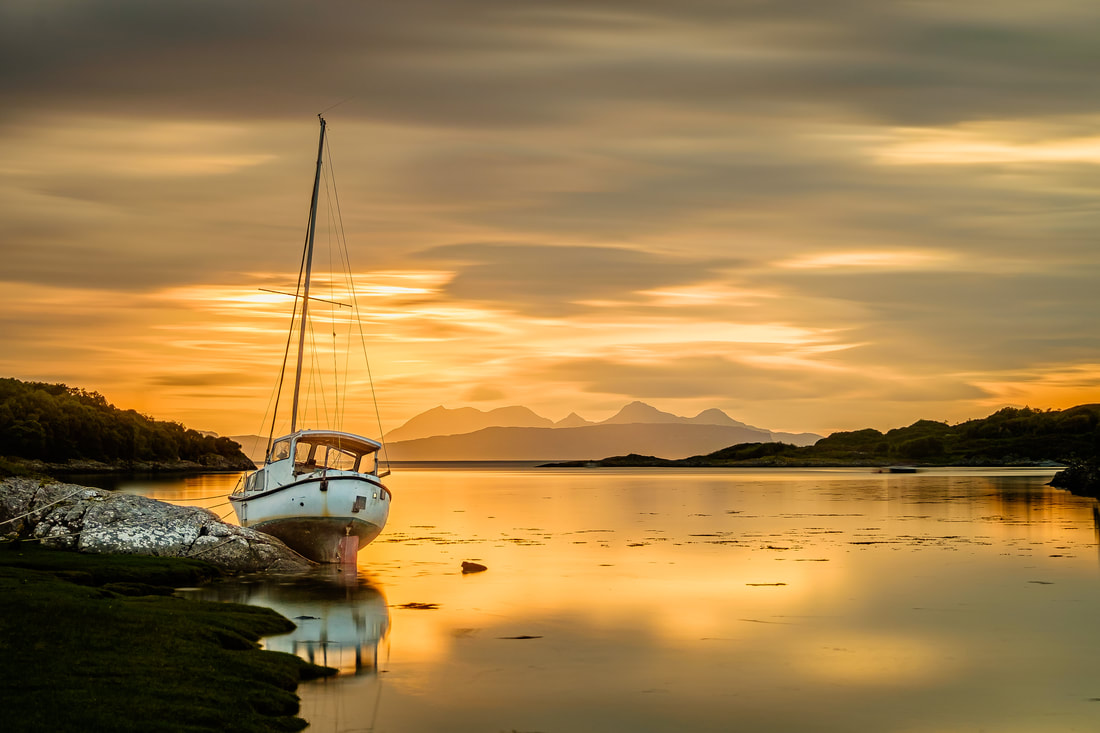 Image 1: On the Rocks I - Samalaman Bay, Glenuig, Moidart I am so fortunate to be able to live where I do. This special corner of Scotland is a photographer’s paradise with its diverse landscape of mountains, moorland and woodland and an amazing coastline that is home to beautiful white sand beaches and dramatic rocky shorelines. It is a place that has something to offer the photographer in all seasons and in the summer months, the northern coastline of Moidart and Ardnamurchan is the place to go with the camera. In these months, the late evening sun sets in the northwest and brings beautiful sunsets to this part of the West Highland Peninsulas.
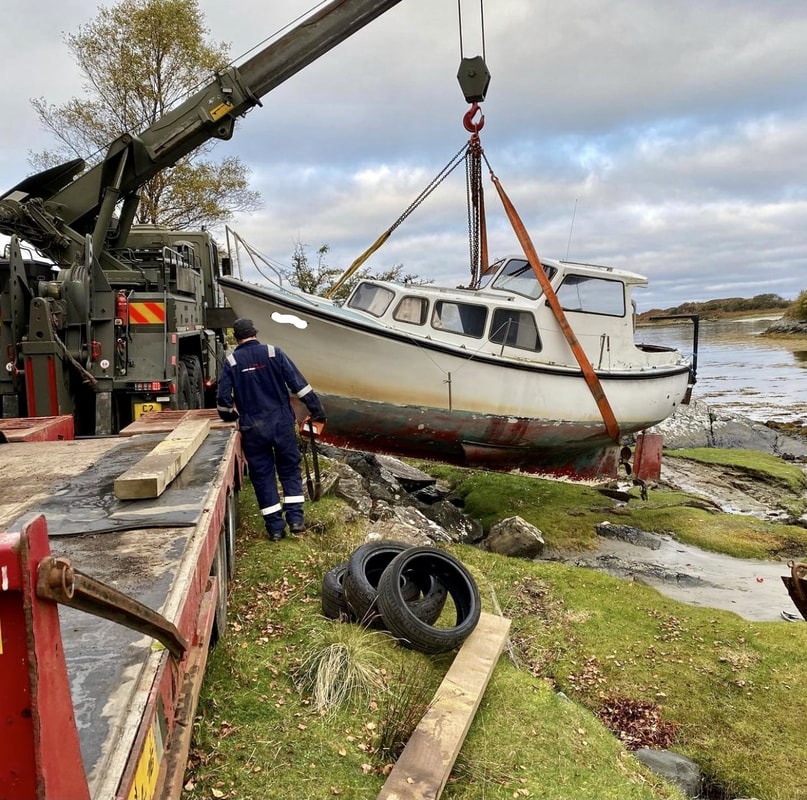
r a few years, an old sailing boat had sat perched high up on a huge, rounded rock on the southern edge of the bay, in a position such that it combined with the edges of the bay and the distant silhouette of the Small Isles to create the perfect composition. I visited the bay on a perfectly still August evening in 2019 when a high spring tide coincided with sunset. Even with almost 5 metres of tide, this old sailboat was high enough up on the rocks to remain steadfast in its position. After taking in the scene for a while, I set up my camera on its tripod, set the exposure time to 90 seconds, pressed the shutter button to capture and freeze 1½ minutes of the most magical west coast sunset to create the image at the top of this blog titled “On the Rocks I”.
When I now visit this spot in Samalaman Bay, it certainly feels that something is missing. That old boat sure was essential to the picture-perfect scene that I captured and although I was saddened at its departure, I seek great comfort in knowing that I did manage to capture it before it was gone forever. To me, this ability to capture the present for the viewers of the future is the power of photography and is summed up by this quote by Karl Lagerfeld: “What I like about photographs is that they capture a moment that’s gone forever, impossible to reproduce.”
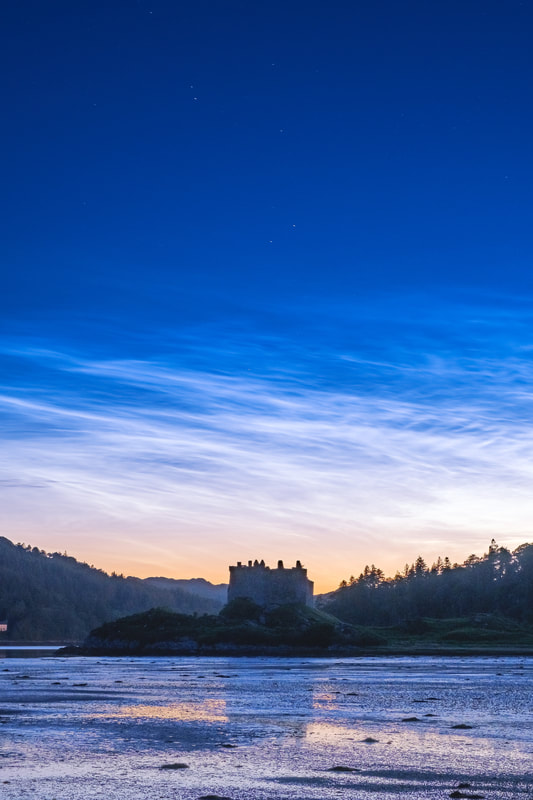
Once rare noctilucent, or “night-shining” clouds are becoming a more common feature of our summer night sky and the increased presence of these ghostly whispers of light shimmering high up in the Earth’s atmosphere is thought to be as a result of human-caused climate change. Although this is certainly cause for concern, the sight of them is quite mesmerising and if you are a night owl, it is a sight that is not too difficult to photograph. 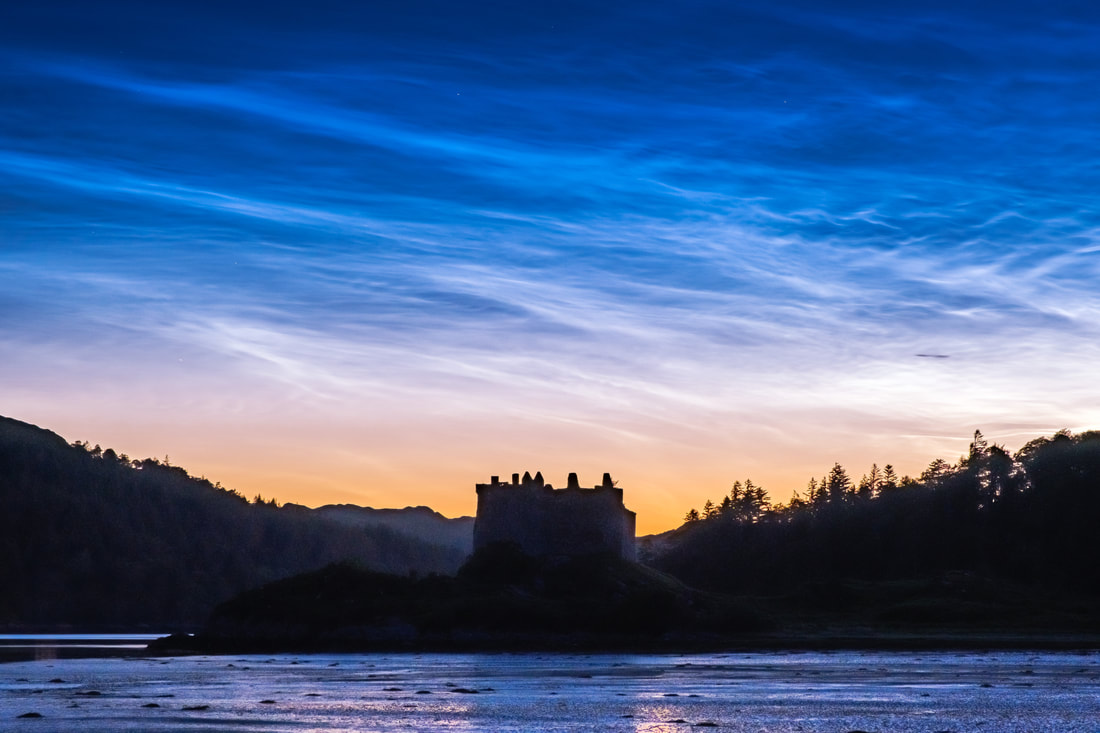 Image 1: Tioram Night Shining I - Castle Tioram, Dorlin, Moidart In the 8 or so weeks either side of the Summer Solstice, which this year was on 21 June, the days are long and the nights are short. In fact, the sun gets to no more than 10-15 degrees below the horizon and this makes it a lean period for both aurora chasers and stargazers because astronomical, or full darkness does not occur at any point during the night. The resulting all-night twilight means that it is simply too light to see the “Merry Dancers” and all but the brightest stars. However, all is not lost because what you can see are noctilucent, or “night-shining” clouds. They become visible in the north to north-west sky as darkness falls and just as the brightest stars become visible. They have the appearance of ghostly whispers of light shimmering in the all-night twilight and are usually set against a pearly-blue sky. 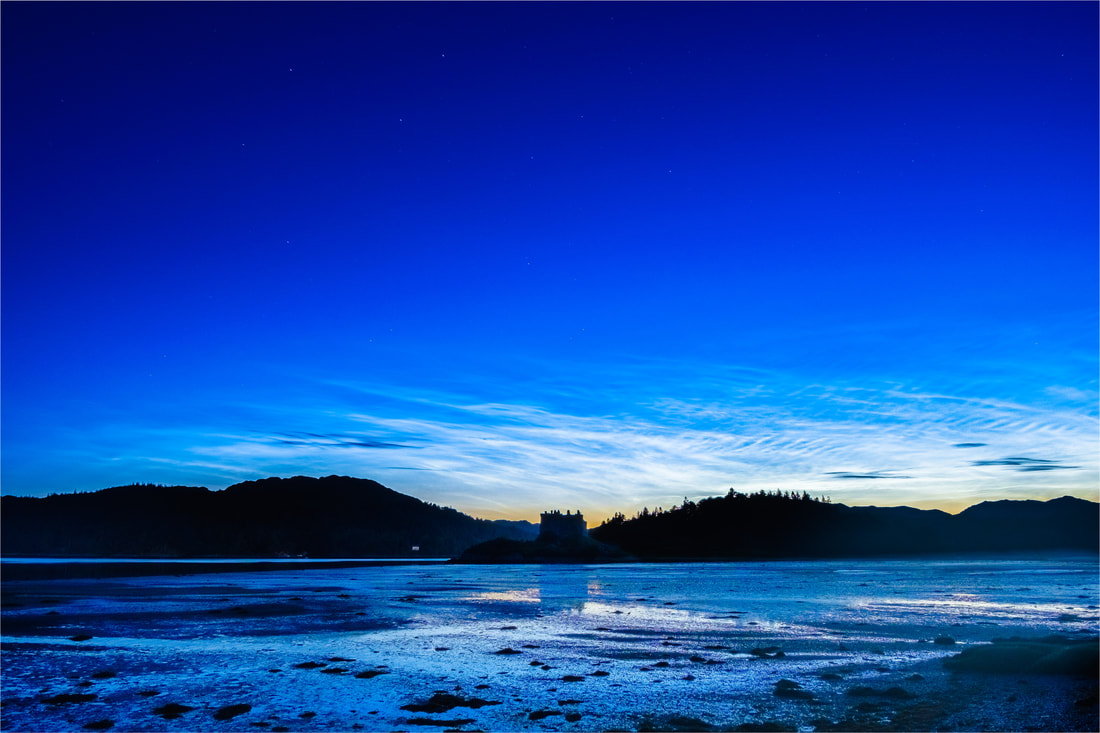 Image 2: Tioram Night Shining IV - Castle Tioram, Dorlin, Moidart These night-shining clouds are the highest clouds in Earth's atmosphere. They form in the middle atmosphere, or mesosphere, roughly 80 kilometres (50 miles) above Earth's surface. They are thought to be made of ice crystals that form on fine dust particles from meteors and volcanic activity. These ice coated dust particles then reflect the light that the sun projects high up into the sky, when it is between 6 to 16 degrees below the horizon, to create an illuminated cloudy veil in the northern sky at latitudes between ±50° and ±70°. They are first known to have been observed in 1885, two years after the 1883 eruption of Krakatoa, but it remains unclear as to whether their appearance had anything to do with the volcanic eruption or whether their discovery was due to more people observing the spectacular sunsets caused by the volcanic debris in the atmosphere.
This does indeed give me cause for concern, but nevertheless, the sight of these shimmering and wispy clouds illuminating the upper reaches of our summer night sky is quite mesmerising. I was fortunate enough to both see and photograph them on a mid-July night at Castle Tioram when it barely got dark. They seemed to not only illuminate the sky but also the landscape around me. There is still time to see them so, if you are outside after midnight on a clear night, look north and you may be able to pick them out. 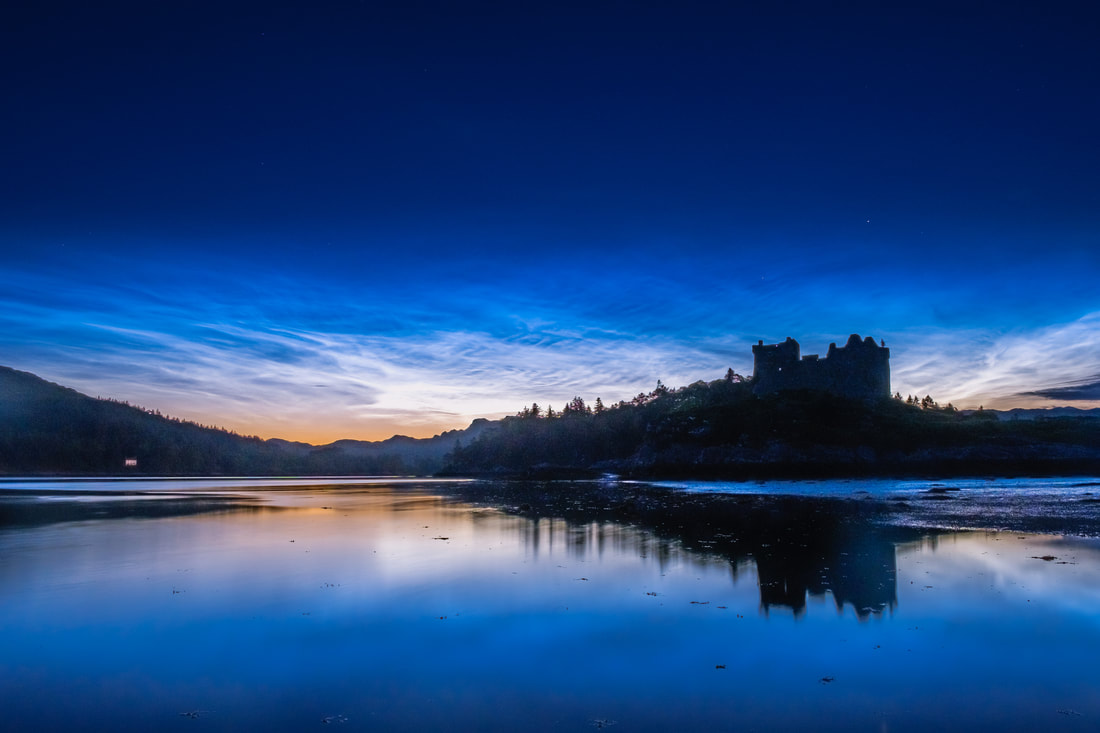 Image 4: Tioram Night Shining III - Castle Tioram, Dorlin, Moidart If you have a modern digital camera fitted with a wide-angle lens which you can mount on a tripod, you can try taking some photographs of them yourself. Put the camera on the manual setting, open up the aperture to at least f4, set your ISO 800 and take a few test shots at exposures of several seconds until you find the exposure time that works. You could even try photographing them with your smart phone if it has a “Night Mode” setting.
Views of the Small Isles of Muck, Eigg, Rùm and Canna are ever-changing as you make the journey from east to west along the coast of Moidart and north Ardnamurchan and past its spectacular cliffs, dramatic rocky shores and beautiful white sand beaches. While the dramatic peaks of Rùm’s Cuillin Mountain range are ever present, the distinctive profile of Eigg and its highest hill, An Sgurr, is a prominent feature at first, but it gradually disappears from view to be replaced by the more diminutive profile of Muck as you reach the journey’s end……. 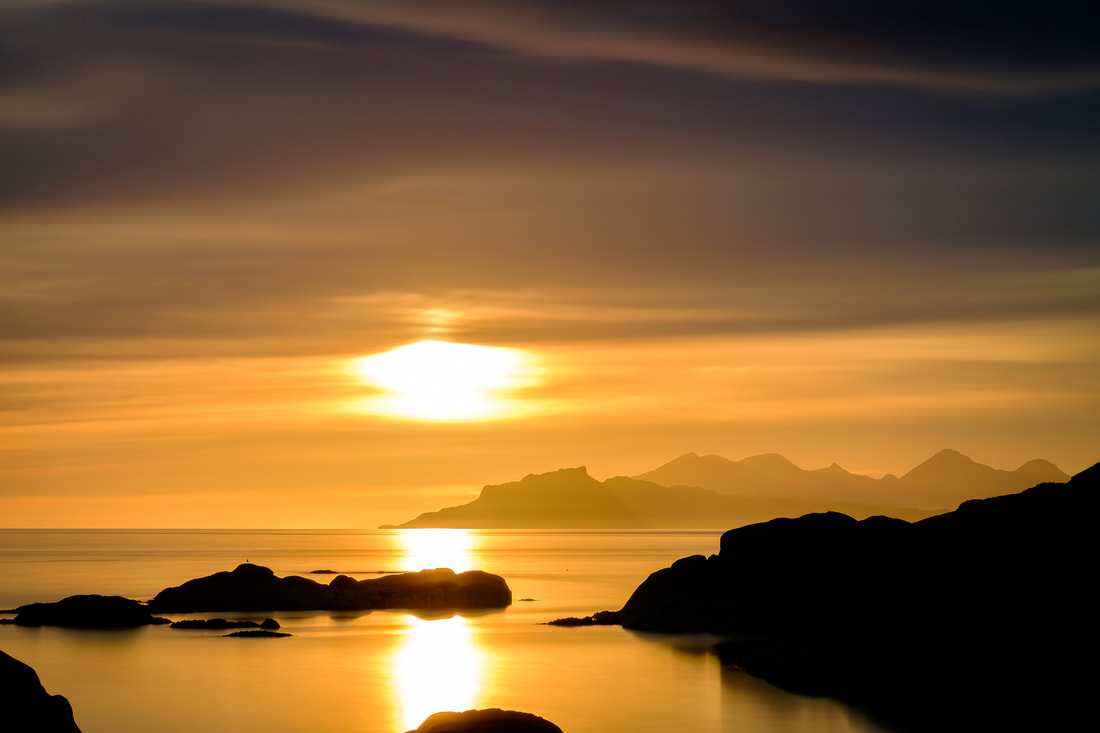 Image 1: Golden Eigg II - Sailean Dubh, Ardtoe, Ardnamurchan IntroductionScotland has 40 National Scenic Areas which cover 13% of its land mass and they earn this designation because their outstanding scenery makes them the country’s finest Landscapes. One of these areas is Morar, Moidart and Ardnamurchan here on Scotland’s north-west coast. It is home to a coastline of spectacular cliffs, dramatic rocky shores and beautiful white sand beaches. Added to all of this are breath-taking views of the Small Isles of Muck, Eigg, Rùm and Canna, which sit a few miles west out in the Sound of Arisaig and just south of the Isle of Skye. As you travel from Moidart in the east, to Ardnamurchan in the west, your perspective of the Small Isles changes significantly, with both them and features on them coming into view and disappearing again after only a few miles. This everchanging view makes photographing both them and this coastline an absolute joy and now that the evening sun is in the north-west, my plan for the coming weeks is to photograph to do just that. My aim is to capture this spectacular coastline while it is bathed in warm sunlight at the end of our long summer days. In the meantime, however, I thought I would describe this somewhat special journey and share some of the images that I already have. Moidart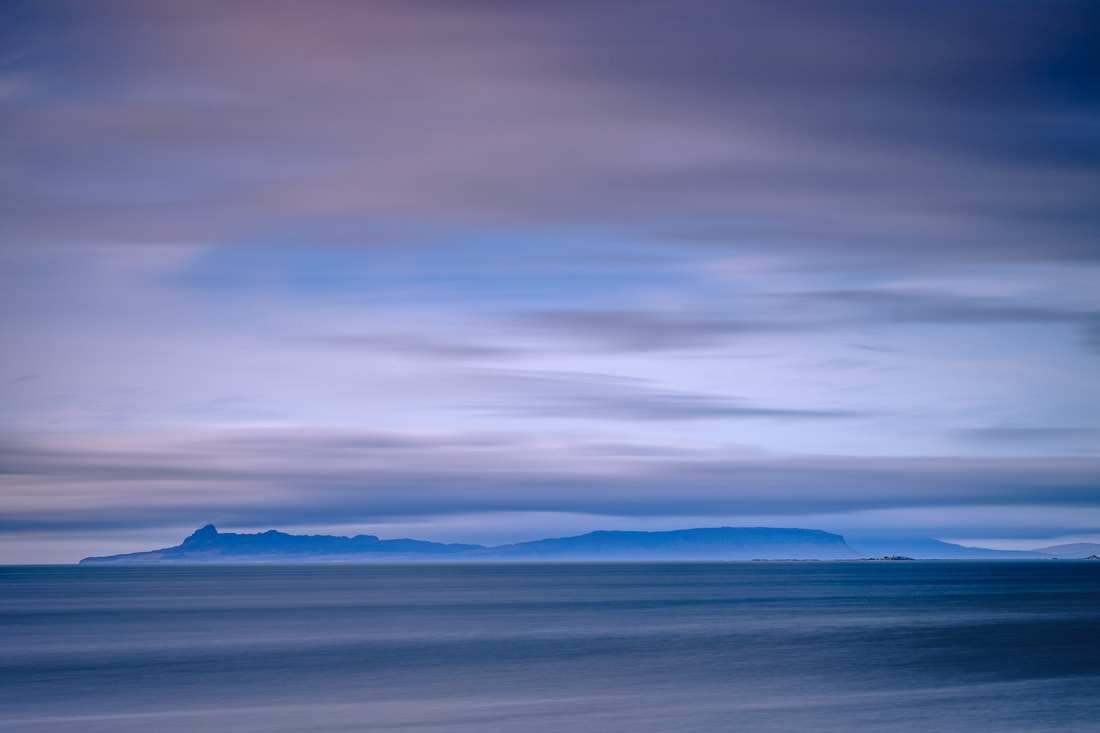 Image 2: Eigg Blues - Isle of Eigg from Rubh a' Chairn Mhoir, Glenuig, Moidart
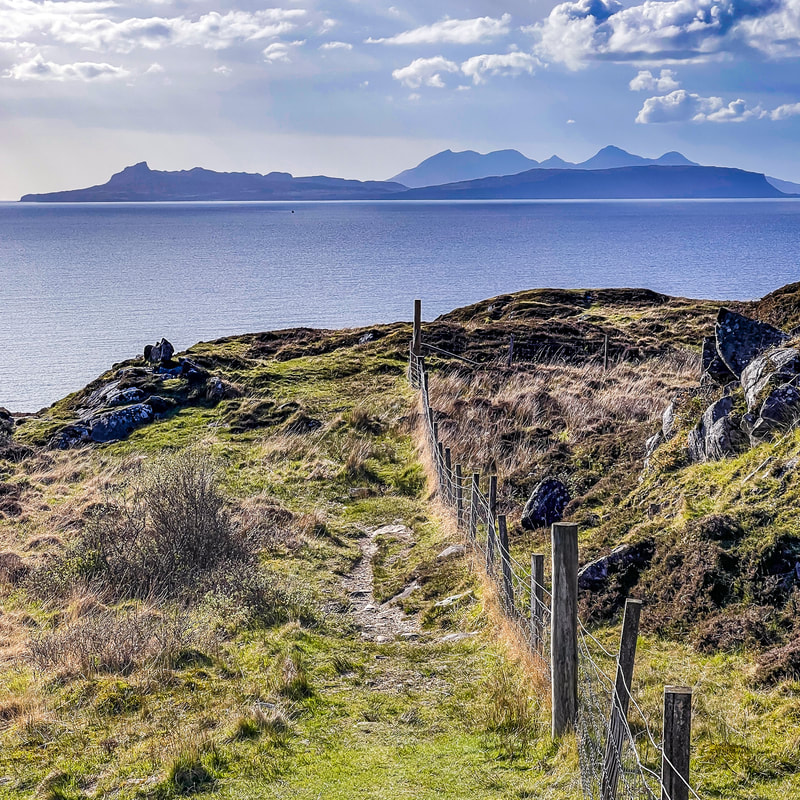
On reaching Glenuig, you can turn off the main road, drive past the Glenuig Inn and continue westward for about a mile and a half to reach the road end. From there, a short walk takes you to Smirisary, an isolated and roadless crofting village that sits between a rocky foreshore and a steep hillside about two miles to the west of Glenuig. As you walk the final half mile to the village, your view of the sea is obstructed by a small hill, but as you get to the top of it, the view dramatically opens up to reveal islands that you feel you can almost touch (Image 3). 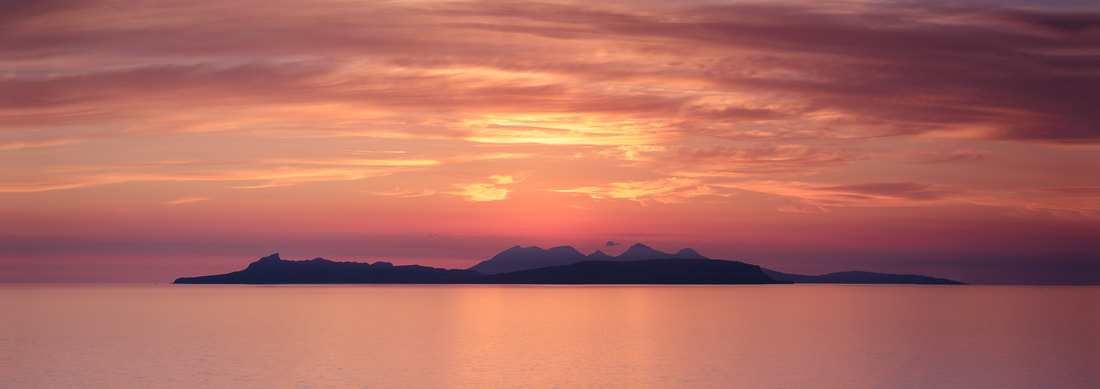 Image 4: Summer Tranquillity II - The Small Isles of Eigg and Rùm viewed from Smirisary, Moidart I like to visit Smirisary in mid to late summer. It is a great place to capture Muck, Eigg and Rùm sitting in flat calm seas while they are silhouetted against the colourful skies that are a feature of the sunsets there at that time of year. From there, you get a closer view of the distinctive shape of An Sgurr and the dramatic peaks of the Rùm and its Cuillin mountain range, which sits behind Eigg and simply adds to the magic you are witnessing (Image 4). 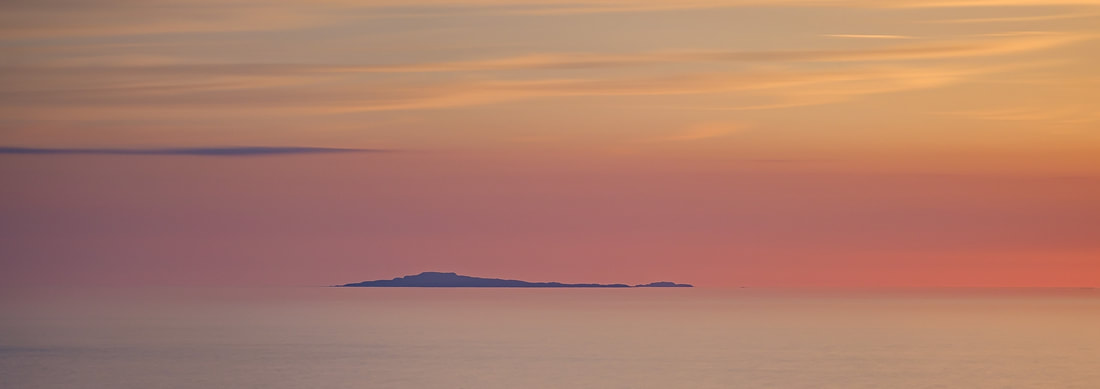 Image 5: Summer Tranquillity I - The Small Isle of Muck viewed from Smirisary, Moidart
East Ardnamurchan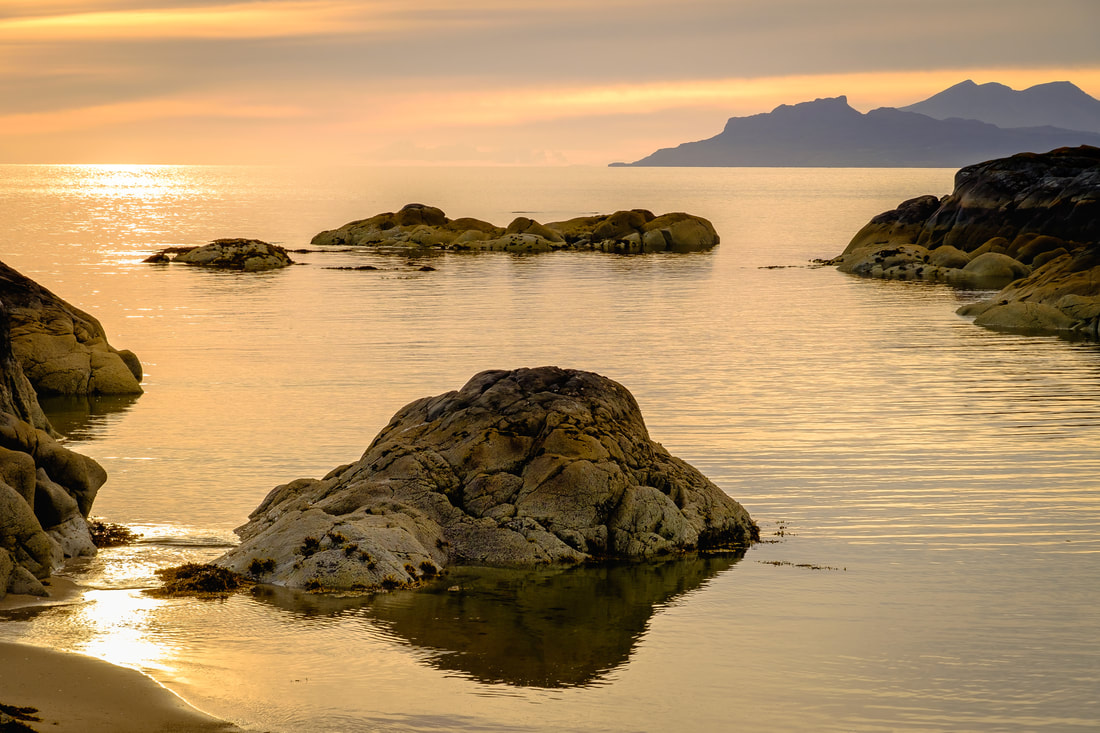 Image 7: Golden Eigg I - Sailean Dubh, Ardtoe, Ardnamurchan If you want to get a view of the Small Isles on this part of your journey, you need to head out to the small but beautiful sandy beach at Ardtoe where a short walk out to the headland on its western side brings the southern end of Eigg and An Sgurr back into view. From there, you also get a glimpse of Rùm because the high peaks of the Rùm Cuillin are just visible above the land that shelters the beach from the open sea (Image 1 and Image 7). 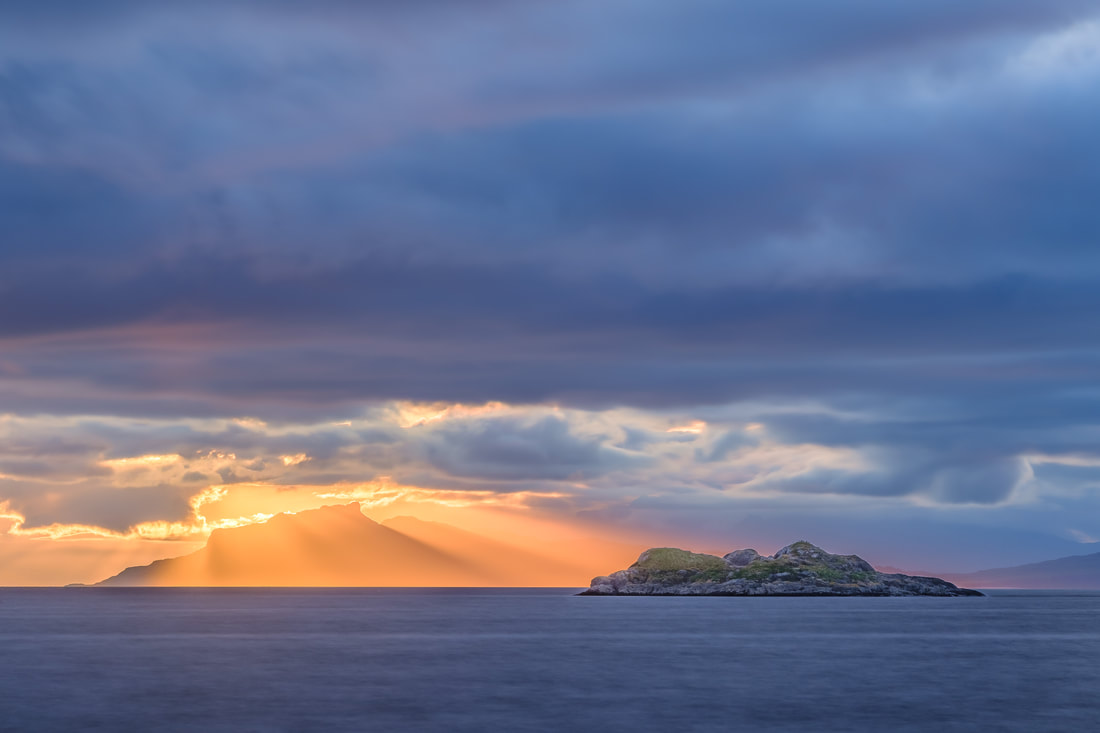 Image 8: Enlightened - Isle of Eigg viewed from Ardtoe, Ardnamurchan While at Ardtoe and if you don’t mind a walk over uneven and often boggy ground, you can make your way out to the end of Rubha Luinngeanach where you get a more open view of Eigg with Rùm behind it. It was at this spot where I witnessed what I think is the most spectacular sunset I have ever seen over the Small Isles (Image 8). I was out there on a rather cloudy July evening, so my hopes of getting a good image were not high. Suddenly the clouds beyond the skerry of Sgeir an Eidigh parted and allowed the most intense of crepuscular rays to shine down on the Isle of Eigg and silhouetted it against the golden backdrop that they had created. It is a moment that is forever etched on my memory. 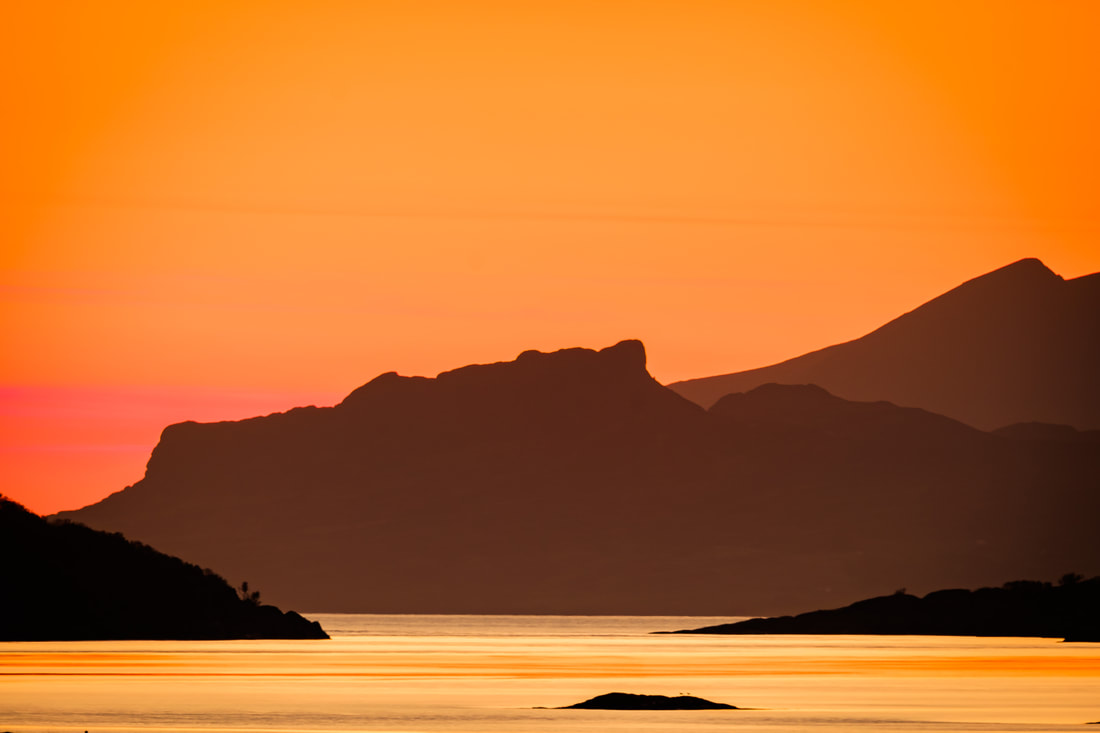 Image 9: Through the Gap - Kentra Bay, Arivegaig, Ardnamurchan On leaving Ardtoe to head back towards Acharacle, you’ll find that a slight diversion down the road towards Arivegaig rewards you with a fine view out through the entrance of Kentra Bay to Eigg, where An Sgurr sits directly behind the gap between the land and the sea (Image 9). 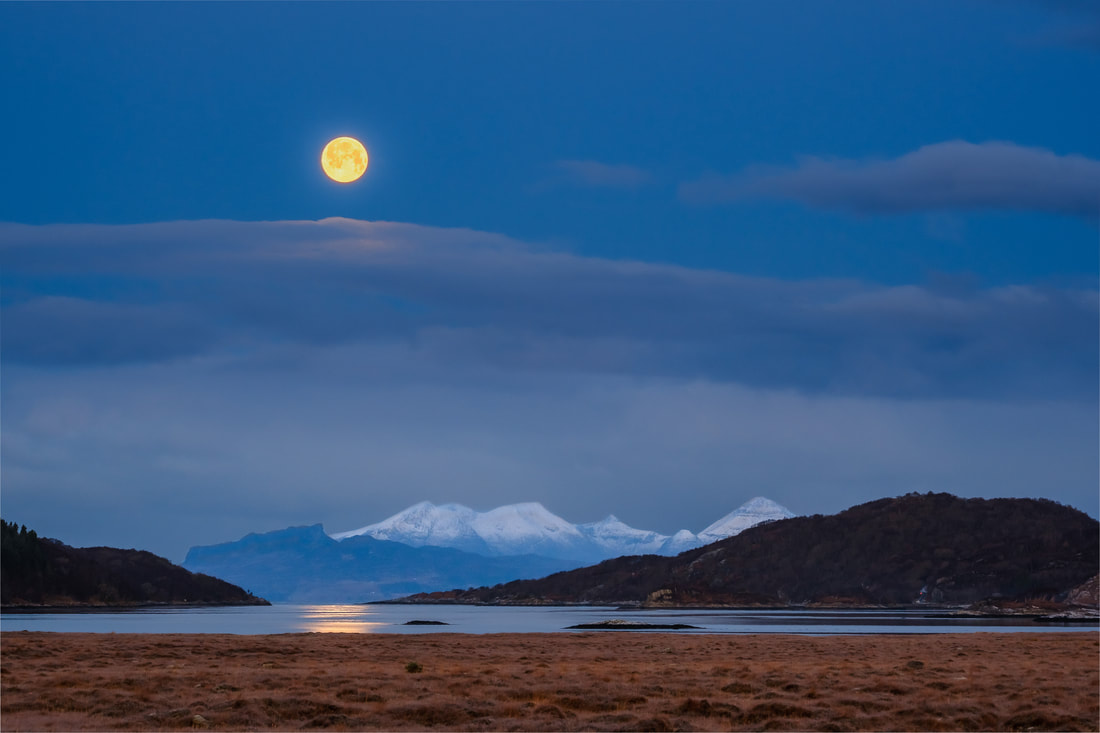 Image 10: Cold Last Moon I - Kentra Bay, Arivegaig, Ardnamurchan The road to Arivegaig is also a spot where you can catch a full moon setting behind the Rùm Cuillin on a clear winter morning (Image 10). West Ardnamurchan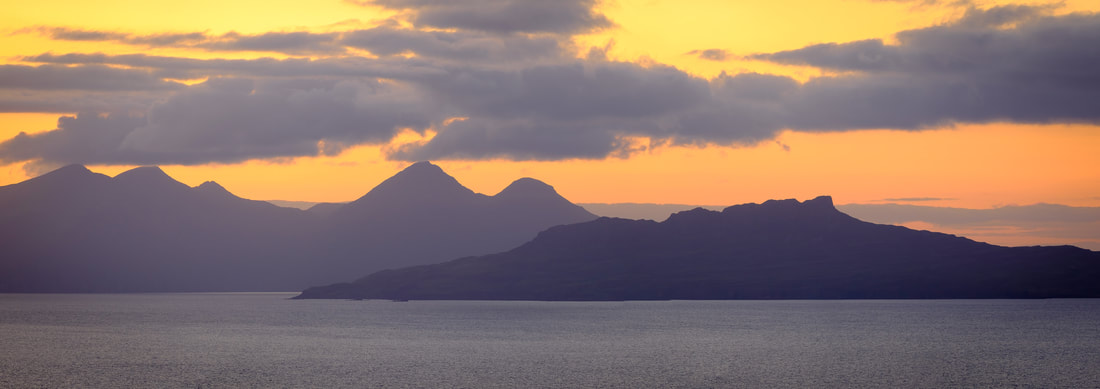 Image 11: Two Small Isles - Eigg & Rùm from the road to Kilchoan at Doire Daraich, Ardnamurchan The next part of the journey west takes you along the side of Loch Sunart and it is a good few miles before you see the Small Isles again because the road now takes you along the southern coast of the Ardnamurchan Peninsula. It is not until you pass Camas nan Geall and follow the road north around the side of Ben Hiant to reach Doire Daraich before they come back into view again (Image 11). 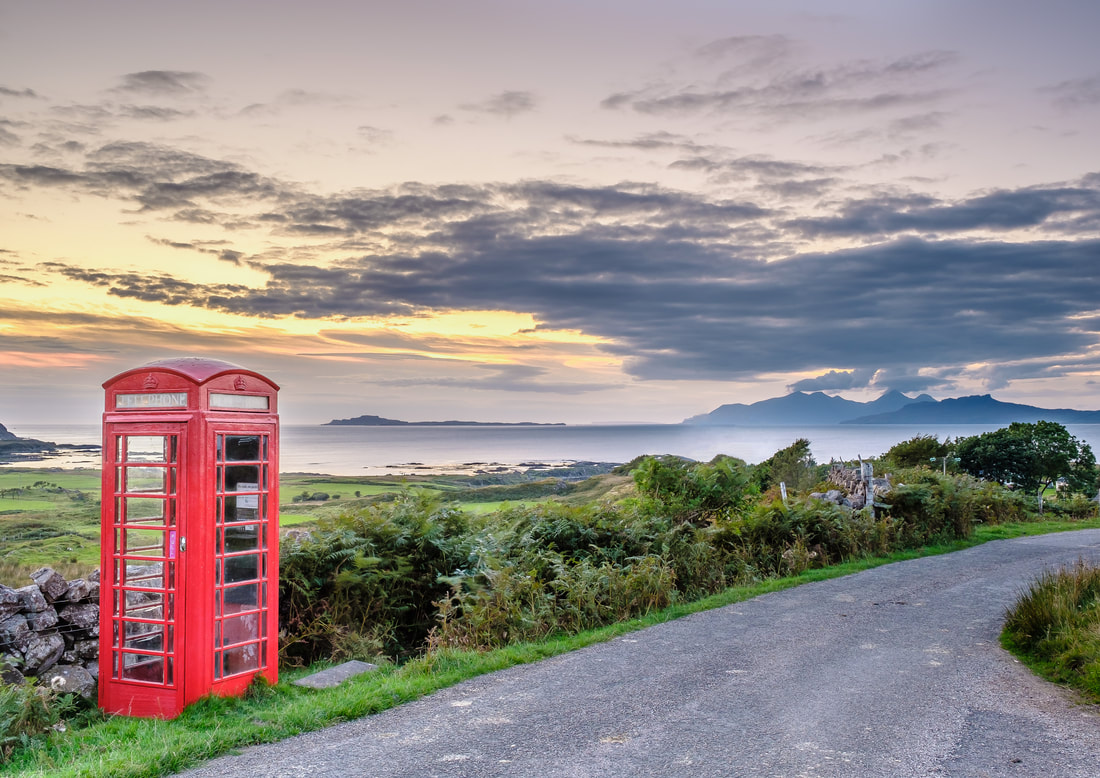 Image 12: Dusk Calling - Kilmory, Ardnamurchan Given how far west you have travelled to reach there, the perspective is now very different because Eigg now sits to the right of Rùm, while the drive down to Kilmory brings the Muck back into view as reach the phone box just before the village (Image 12). 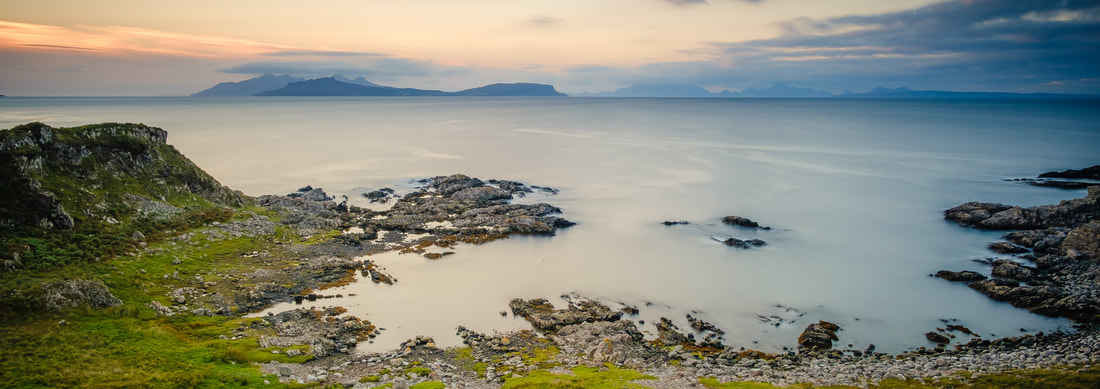 Image 13: Overlooking the bay at Inverockle to Eigg and Rùm with Skye on the distant north-eastern horizon
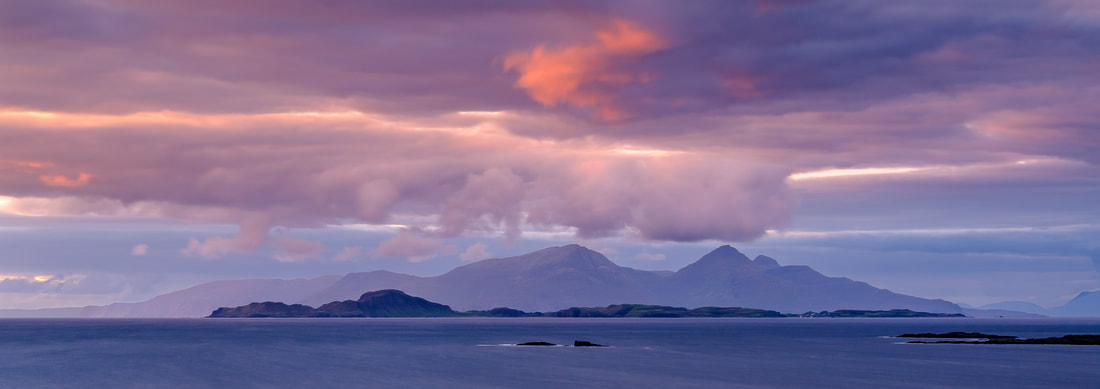 Image 15: Pink Rùm & Muck - The Small Isles of Rùm and Muck viewed from Portuairk, Ardnamurchan It is from the hills above Portuairk from where I think you get the most dramatic view of Rùm and the magnificent peaks of its Cuillin mountain range. It is simply majestic, sitting there beyond Sanna Bay and the significantly more diminutive Isle of Muck (Image 15). 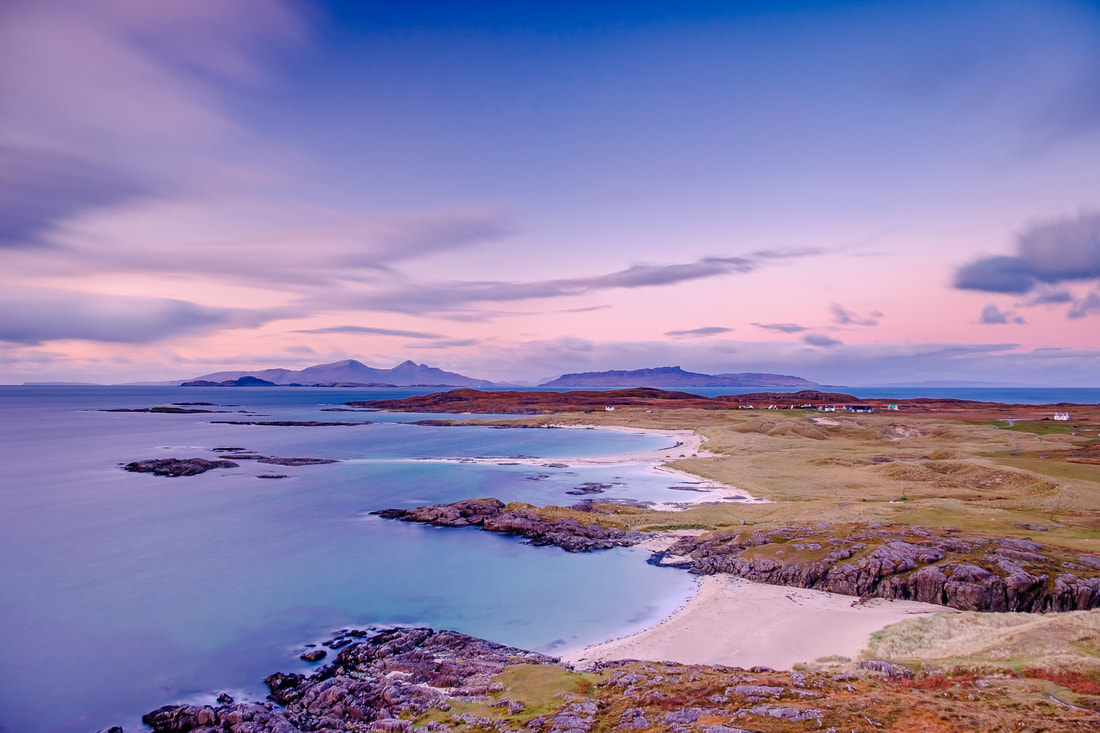 Image 16: Sanna Sundown I - Sanna Bay, Sanna, Ardnamurchan While there, it is well worth taking the walk from Portuairk to the beautiful white sand beach at Sanna because, as you climb over the hill that separates the two, another magnificent view of the Small Isles reveals itself (Image 16). It is from there that you can see all the Small Isles because the fourth and, up until now, elusive Isle of Canna reveals itself. If you stop there for a little whole and look north over the beach you can just make it out, sitting well out the west of the Isle of Rùm, which has Eigg to its east and Muck to its south. Journey’s End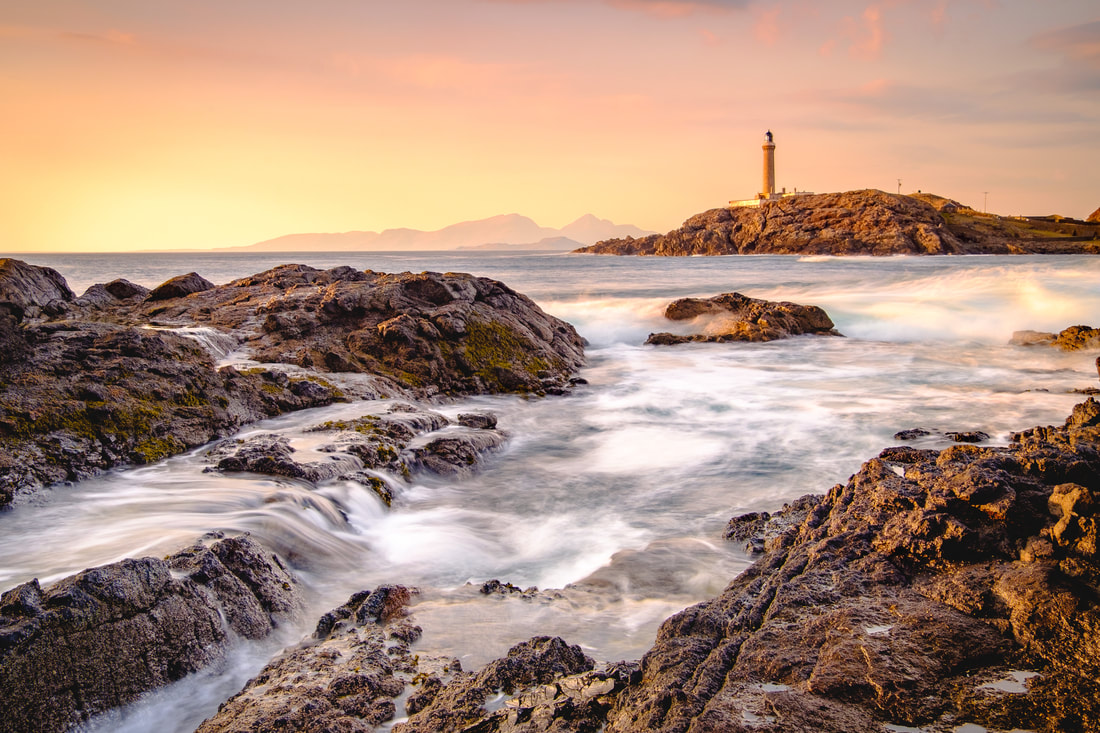 Image 17: Wave Symphony I - Ardnamurchan Lighthouse from Dubh Rubha Mor, Ardnamurchan Our journey from east to west along this beautiful Moidart and Ardnamurchan coastline ends at Ardnamurchan Point. It is as far west as you can go on the British Mainland and is home to the iconic Ardnamurchan Lighthouse which so many visitors head for when they visit the West Highland Peninsulas.
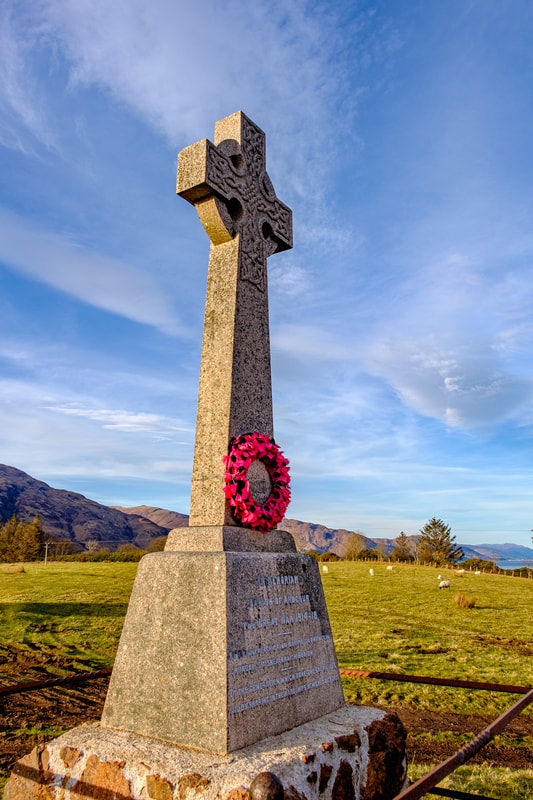
While you do get a clear view of the Small Isles from there, they do not readily sit in any photographic composition that features the lighthouse because the camera tends to point in a direction looking away from them or is at an angle where the islands are hidden by the lighthouse itself. It takes a walk out on to the rocks of Dubh Rubha Mor at low tide before you can point the camera north, across the bay of Briaghlann, and capture both the lighthouse and the now familiar profile of Rùm and Muck behind it and it seems fitting that I end this journey with an image of the sun setting on this very scene (Image 17). With some time to spare after travelling back across the Corran Narrows on the ferry, I found myself up at the Ardgour War Memorial looking at signs of something that had gone before which had been a small part of a huge military project that is thought to have played a key role in bringing World War I to an end …. 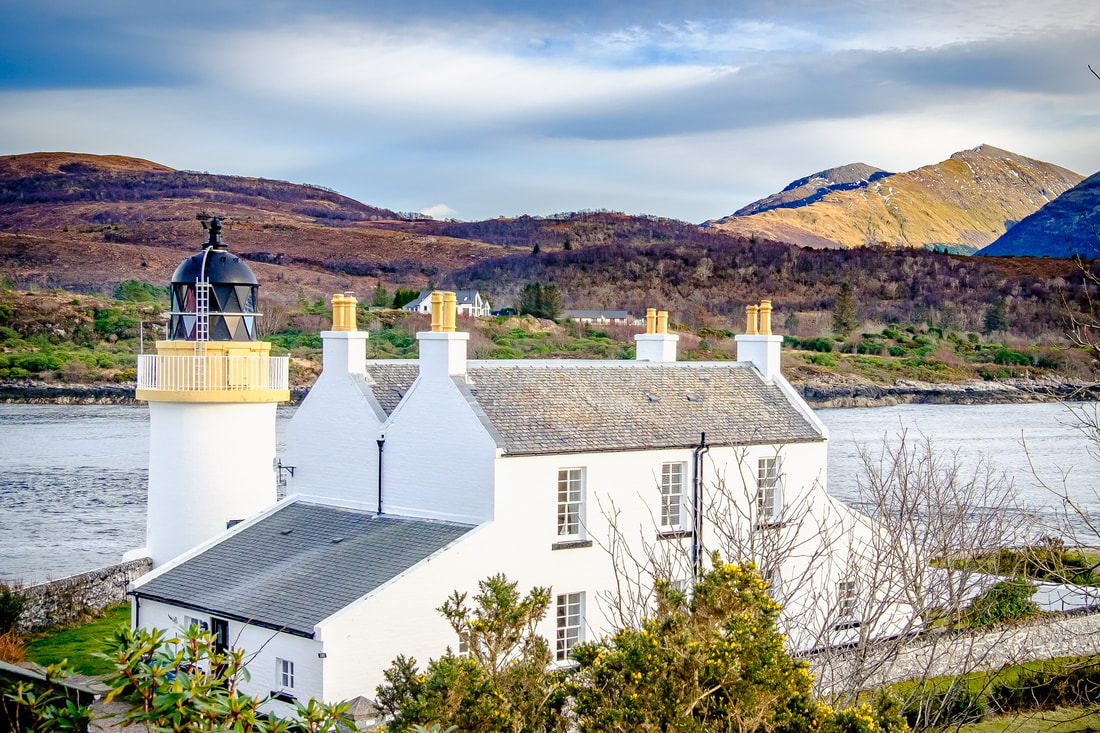 Corran Lighthouse and Lodge in the Spring Sunshine Time on my HandsLast week, I found myself with an unexpected hour or so to spare at Corran Point, so decided to go for a walk and find the Ardgour War Memorial, which is located up on a bank just south of the lighthouse and above the road. The main reason for doing this was to scout out the location in advance of me going there at some point after dark to photograph the Memorial under the stars. This is something that I do when preparing for most of my night shots as it is so much easier to figure out a composition in daylight than it is in the pitch dark. 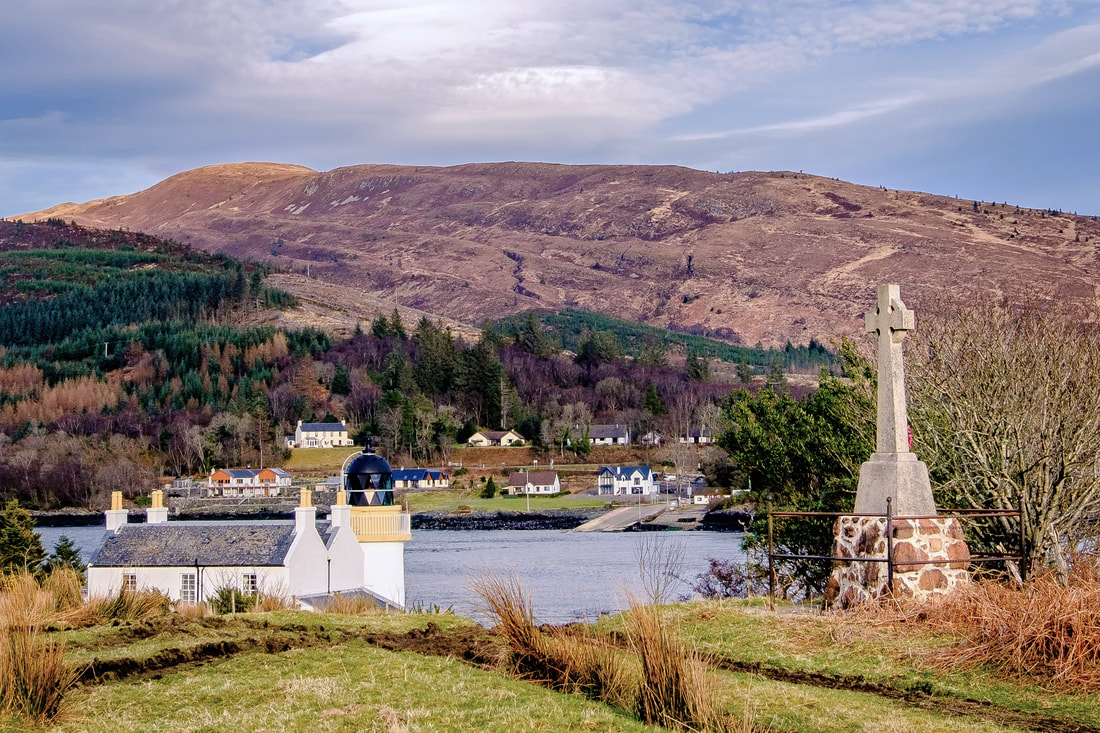 Ardgour War Memorial near Corran Lighthouse Having walked from the Corran Ferry, I reached the bend in the road by the Lighthouse and followed a track up into a field beyond a metal gate. I found the War Memorial at the top of a bank overlooking Loch Linnhe, with expansive views all the way down its full length to the south. The Memorial itself is typical of the many that you find scattered across the Highlands, consisting of a granite Celtic cross and plinth mounted on a base of what seemed to be made of local stone.
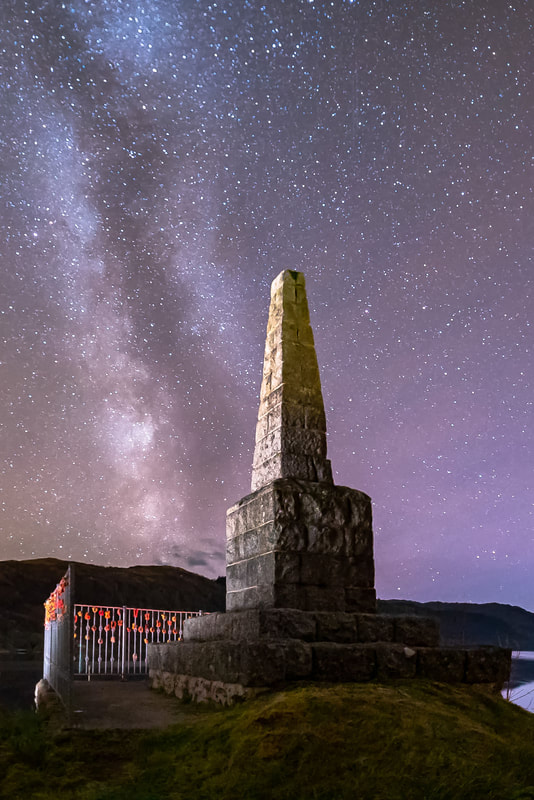
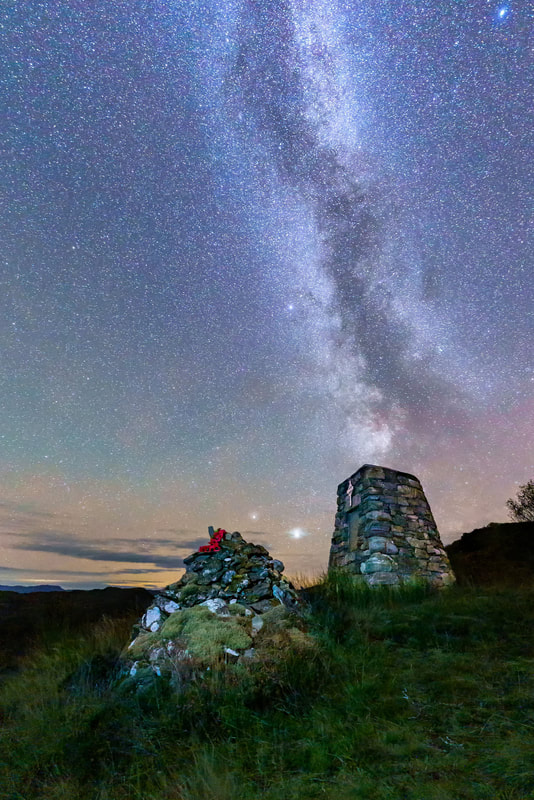
Gradually, I began thinking ahead to my future shot of the War Memorial under the stars and, eventually, I began looking at different shot angles of the Memorial to see if I could find some compositions that might work for the photograph that I had in mind. My plan is to take it later in the year when the Milky Way will be at its best, with its cloudy core above the horizon in the south to south-west sky. My aim is to produce something similar to these two shots that I’ve taken of the Strontian and Moidart war memorials in previous years.
While doing this, I noticed that the Memorial’s stone base was sitting on what appeared to be a metal ring with several bolts protruding from it. You can see the metal ring and bolts in the picture below and the more that I thought about them, the more I couldn’t help wondering what they had been used for. 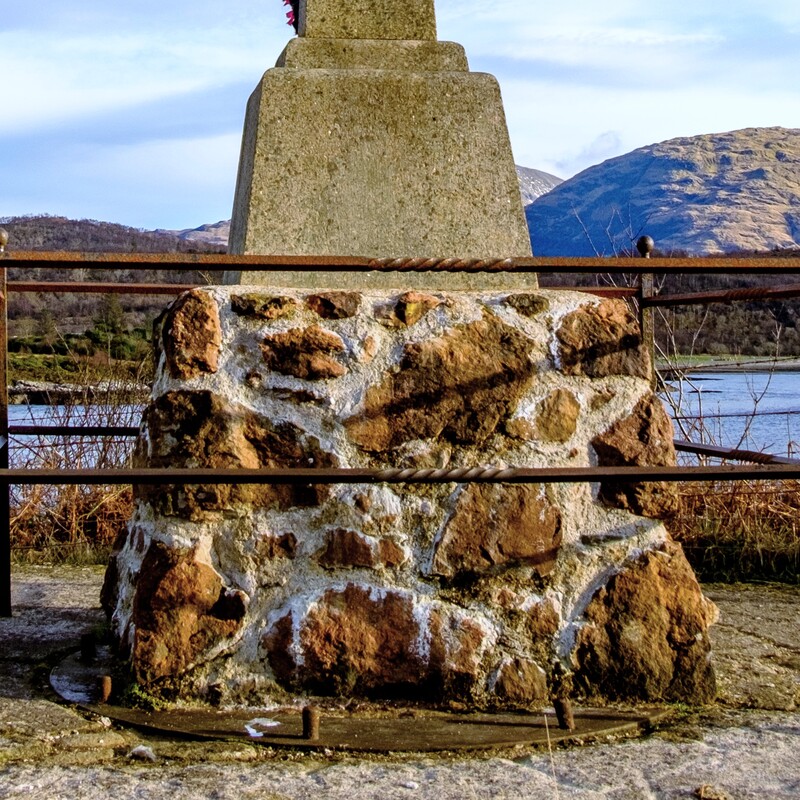 The Base of the Ardgour War Memorial Playing on My MindThis played on my mind for a day or two, leading me to do a bit of research to find out more about them. After looking at a few sources, I found some information in the Highland Historic Environment Record, that suggested that a gun battery was built on that spot in 1917, to provide protection for the United States ships unloading naval mines at Corpach that were then transported in smaller boats through the Caledonian Canal to the US Naval Base at Inverness. Further research uncovered a report titled “The Built Heritage of the First World War in Scotland” that was commissioned by Historic Scotland which confirms that the gun battery was built there and that it comprised two 15-pdr guns and one 7.5-inch howitzer bolted down onto steel rings called holdfasts, which were set into plain concrete slabs. It turns out that the War Memorial was built on one of these concrete slabs and the steel ring at its base is one of these holdfasts. The Imperial War Museum does have a photograph of the gun battery which was taken in 1918 and shows the Royal Marine Gun Crews manning the guns. In it, you can see that there is no parapet around the guns and that the ammunition for them was stored in wooden lockers close by. I’ve asked the Imperial War Museum for a licence to publish this photograph and hope to be able to share it with you at some point. A Small Part of a Big PictureAnother question came to my mind while I was researching all this – Why was the United States Navy shipping naval mines to Corpach and then transporting them up the Caledonian Canal to Inverness? Well, the answer is that the mines were being used in the North Sea Mine Barrage which was a large minefield laid easterly from the Orkney Islands, right across the top of the North Sea to Norway with the aim of preventing the U-Boats making their way from their bases in Germany and out into the Atlantic to attack the convoys that were bringing supplies from the United States to the British Isles. Laying this mine barrage was a huge undertaking and until World War II, it was the largest ever laid. It spanned the entire 230-mile width of the North Sea from Orkney and Norway and was between 15 to 35 miles wide. The Allied Forces began laying the mines in June 1918 and within a matter of a few months they had laid just over 70,000 of them at a total cost of just over £1bn in today’s money. The barrage was considered to be a great success and is credited with the destruction or damage of up to 21 U-Boats, but probably its greater effect was in shattering the morale of German submarine crews, thus helping to bring about the revolt of German seamen that marked the beginning of the defeat of Germany in World War I. Hidden HistorySo there you have it, a tiny little bit of history hidden beneath the Ardgour War Memorial in the form of a steel ring and some bolts giving a small clue of something that went before. I would never have thought that these incongruous bolts would have been part of what today would be the equivalent of a £1bn military project that is thought to have played a key part in bringing World War I to an end. A war that left more than 16 million people dead and also helped to spread one of the world’s deadliest global pandemics, the Spanish flu epidemic of 1918, which killed an estimated 20 to 50 million people. Poignant, very poignant indeed.
We’re coming to the end of this winter. One during which we had the coldest January since 2010. One of snow and of cold and clear weather and one that has been productive from a photographic perspective. See some of the images I’ve captured and find out a bit about the story behind them…. 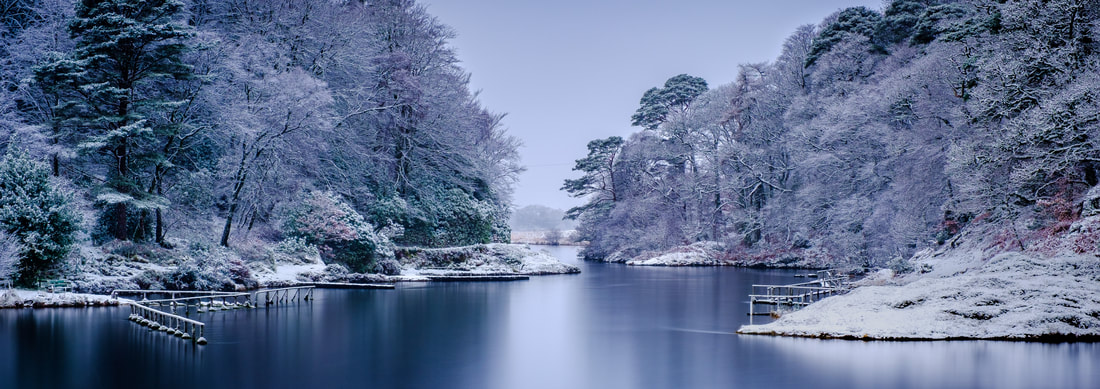 Steely Winter Blues - River Shiel, Blain, Moidart How Do You Cope with all the Snow?We are fast approaching the start of Meteorological Spring (March, April and May) and also the end of my fifth winter since moving to the Peninsulas. There is a noticeable difference in the hours of daylight as the nights shorten and it will not be long before the landscape begins to spring back into life. I find myself thinking back on the winter months of December, January and February; and also a question I’m often asked by people visiting – “How do you cope with all the snow in winter?” Why this question gets asked always intrigues me. It seems to always happen when standing on the decking outside my studio looking at Loch Sunart and all the hills that surround it. Could it be because this remote and rugged landscape looks foreboding? Could it be because we are well north of where most people live? Who knows? Well, whatever it is, my answer is always the same - “It’s never a problem here as we don’t get that much snow and when we do get it, it is usually only high up on the hills. In fact, if the snow does fall down here at sea level, it only lasts a day or two at the very most and I guess that being on a bit of land that sticks out into the sea on the west coast means that the Gulf Stream keeps the temperatures up”. This is indeed true and it is complete contrast to the snowy winters I experienced when growing up on the east side of Scotland when, in the days without central heating, thick frost would form on the inside of the windows and we’d need to scrape a little hole in it to reveal what was outside. I do miss “proper” winters like that, but looking back over the last few months, it certainly feels as if we’ve had one this time. In fact, we’ve just had our coldest January since 2010, with the average temperature recording in Scotland being 0.6°C while my weather station here at Resipole recorded an average of 2.9°C. The strong northerly air flow that brought the low temperatures also brought substantial sunshine with it and plenty of cold, crisp and clear days on which I just had to get out with the camera. First Snow and Winter InspirationLooking back through my images from the last few months reminded me that this “proper” winter weather was not just limited to January. Indeed, we saw our first snow at the end of November while having a staycation at Kingairloch Estate over on the east side of the Peninsulas. We woke up on a morning towards the end of our week away to see snow on the distant high peaks of Glencoe and the Mamores. This prompted a drive up the shore of Loch Linnhe to get a closer look. The snow-capped mountains looked lovely under the clear blue sky and we just had to stop at Lochan Doire a' Bhraghaid to take in the view. From there you get a fantastic view of Ben Nevis because you can see it through a gap in the hills above Inversanda. While there, I took this shot of the snow-covered slopes of Ben Nevis, some 17 miles to the north and made a mental note to myself to come back at some point and capture it when it had the first light of a winter day on it. 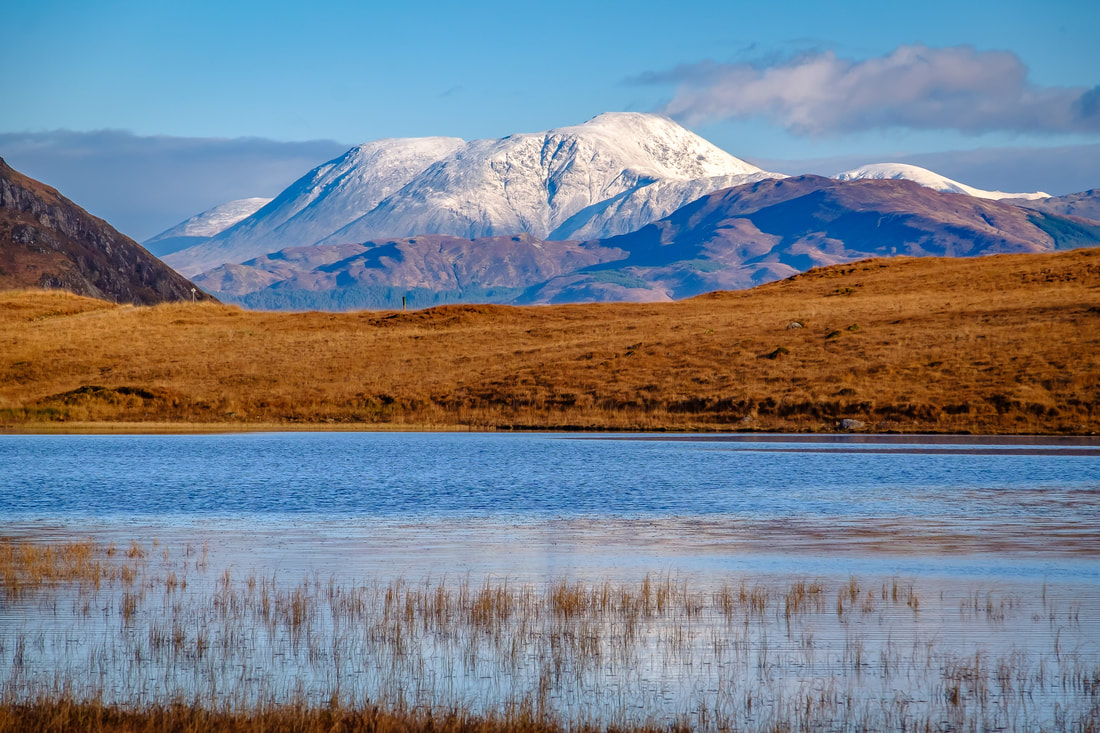 First Snow on the Ben I - Ben Nevis viewed from Lochan Doire a' Bhraghaid, Inversanda, Ardgour Searching for Some LightThis first of the winter snow on the hills lasted for just over a week, but before it disappeared, I headed to West Ardnamurchan and up to a spot high on the slopes of Beinn Bhuidhe above Glenmore. It’s a great place to capture panoramic views of Loch Sunart or use a long lens to not only pick out elements of the high hills of Morvern on the other side of Loch Sunart, but also of Loch Teacuis, which cuts its way southwards into them. Unfortunately, I always seem to time my visits to the slopes of Beinn Bhuidhe on days when the light does not want to do what I need it to do. I’ve lost count of the number of times I’ve left Resipole under promising looking skies only to arrive at my spot and find thick cloud and no light on the landscape. I thought that this time was going to be another like that because thick cloud greeted me on my arrival. As I followed the path up to Beinn Bhuidhe, I kept looking at the cloud filled sky in the hope that it would clear a little and let through some light, but it didn’t. Undeterred, I set up at my chosen spot and sat for about an hour, sheltering as best I could from the biting easterly wind, while looking through the long-lens I’d fitted to the camera in search of some compositions that might work if the light did appear. I had almost given up hope, but in the few minutes before the sun was due to dip below the hills to the south-west, a small gap appeared to let a patch of light fall on the snow-capped peak of Beinn Iadain, one of the high peaks of Morvern. The resulting image shows the peak of Ben Iadain sporting a crown of golden light with the north facing slopes of Beinn Ghormaig, the Isle Carna and the Isle of Risga sitting in front of it. 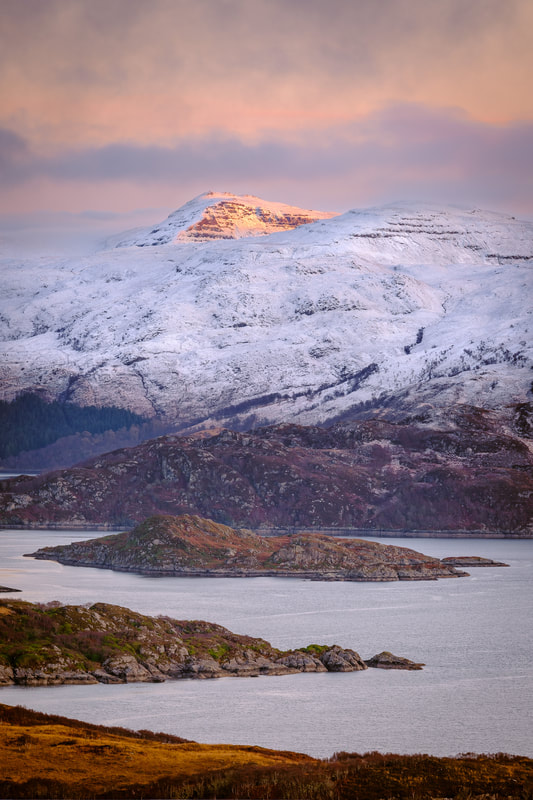 Golden Crown I - Beinn Iadain, Morvern An Afternoon of SerendipityThankfully, not all my shots are so hard won and occasionally good fortune smiles on me. In early December, a few weeks after my time on Beinn Bhuidhe, I had a batch of Christmas orders to take to the Post Office in Acharacle and while packing them all into the car, I could not help but notice some hints of colour appearing in the sky to the west. It looked promising, so I decided to take my camera gear with me just in case. I sure wasn’t disappointed with what unfolded. As I drove down into the village, I could see the mist beginning to form in the air above Loch Shiel, so instead of going straight to the Post Office, I took the short detour down to the jetty in village to check out the conditions on the loch. As I stood on the jetty, I watched the pinks and purples of a winter sunset intensify while mist rolled down the loch and I couldn’t help but feel an overwhelming sense of calm, as well as whole load of good fortune about my decision to take my camera gear with me. I was there for well over an hour, photographing scenes in different directions and under different light conditions before deciding that I really needed to get to the Post Office before it closed. Both jobs done. Parcels posted and a number of “keepers” captured including this panoramic image of the sunset colours at their peak. 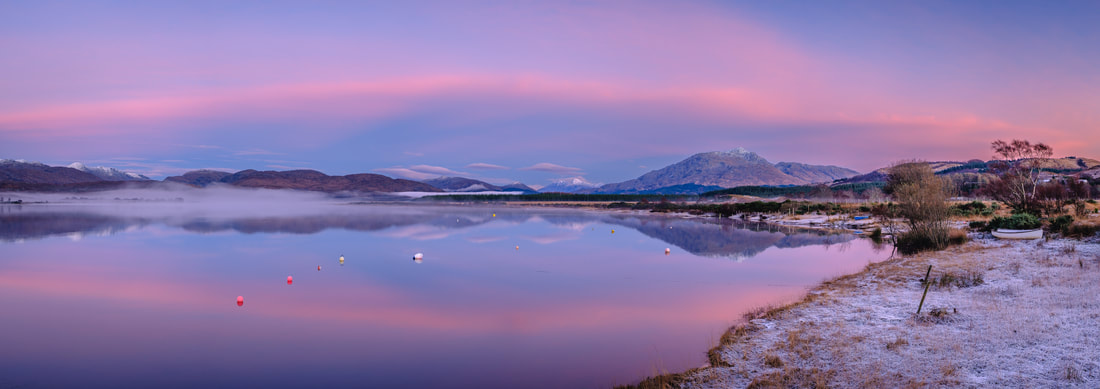 Descending Calm - Loch Shiel, Acharacle, Ardnamurchan A Plan Comes TogetherFinding myself in January and in a new year, my mind was still set on capturing the shot of the first light of the day on the snow covered peak of Ben Nevis. The shot that I had thought of when I saw the first snow of this winter on the hills back in November. With clouds usually covering its summit for nearly 80% of the winter months, photographing Ben Nevis sure turned out to be a bit of a wating game. There needed to be a clear morning during a spell of the weather cold enough to put snow on the Ben and freeze the surface of Lochan Doire a' Bhraghaid. Finally, at the start of the second week in January, the conditions seemed very promising and I headed up into the hills above Inversanda for sunrise in the hope that I’d get the shot I was looking for. Setting up in the dark, I couldn’t see if Ben Nevis was clear of cloud, but the moon and stars above my head suggested that it could be. As I waited for the first light of what was a very cold January morning to appear, the mountain began to emerge from the darkness and it looked as if my luck was in. Eventually, the first light of the day shone on its south facing upper slopes and there was just enough cloud to enhance the pink of the sunrise which, even at a distance of 17 miles, was reflected back onto the frozen surface of the lochan. I love it when a plan comes together. 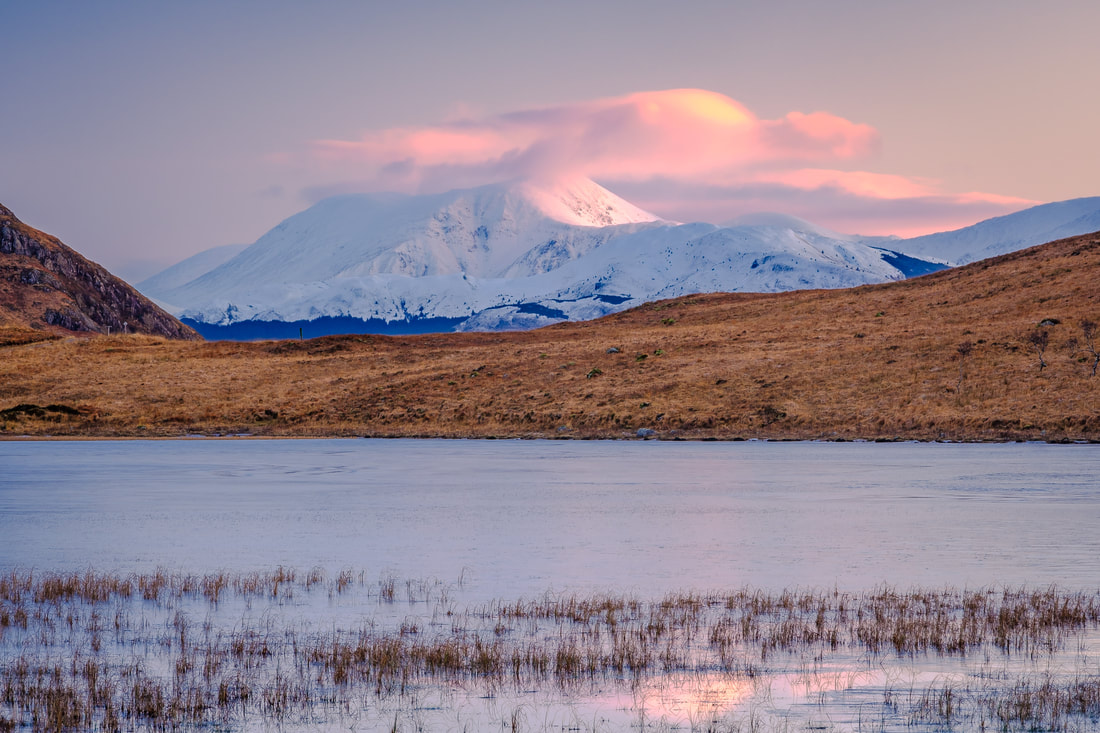 First High-Light I – Ben Nevis viewed from Lochan Doire a' Bhraghaid, Inversanda, Ardgour Time for a Plan BThe last week in January brought a few days of very heavy snowfall which, very unusually left a couple of inches of the white stuff all the way down to the seashore. Equally unusual were day and night-time temperatures so low that the snow at sea level did not disappear. As I watched successive tides wash fresh falls of snow from the loch shore, I thought that an image of snow lying on a sandy beach all the way down to the water would be worth capturing and that the beach at Ardtoe would be a great place to do it. With this in mind, I awoke early on a morning after heavy overnight snow had been forecast. On opening the curtains to a freshly snow-covered landscape, I decided to head out to Ardtoe. With much anticipation, I left the house but as I drove closer and closer to my destination the clear skies became more and more obscured by mist. This is not unusual because the low ground around Loch Shiel often cradles mist on cold and still winter mornings. So undeterred, I continued my journey to the beach as experience suggested that it would be clear there. However, it was not to be and I was greeted by a snow-covered beach shrouded in thick mist. The more I waited for the mist to clear, the thicker and thicker it seemed to become, so I eventually decided to head home. On the drive back through a beautiful snow-covered landscape, I thought that the conditions were too good to submit to failure and began racking my brains to figure out a place where a combination of misty conditions and fresh snow fall could work together. I eventually decided to take a small detour to the old bridge over the River Shiel at Blain to see what it was like there. When I arrived, I was not disappointed. The scene was stunning with all the trees covered in the freshly fallen snow and some beautiful light fighting its way through the mist behind the bridge. After an extremely productive half hour, I left with a few images, including this one of the bridge, with the river beneath it coloured by golden light fighting to break through the mist behind it. Thank heavens for a little local knowledge and for figuring out a Plan B. 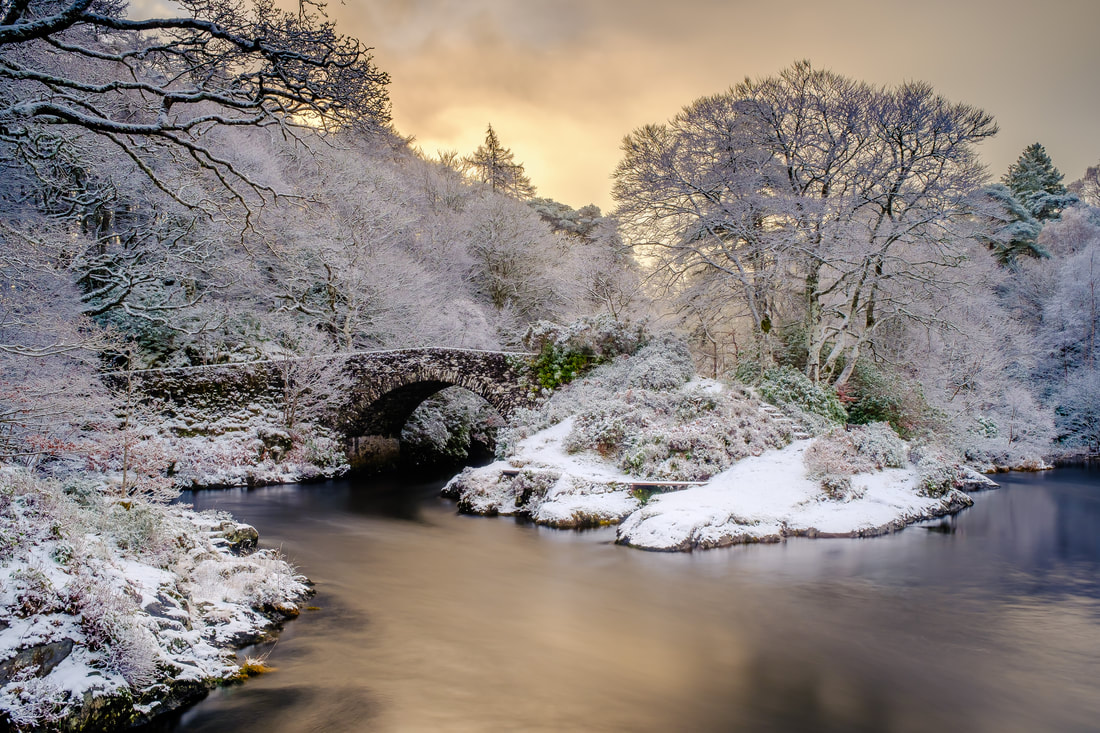 Winter River of Gold I - River Shiel, Blain, Moidart A Winter I Will RememberIt’s been a winter just like the ones I remember from my childhood. I’ll remember it not only for its snow and its cold, clear days but also for it being a winter that has given me an extremely productive time for my photography. The images I’ve included in this blog are just a small sample of those that I’ve captured and if you’d like to see more, you can find the in the Recent Images Gallery on this website. I hope you enjoy them.
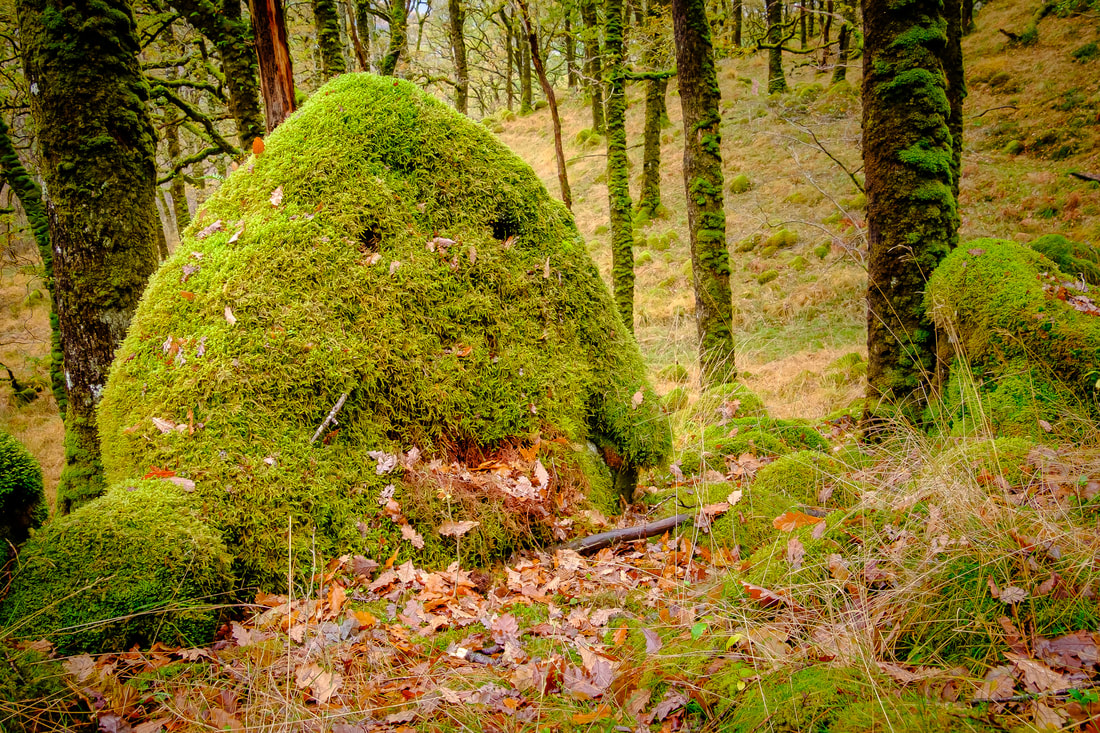
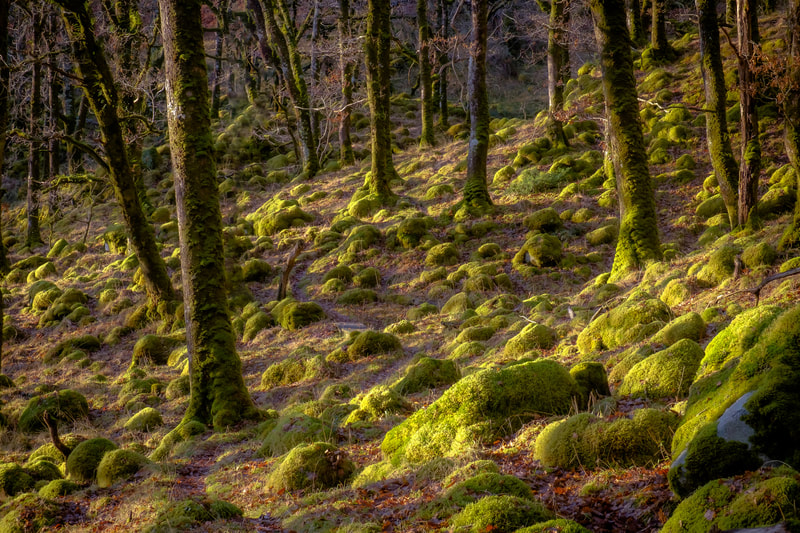
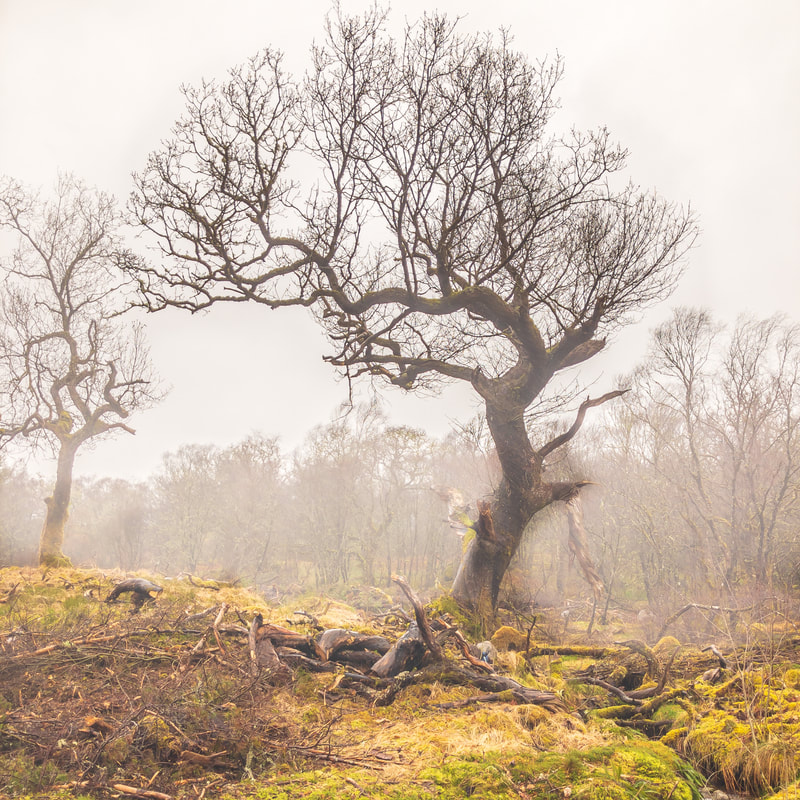
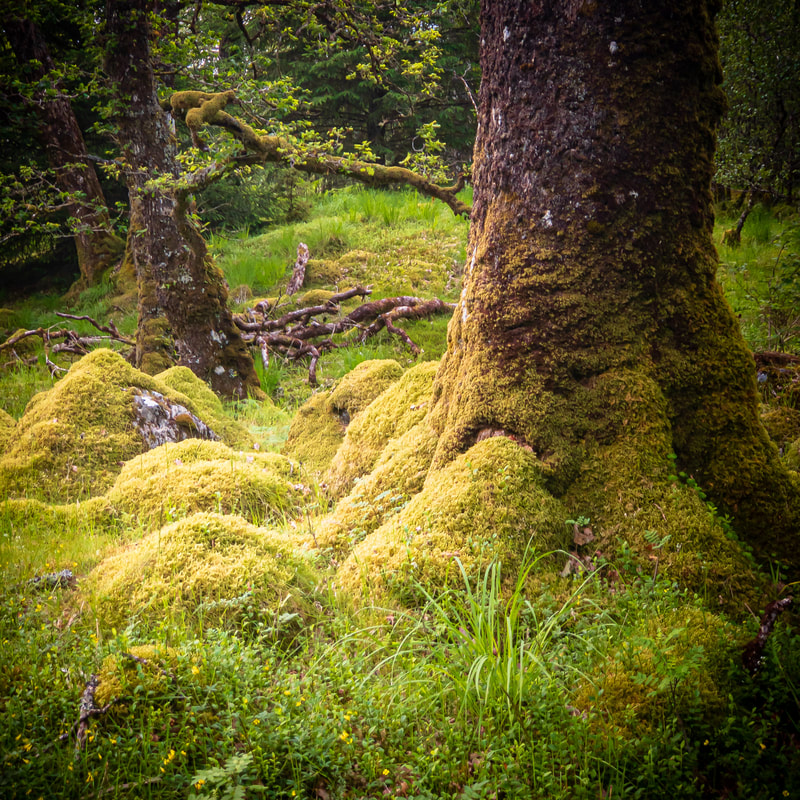
I took the following photograph on a late winter afternoon as light fell on some of the hundreds of moss-covered boulders that lie amongst the trees in Ariundle Oakwood near Strontian and couldn’t help being reminded of the faerie mounds where the sídhe are said to live. Read on to find out more about these mythological creatures…. 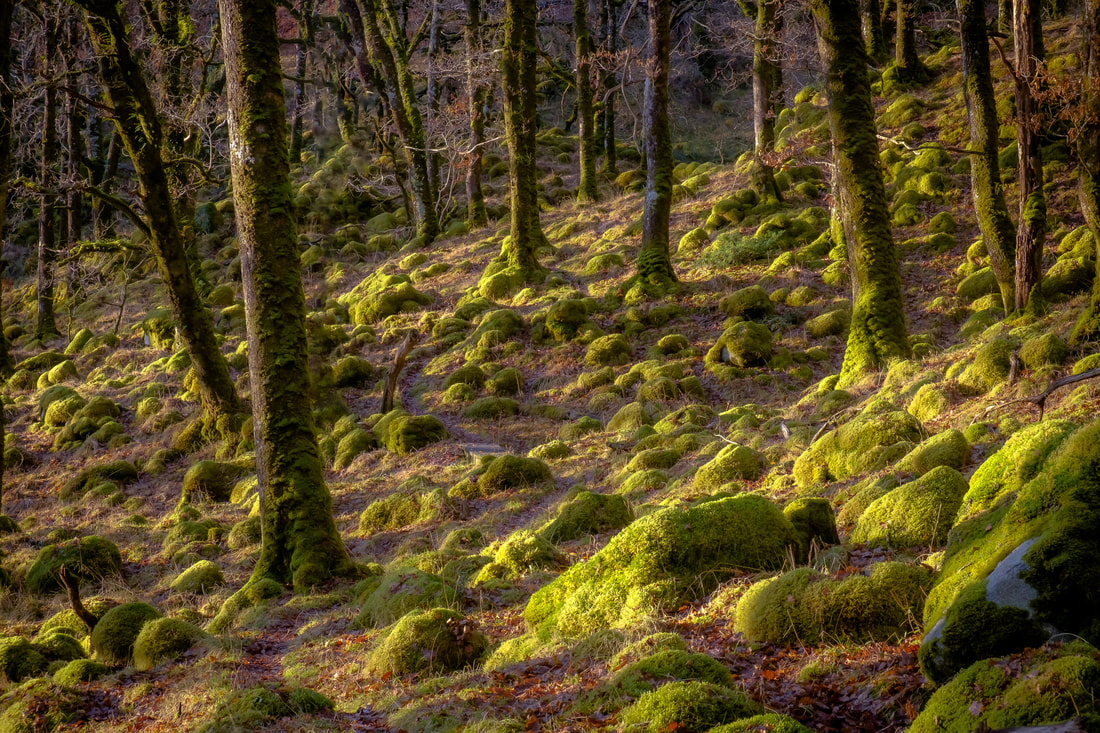 Light falling on what looks like faerie mounds - Ariundle Oakwood near Strontian What’s in a Name? If you take a walk through Ariundle Oakwood, you’ll see a woodland floor covered with hundreds of moss-covered boulders which, with a little bit of imagination, could be mistaken for mounds that are home to the mythological sídhe, a supernatural race comparable to the faeries or elves. Indeed, the nearby village of Strontian got its name because of the faeries. In Scottish Gaelic, it is called Sròn an t-Sìthein, which translates as the ‘nose of the fairy hill’ and means a knoll or low round hill inhabited by the sídhe.
Going back to Strontian, or Sròn an t-Sìthein, the term sìthein (pronounced shee-an) often referred to small conical hills with hollow interiors containing an invisible world within which it was believed that faeries coexisted with the world of humans. They were thought to have had a huge influence on how successful the annual harvest would be and if a crop failed it was sometimes thought that someone had violated or upset them. So, before you decide to go walking in the fields or forests by yourself, it is perhaps best if you know a little bit about the various faeries, their significance and how not to upset them. Respect, Honesty and No Green Most important of all is to never let a faerie overhear you calling them faeries as they do not like this. They prefer to be called ‘fair folk’ and are very sensitive creatures, so do not be rude, or you might suffer the consequences. Also, you should always be honest with a faerie as they will know if you have lied to them, and not surprisingly, they don’t take kindly to that either. Finally, wearing the colour ‘green’, is also not advisable, as faeries see this as a colour that belongs to them. There are many different kinds of fairies. Some take on human form, some take the form of creatures, some can fly, and all can appear and disappear at will. Some will fool you with comical antics, some will lure you with beauty and some will just plainly let you know how they feel about a human intrusion. Coming across ‘fair folk’ like Buachailleen, Brownies, Gnomes, the Gruagach, Heather Pixies, Pixies and Seelie Courts can be a very rewarding and magical experience, as most of these faeries enjoy being mischievous, shy and friendly. The same cannot be said for the Ghillie Dhu, Kelpies, Nucklelavees or Fachans. Most of these faeries dislike humans intensely and an encounter with one of them folk could end badly for you. In particular, make sure you avoid the Black Angus or Cù-sìth, which means "faery dog". If this large black dog with yellow eyes and sharp fangs shows itself to you, the legend says that you will die in a fortnight. Belief in the ‘fair folk’ continues to this day, with stories being told in the early twentieth century of unwary humans being lured inside the sìthein at night, only to emerge the following morning and discover that decades had passed in the outside world. Other tales detail the abduction of unbaptised babies, or doomed romances with the fairy folk, and the various ills which befell those who dared to refuse them hospitality. Even as recently as January this year (2020), plans for a fish farm in Loch Pooltiel off the north-west coast of Skye were rejected after campaigners warned that fishermen could be lured to their deaths by Ashrays. Also known as Asrais, these faeries are completely translucent water creatures and are often mistaken for sea ghosts. A group of campaigners called Friends of the Eilean Fhlodaigearraidh Faeries warned that workers' lives could be put at risk by the creatures, who could 'lure them with promises of gold and jewels into the deepest part of the ocean'. It’s not all bad though, because as long as you respect the faeries and stick to the rules how not to upset them, then you should be safe on your walk through the oakwoods. Remember to call them ‘fair folk’, do not be rude or dishonest and finally, don’t wear green. Images of SunartYou will find other images of Ariundle Oakwood and the wider area of Sunart in the Images of Sunart gallery on this website. If you’d like a print of any one of them, please feel free to get in touch. Also get in touch if you’d like to arrange some photography tuition.
If you're planning a visit here to the West Highland Peninsulas of Ardgour, Ardnamurchan, Moidart, Morvern and Sunart, then here are some tips on how best to enjoy some of the darkest night skies in Europe 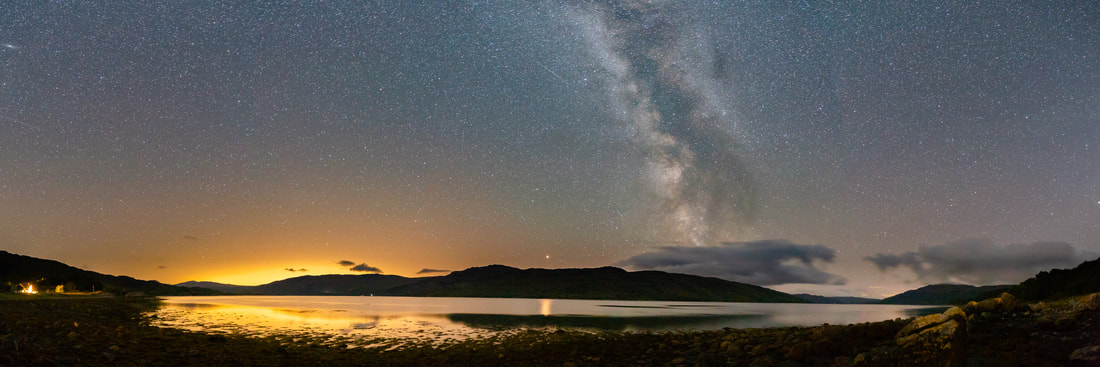 The autumn night sky from Rockpool House After living for almost 30 years in and around Glasgow, I moved to Rockpool House located right on the shore of Loch Sunart and was immediately blown away by the number of stars I could see in the sky on a dark, clear night. Three years have passed and my interest in night photography has become a passion that produces some of my most popular images and the recent acquisition of a telescope now has me doing a bit of stargazing. So, in this blog, I thought I’d share a few tips for exploring the night sky if you visit here and find yourself a under a sky that is so dark that you can see the Milky Way and over 7000 stars. Where to Go While I can walk out of the front door and see these 7000 stars, I usually go a little further afield to photograph the landscape under the night sky. I usually look for places with a clear view south or south-west to photograph the Milky Way and places with a clear horizon to the north that overlook water to photograph the Northern Lights. If you are here, then I suggest that you go to one of the seven places that are listed on the Dark Skies page of the West Highland Peninsulas website. When to Go I find that the best time to photograph or look at the night sky is in the time window between 2 hours after sunset and 2 hours before sunrise. As we are pretty far North, this means that the best times of year to look are Autumn, Winter and Spring when the nights are long and dark enough. Also, the light from the moon can make it difficult to see the stars, so it is best to look when there is little or no moon in the sky. Given this, it is best to check our local sun and moon times to decide when best to go out. You should also check the weather for when clear nights are forecast. How to Look
What to See
You will find the images featured in this blog, along with many more, in the “Our Night Sky” photo gallery. If you’d like a print of any one of them, please feel free to get in touch. Also get in touch if you’d like to arrange some night photography tuition.
|