|
This month’s thoughts come from a set of six images taken one morning when I decided to explore the boggy ground around the head of Loch Moidart at Ardmolich. I had driven by there the night before on my way to Glenuig and my eye was drawn to a large swathe of cottongrass that covered much of what I could see. This fluffy headed plant is a common sight on the Peninsula from around late May and into midsummer. In many places they are dotted here and there, but occasionally they form more substantial stands such as the one I had spotted and when they do, they are well worth photographing.  Cotton Grass I: Ardmolich, Moidart Despite its appearance, cottongrass, also known as bog cotton or ghost grass is neither cotton or grass. It is in fact a sedge, which is a group of plants that are closely related to grasses. Three species of cottongrass are likely to be found in Scotland: Hare’s-tail Cottongrass, Common Cottongrass and Broad-leaved Cottongrass. All three love damp, acidic environments so are well at home in the peat filled salt marsh that is at Ardmolich. Hare’s-tail cottongrass has just one ‘cotton’ head at the tip of its stem in the form of a tidy, almost spherical tuft, reminiscent of the tail of a rabbit or hare, hence the name. On the other hand, broad-leaved cottongrass and common cottongrass both have several and more unkempt ‘cotton’ heads drooping from their stems that look a bit like cotton wool that has been pulled apart. Having looked at the plants I was photographing, I decided that they were common cottongrass because of the narrow leaves and stems that they had. I wandered around the salt marsh, carefully making my way around innumerable water pools and across countless tussocks until I found myself in the middle of a sea of white, fluffy seed heads gently swaying in the slight morning breeze. I knelt down to take a closer look at the tufts of ‘cotton’ and found myself with an eye level view across the top of them to the hills at the other end of Loch Moidart. It was from there that I took my first photograph, using a long focal length to compress and emphasise the sea of white that floated before me.  Cotton Grass II: Ardmolich, Moidart With the wide perspective shot taken, I focused my time on taking a series of shots that captured the cotton grass in more detail, eventually homing in on a single plant that I was able to isolate from all the others around it by using careful composition and a wide aperture. Coming to the end of doing this, I began to wonder if this fluffy, delicate plant had been used for anything in the past and if it had any folklore associated with it.
Unsurprisingly, one of the primary historic uses of cottongrass was as a stuffing material, particularly by rural communities where resources were limited, and every available material was put to good use. I found references to its downy fibres being used as an insulating stuffing for pillows, mattresses, for lining shoes and even as an absorbent pad for infants to use at night instead of a nappy. When it comes to Scottish folklore, one common theme appears to be the association of cottongrass with the faeries. A number of tales describe cottongrass as one of their favourite plants because they used the soft, fluffy tufts to make their beds, while other tales have described patches of cotton grass swaying gently in the wind as the sight of faeries dancing. However, it is in Shetland where the clearest association of cottongrass and mystical beings exists. It is known locally as Lucka Minnie’s Oo, or wool. A witch from Shetland folklore, Lucka Minnie, was said to roam the hills in summer to collect this wool, which she’d process on a card obtained from the faeries and then use it to knit her clothes. When I tried to find out a bit more about her, I came across two conflicting stories. One described her as a fearful ‘trow’ or troll who met her end while chasing after a young boy who she’d intended to eat for her dinner. The other painted her as a rather benevolent character who would guide lost travellers through treacherous boglands by revealing paths marked by distinctive clumps of cottongrass. I guess that if one were to be true, I hope it would be the latter, which I think would be a fitting tale to link with the delicately beautiful tufts that are the seed heads of the cottongrass.
0 Comments
Despite June being colder than normal, the greening up of the landscape we saw in May was followed by a profusion of wildflowers coming in to bloom to cover the landscape with a multitude of bright colours. This year, it seemed to me that the most prominent amongst them has been the foxglove, with its tall purple spire of bell shape flowers often found rising above dense blankets of bracken that cover the ground from late May onwards. Their size and colour make them visually striking plants and a pair that I found out at Dorlin one morning provided me with the ideal subject on which to anchor this shot of Castle Tioram.  Duo Digitalis II - Castle Tioram, Dorlin, Moidart While foxgloves, scientifically known as Digitalis purpurea, are undoubtedly striking plants, they are renowned for their potent medicinal properties and have played a key role in treating heart conditions. In the late 18th century, the English physician William Withering discovered that digitalis, an extract from the foxglove, contained digitoxin and digoxin. These two compounds help strengthen and regulate the force of the heart contractions and have been used to treat irregular heartbeats and manage the symptoms of heart failure. In the past, digitalis has had other medicinal uses and was listed in Nicholas Culpeper’s 1652 herbal medicine guide, The English Physician, as a treatment for “the falling sickness”, or epilepsy. One famous person who may have been treated with digitalis for epileptic seizures was Vincent Van Gogh. Many art historians believe that the yellow haze that this would cause in the sight of patients receiving this type of treatment may be responsible for his “yellow period”. This was a time when yellow dominated many of his paintings, and particularly The Starry Night, a painting in which a yellow corona surrounded the moon and each star in it.  The Starry Night by Vincent Van Gogh 1889 Source: Wikipedia Commons When it comes to folklore, views are divided on where the common name for Digitalis purpurea comes from. In some parts of Scotland, there is a strong association between the plant and faeries, with foxglove seeming to be a corruption of “folksglove” thus implying that the flowers were the gloves of faeries. In this context it is believed that these gloves are worn by these mystical beings to help them avoid leaving fingerprints when meddling in human affairs.  Duo Digitalis I – Camas nan Geall, Ardslignish, Ardnamurchan Another myth tells of the foxglove’s bell-shaped flowers being used as little hats or homes by faeries, with children often warned against picking them to avoid offending the fairies who might live inside them and to not bring misfortune upon themselves. Foxgloves were also thought to have protective properties and hanging a sprig of foxglove outside a house was believed to ward off evil spirits and protect the inhabitants from harm. While in some areas, foxgloves were planted around homes and barns to safeguard against witchcraft and to ensure the health and safety of livestock. Alternative folklore suggest that the name “foxglove” comes from the idea that the flowers are the right size and shape for foxes to wear on their paws. According to this legend, foxes, known for their slyness and stealth, would put the flowers over their paws to muffle their footsteps as they hunted or avoided predators. This idea not only highlighted the fox’s cunning nature but also lent an almost magical quality to the foxglove plant, suggesting that it provided some supernatural aid to these clever animals.
I don’t know what it is, but I find that my eye is frequently drawn to the sight of a croft house sitting isolated in the landscape here on the Peninsula. It as if each one of these small and rather innocuous buildings has a story to tell and I guess this is why I find them so profoundly captivating. When it comes to a photograph of one, it is certainly true that a picture paints a thousand words. It’s almost as if the image is inviting me to immerse myself in a narrative that intertwines history, culture, nature, and human resilience. 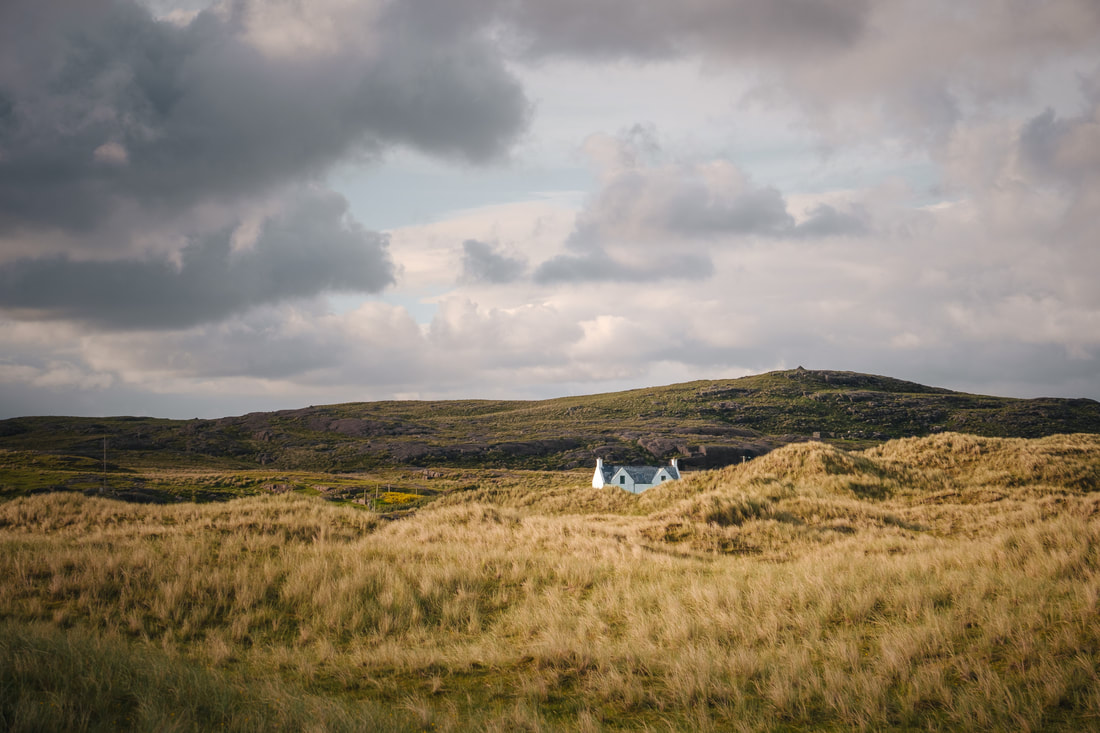 Among the Dunes - Sanna, Ardnamurchan The narrative begins with their construction, in a time when the Scottish Highlands was sparsely populated, and life was dictated by the seasons. Back then they would have had sturdy stone walls with rounded corners to help combat the wind and treasured timbers would have supported a thatched roof. The use of locally sourced materials in these parts of the building standing as a testament to the craftsmanship and ingenuity of the crofters who had to live in harmony with their surroundings in order to survive. One can only imagine the challenges faced as the occupants practiced subsistence farming, growing crops like barley, oats and potatoes, and rearing a few cattle and sheep. However, despite the hardships, my sense is that the crofting way of life fostered a strong sense of community and mutual dependence, with the crofters working together during peak times, such as at harvest time and peat cutting. Indeed, the communal working and gatherings at important agricultural milestones would have provided opportunities for celebrating together. So, when I look at these houses, I can almost hear the murmur of voices and the echoes of laughter as the families shared stories and songs that passed from one generation to the next. 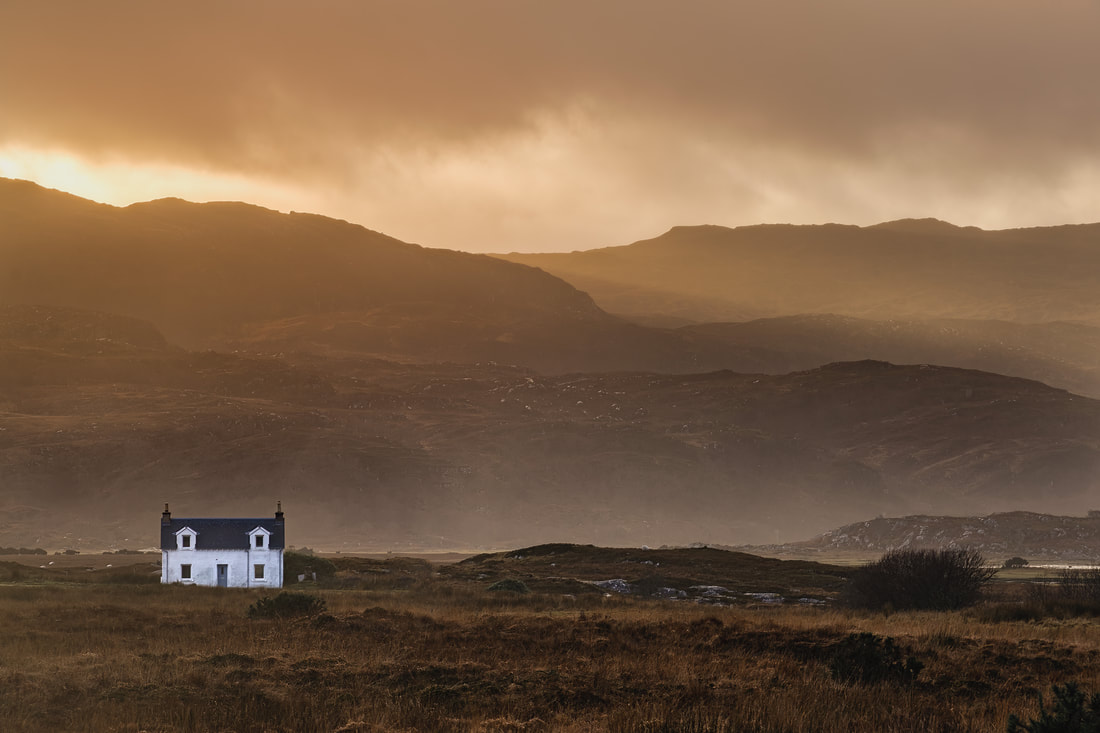 Storm Haven - Raelands, Kentra, Ardnamurchan The landscape surrounding the house is equally integral to its story. Whether it be rolling hillside, open moorland, sand dunes or rocky foreshore, a photograph of a croft house set against a vast and rugged landscape speaks to the symbiotic relationship between the crofters and their environment. It’s a story of respect for nature and one that changes with the seasons. In spring, the landscape might be carpeted with blossoming wildflowers, symbolising renewal and hope. Summer’s light might cast a red glow across the walls and roof of the house, bringing a sense of warmth and security. Autumn introduces a palette of golds and oranges, a time of harvest and preparation for the winter ahead. Finally, in winter, the house, perhaps dusted with snow, stands as a beacon of warmth and safety amid the stark, cold landscape. Although stone built walls and thatched roofs have been replaced by white rendered walls and slate roofs to give us the croft houses we see today, these buildings still captivate my imagination and permeate a sense of history and heritage. To me, they are more than just structures; they are a living, breathing testament to the resilience of the people who have endured centuries of hardship and adversity to call this rugged landscape home. Such scenes speak to me and tell me a story not just of survival, but one of thriving in harmony with the land, drawing strength from the beauty and harshness of nature and this is perhaps why I find both my eye and my camera drawn to them. 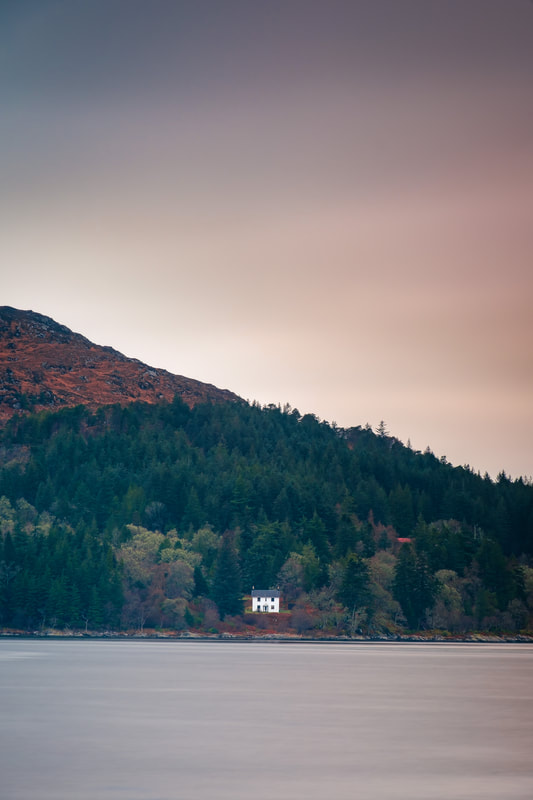 Island Retreat - Tioram Cottage, Eilean Shona, Moidart As I write this, we are about halfway through meteorological Spring and the recent cold and wet weather seems to have delayed the awakening of the landscape from its winter slumber. The dawn chorus has not yet filled the early morning air with birdsong and the spring flowers are only just beginning to cover the ground with the usual multitude of bright colours. However, as April turns into May, I’m hopeful that I’ll soon hear my first cuckoo, whose distinctive call well and truly heralds the arrival of spring, just as it did when I was out at Smirisary on a beautiful mid-spring evening and captured the image below. 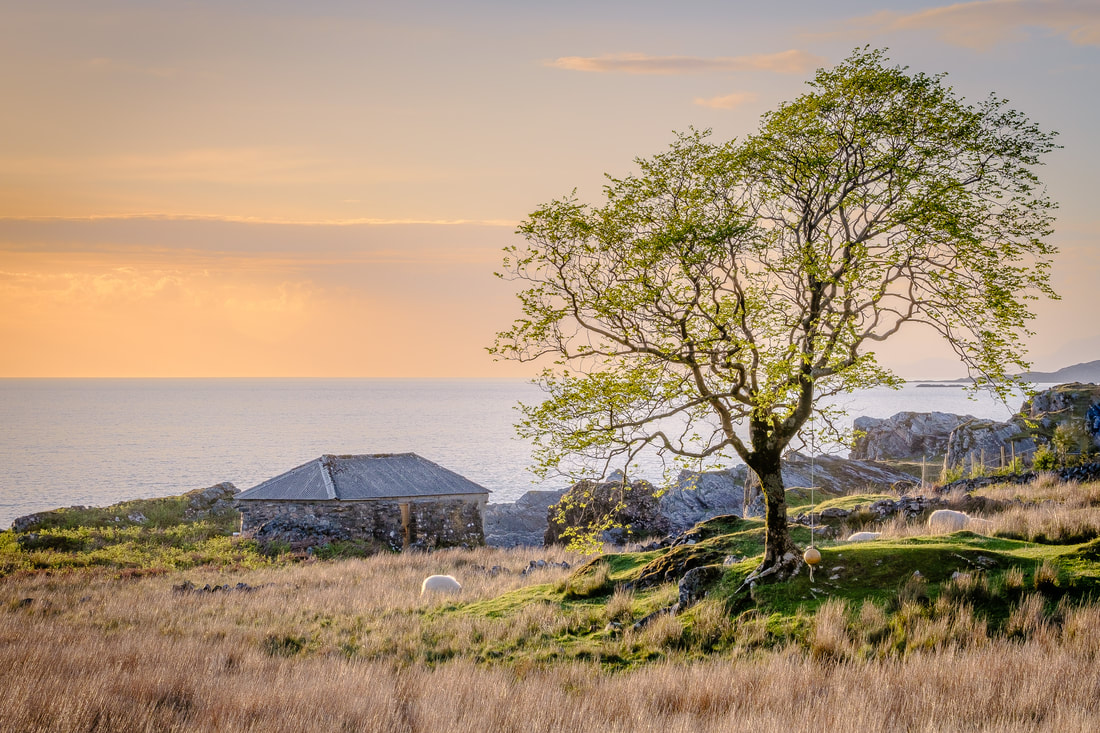 Spring Shieling - Smirisary, Glenuig, Moidart In my mind, the cuckoo is one of the most iconic migratory birds to visit us each year. Its distinctive "cuck-oo" or "coo-coo" call resonates through misty mornings and still evenings, carrying promises of warmer days and the vibrant rebirth of flora and fauna. In addition to this, the bird itself is intertwined with various superstitions and legends.
One prevalent belief is that the timing of the cuckoo's arrival can predict the weather for the upcoming season. If the cuckoo is heard early in the spring, it was said to foretell a warm and prosperous summer ahead. Conversely, a late arrival was thought to signal a cold and harsh season, causing anxiety among farmers and villagers who relied on favourable weather for their livelihoods. The cuckoo's association with prophecy extends beyond meteorological predictions and into matters of love and luck. In some Scottish communities, it was believed that hearing the first call of the cuckoo could bring fortune to couples seeking to conceive a child. Newlyweds would eagerly await the arrival of the cuckoo, hoping that its call would bless their union with fertility and abundance. However, not all superstitions surrounding the cuckoo were benign. In certain folklore traditions, the cuckoo was viewed with suspicion and even fear, often being portrayed as a symbol of deceit and trickery. One particularly ominous belief is the notion of the "cuckoo's curse," which suggests that hearing the bird's call on certain days, especially Sundays or while in bed, could bring misfortune or even death to the listener or their family. The mysterious nature of the cuckoo is further accentuated by its peculiar habits, including its brood parasitism behaviour. Unlike most birds, which build nests and care for their young, the cuckoo lays its eggs in the nests of other bird species, relying on them to raise its offspring. This behaviour has led to the cuckoo being associated with themes of deception and betrayal in folklore, because it exploits the labour and resources of unwitting foster parents. Beyond its cultural significance, the cuckoo's presence also serves as a barometer of ecological health, reflecting the condition of its breeding habitat and the availability of its preferred food sources. Concerns about habitat loss, climate change, and the decline of insect populations have led to conservation efforts aimed at preserving and restoring the cuckoo's habitat. They include protecting vital breeding grounds, restoring degraded ecosystems, and raising awareness about the importance of migratory birds. Despite these efforts, the cuckoo faces an uncertain future in Scotland. Like many migratory birds, it must navigate a perilous journey here which is fraught with challenges, while avoiding predation and dealing with climate-induced disruptions in food availability. In addition, its dependence on other species, such as the reed warbler and meadow pipit, for egg incubation and chick rearing further complicates its conservation. Yet, amidst these challenges, there is cause for hope. The resilience of the cuckoo, coupled with the dedication of conservationists and the support of local communities, offers a glimmer of optimism for its continued survival. By fostering greater awareness, understanding, and appreciation for this charismatic bird the conservationists hope that they can ensure that future generations will be able to delight in the timeless spectacle of the cuckoo's arrival in a Scottish spring. I, for one, hope that they succeed. I been looking through my library of images in recent weeks, looking for common themes that might form the basis of a couple of projects for the next 12 months or so and noticed that there were a few photographs that were taken during what is called the “Blue Hour”, an incredibly photogenic time of the day when the landscape is infused with rich, blue tones. One of these images is below and it shows Ardnamurchan Lighthouse on its rocky promontory with the sea, the land and the sky all tinged with these rich, blue tones. So what exactly is the blue hour? 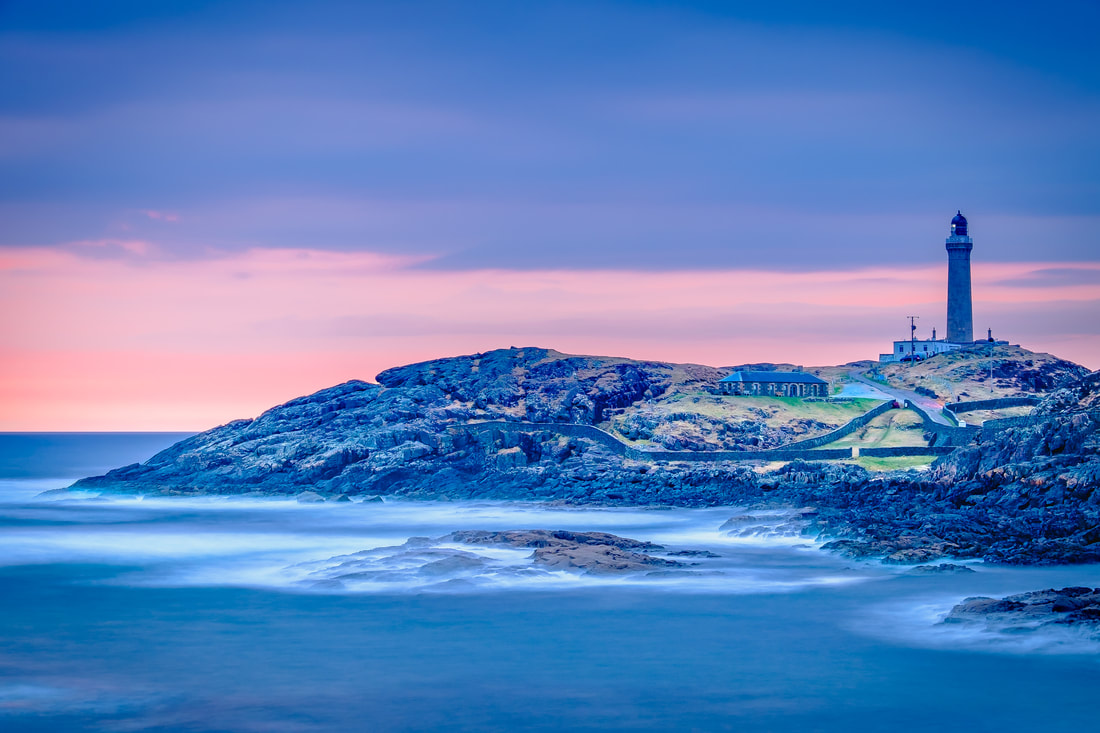 Last Light, First Light - Looking across Briaghlann to Ardnamurchan Lighthouse, Ardnamurchan The blue hour occurs twice a day, just before sunrise and just after sunset, so you might be thinking that it is simply the time of day known as twilight, but there is a little more to it than that. This first thing to know is that there are three phases of twilight: civil twilight, when the Sun is between 0° and -6° below the horizon; nautical twilight, when it is between -6° and -12° below; and astronomical twilight, when it is between -12° and -18°below. During civil twilight, there is still colour in the sky, and it is light enough to see objects clearly; the sky is darker during nautical twilight and by astronomical twilight it's almost completely dark. The evening blue hour is the period of transition from civil to nautical twilight (or vice versa in the morning), when the Sun is between -4° and -8° below the horizon. At this time, the longer red wavelengths of light from the Sun pass straight out into space and the shorter, blue wavelengths are scattered in the atmosphere. The result is a rich and saturated cool blue colour that is incredibly atmospheric, so if romance and mystery are your thing, this really is a great time head out with your camera. Before you do though, you should know that despite its name, the blue hour only lasts for 20-40 minutes depending on your location, the time of year and atmospheric conditions. At this time of year here on the Peninsula, it begins at about 20 minutes after sunset and at 45 minutes before sunrise. In either case it lasts for around 20 minutes, so the opportunity for photography is fleeting, but nonetheless very rewarding. 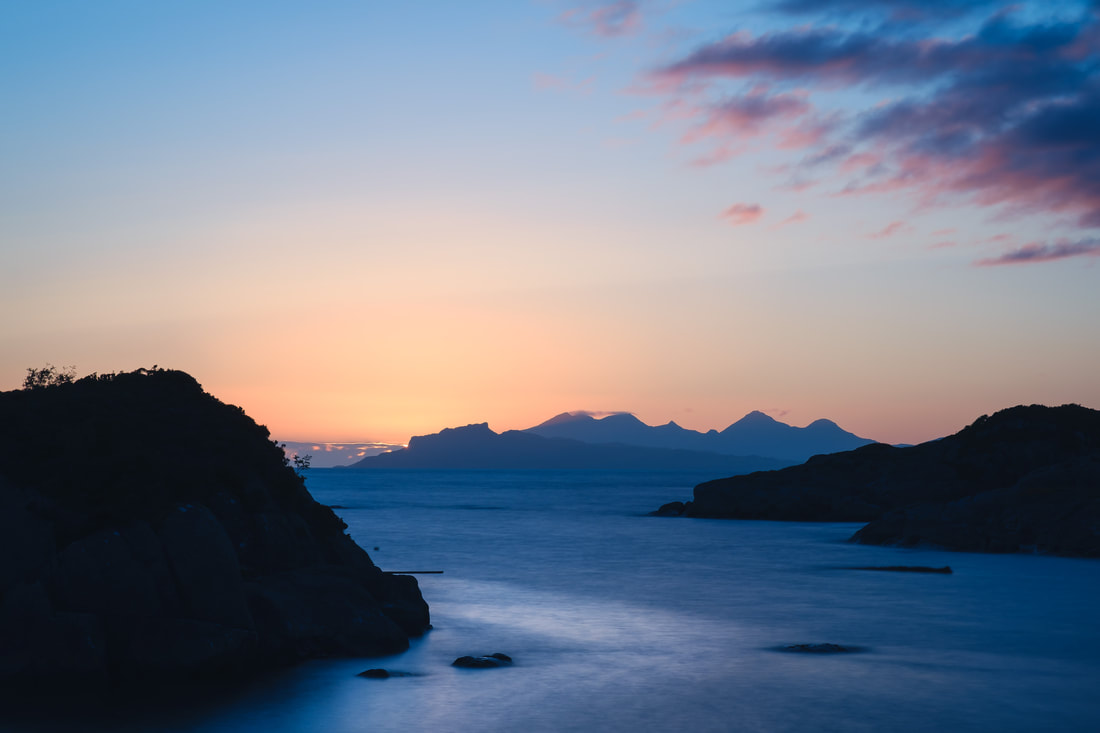 Sundown Blues I - Sailean Dubh, Ardtoe, Ardnamurchan Beyond its aesthetic appeal, I find the blue hour to be an incredibly tranquil and thought-provoking time of day, and this is especially true of the evening blue hour. I’m not sure what it is, but this “in-between time” during which day transitions into night, I feel compelled to pause and appreciate the beauty of that exact moment. This is especially true if I’m out in the landscape alone with my camera because moments of such solitude bring a real sense of peace and stillness that allow me to disconnect from any stresses or challenges that I may have experienced during the day. As the blue hour comes to an end, the sky transforms from the canvas of rich blues that I was photographing to a deepening shade of indigo. With this comes the gradual unveiling of the stars, with each one sparkling ever brighter as the sky darkens. As more and more stars become visible, I am often struck by the vastness of the cosmos and with this comes strong feelings of awe and humility due to Earth’s true insignificance. The sheer scale of the Universe, with its billions of galaxies each containing billions of stars, puts into perspective the minuscule size and fleeting existence of our home planet. It is a mere speck of dust in the cosmic ocean and seems so inconsequential in comparison to the unimaginable expanses of space stretching out in all directions. It is in these moments that I am reminded of the transient nature of human existence. Yet, amidst this feeling of smallness, there is also a sense of wonder and curiosity. The very fact that we can contemplate our place in the Universe, that we can marvel at the stars and ponder the mysteries of existence, is a testament to the extraordinary capabilities of the human mind. It is in moments like this that I just love catching the blues. 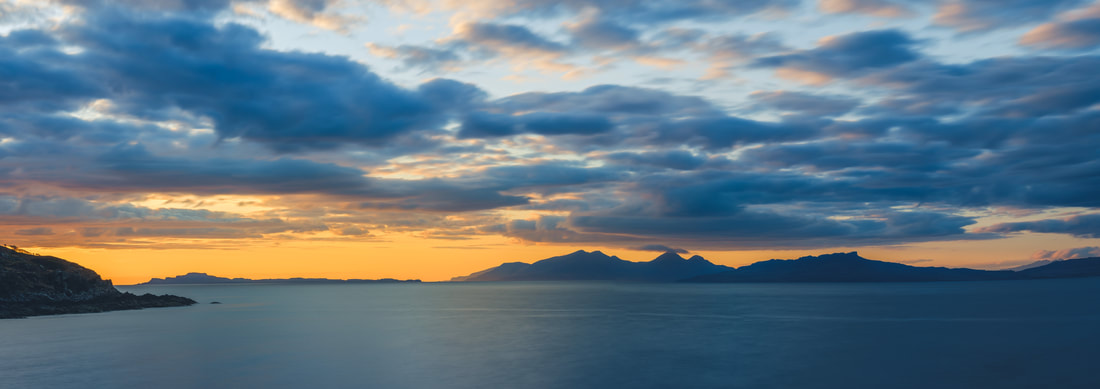 Cobalt and Amber – The Small Isles viewed from Fascadale, Ardnamurchan I took the image below on a late February afternoon from the sandy beach at Port na Carraidh at the western end of the Ardnamurchan Peninsula. Like many of my landscape images, the process involved finding the composition, framing the shot and then a significant period of time waiting for the light to be right. While some people may find such time boring and perhaps frustrating, I find it to be one of the most enjoyable parts of the whole process because it provides an opportunity for some quiet reflection and thinking which, on this occasion, had me pondering the difference between knowledge and wisdom. 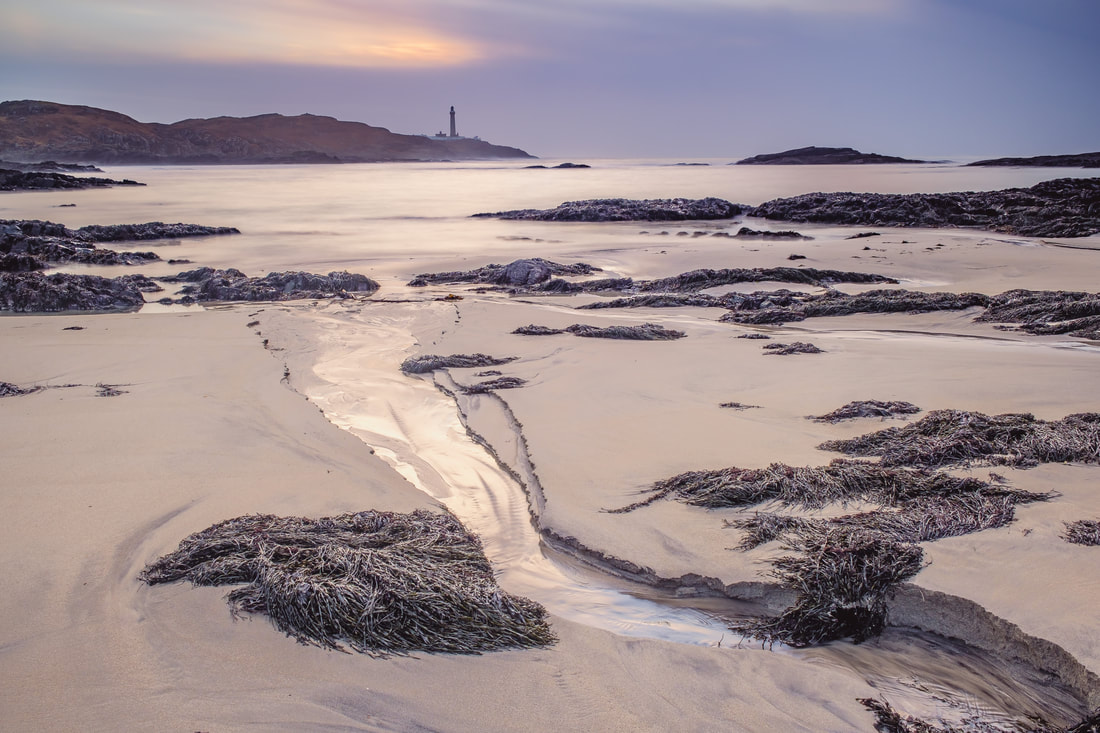 Distant Lighthouse I - Port na Carraidh, Ardnamurchan I guess I ended up thinking about the difference between the two because photography, as both an art form and a technical skill, involves a delicate balance between knowledge and wisdom. Indeed, a photographer’s ability to capture compelling images is influenced not only by technical know-how but also by the nuanced application of wisdom.
Knowledge in its fundamental form is gained by the acquisition of information, facts, and skills which, in the case of photography, encompasses an understanding of things such as camera settings, composition rules, lighting techniques, and post-processing tools. It is the photographer's proficiency in handling equipment, choosing the right exposure, and manipulating elements within the frame that provides the necessary foundation for capturing technically sound images. In contrast, wisdom goes beyond the mere possession of such information and the technicalities of taking a photograph. It allows photographers to determine the relevance of various pieces of the information that make up their knowledge and how best to apply it to their own work. To my mind, a wise photographer understands that a compelling image is not solely about pixel-perfect technical execution but about conveying a story, evoking emotions or capturing the essence of a moment. One key distinction between the two lies in how they are acquired. Knowledge can be obtained through formal education, reading and observation. It is quantifiable and can be measured in terms of proficiency in a specific field or the retention of factual details. I’m sure everyone will remember dreaded exams at school that aimed to do just this. Wisdom, on the other hand, is cultivated over time and often matures through a combination of life experiences and introspection, and a willingness to learn from both successes and failures. It certainly can’t be measured in a way that knowledge can be. When thinking about the image above, my sense is that wisdom encouraged me to make thoughtful decisions about what to include in the frame and what to exclude from it, it helped me recognise the emotional impact of light and encouraged me to wait the time I did to take the photograph. The result was that I pressed the shutter button just when the conditions were right and created an image that conveyed the emotions that I wanted it to. In my photographic journey, like many people I guess, I began it by acquiring knowledge through learning the basics of composition, exposure, and editing techniques. It was only after I understood these basics that I was able to practice, try photography under different conditions and, probably most importantly of all, learn from my successes and failures. Recently, I have been reviewing images that I took a few years ago, and comparing those that invoke some form of emotional response with those that don’t. By doing this, I’m working on identifying recurring themes, styles, and subjects that resonate with me. My hope is that by incorporating these elements into my future work, I can refine my artistic style and more consistently create images that resonate deeply with not only myself, but also audiences that view them. Although Ben Nevis sits just to the east of Fort William, its height of 1,345 metres (4,413 feet) not only makes it the highest mountain in the British Isles, but also means that it is visible from a number of places on the Peninsula. One such place is Lochan Doire a' Bhraghaid and this is where I took the photograph below. It was taken on a cold January morning when the pink light from the Sun rising in the south-east was caught by the mountain’s south facing upper slopes and the clouds that covered what is an extremely elusive summit. A summit that, perhaps one day, I’ll be lucky enough to capture. 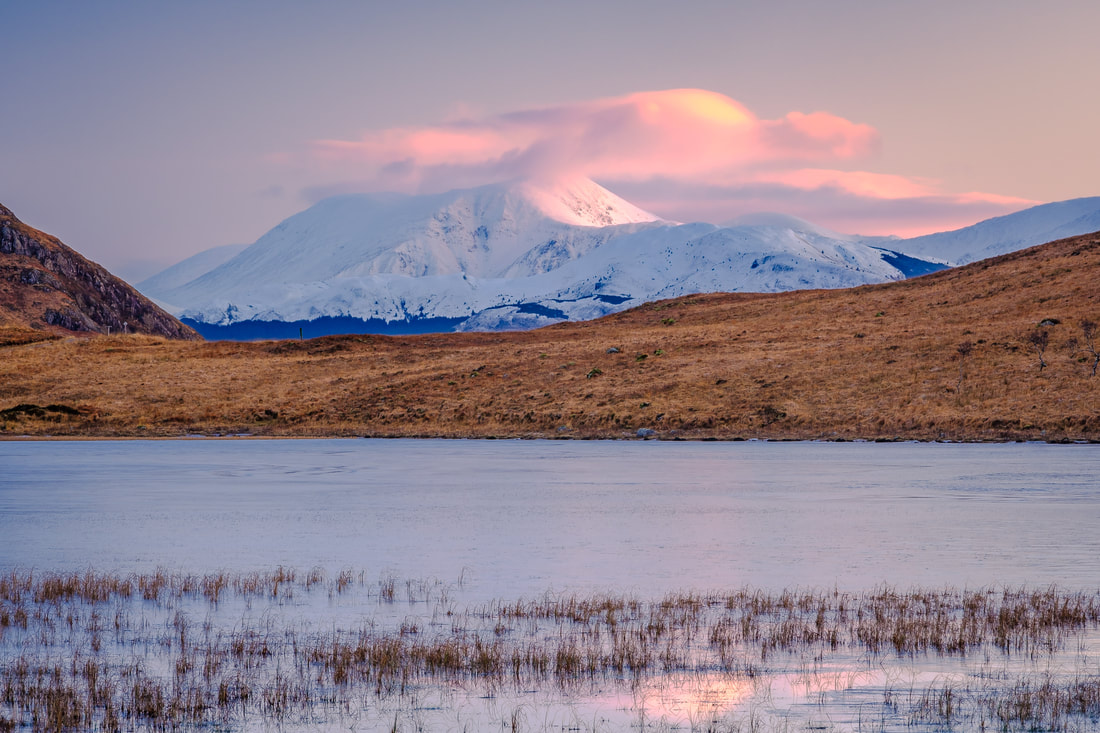 First High-Light I – Ben Nevis viewed from Lochan Doire a' Bhraghaid, Inversanda, Ardgour The summit of Ben Nevis is notorious for unpredictable and often harsh weather conditions that are constantly influenced by North Atlantic weather systems. The mountain is in an area that experiences a significant amount of precipitation, averaging around 4,406 mm of rain annually. This, combined with the mountain's height, creates a perfect environment for cloud formation. The warm and moist air from the Atlantic meets its high peaks, resulting in the frequent presence of clouds. In fact, its summit is only visible for an average of 30 days per year, making it extremely elusive and therefore a challenge to photograph. However, I am hoping that with a little planning, patience, and persistence, I will eventually get the shot that I have in my mind’s eye.
Planning is the cornerstone of successful landscape photography and involves thorough research and preparation before heading out to a location. In this instance, the factors to consider are weather conditions, time of day, and the position of the sun. For the shot I’m after, I’m looking for an unobscured snow-covered summit with warm sunlight falling on the sides of Ben Nevis that are visible from Lochan Doire a' Bhraghaid some 17 miles to its southwest. This means that the shot needs to be taken on a morning during a cold and clear spell of weather in the months of December, January and potentially February because this is when the sun will be rising in the right place. I used various topographic maps and sun tracking apps to help me pick these months and various weather forecasts help me decide which days to go out on. Next up is patience. Nature does not always cooperate, and capturing the perfect shot often requires waiting for the right moment. The ideal lighting, weather conditions, and natural elements may not align immediately so I often find myself waiting an hour or more before I feel that the time is right to press the shutter button. On the morning I took the image above, I arrived before sunrise to see that the summit of Ben Nevis was clear. I therefore set up my tripod, framed the shot and waited in anticipation of Sun rising to bath it in a warm pink glow. However, it was not to be because a bank of cloud rolled in from the north and obscured the summit just as sunlight began to fall on the mountain. So finally, this is where persistence comes in, because it involves a commitment to returning to a location time and time again until the conditions are just right. In this instance, the lighting may have been perfect, but the weather did not cooperate. It was tantalisingly close, but that 1 in 12 chance of the summit being clear conspired against me and I didn’t quite get the shot I was looking for. In fact, I have returned to Lochan Doire a' Bhraghaid a few times since to capture that “elusive peak”, only to be met with no success. Never mind though. The thrill of landscape photography is often to do with the “chase” and when the conditions eventually do align, the resulting image will be more than enough reward for all the planning, patience, and persistence. Until then, I look forward to the day when I can share the image that I have in my mind’s eye with you. The image below shows a full Moon way out beyond the entrance of Kentra Bay, hanging in the sky above the Isle of Eigg and the snow-capped peaks of the Rùm Cuillin in the hour or so before it was due set in the north-west. Taken on the extremely cold morning of 30 December 2020 and showing the last full Moon of the year, I decided to call the image “Cold Last Moon I” only to later find out that I was indeed looking at a Cold Moon. 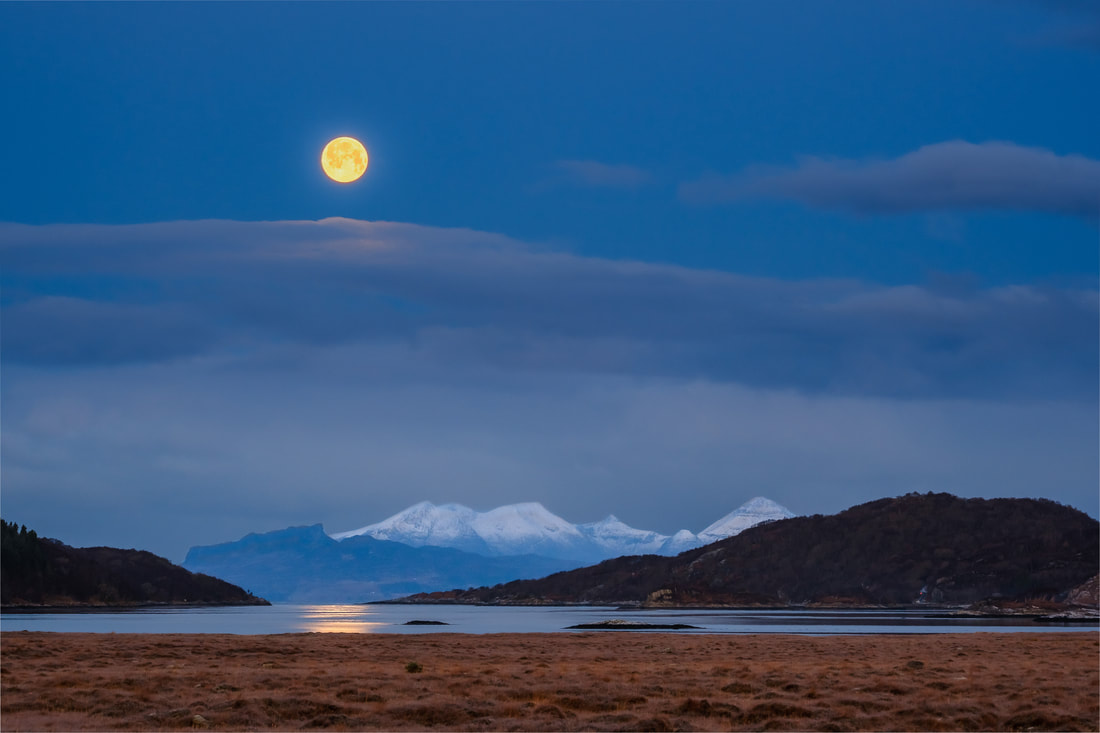 Cold Last Moon I - Kentra Bay, Arivegaig, Ardnamurchan The names of full Moons come from early Native American culture because many tribes tracked the passage of time by using each full Moon and linking its name to the changes in the natural world as the months passed. In 2024, the names and timing of the full moons will be follows: Wolf Moon: 25 January at 5:54 pm This name originates from the howling of wolves that was often heard during the cold January nights. It symbolises the harshness of winter and the challenges faced by both humans and wildlife. Snow Moon: 24 February at 12:30 pm February tends to bring heavy snowfall in many regions, so this Moon was named after the deep snow covering the ground and reflects the often challenging weather conditions of midwinter.
Buck Moon: 21 July at 11:17 am July is the month when the new antlers of buck deer grow larger. This full Moon was named in recognition of this phase of antler growth, indicating the maturity and strength of the bucks. Super Sturgeon Moon: 19 August at 7:25 pm August was associated with the abundance of sturgeon fish in lakes and rivers of North America and the Sturgeon Moon acknowledges the significance of this large fish in the ecosystems during this time. Super Harvest Moon: 18 September at 3:34 am This is the full Moon closest to the autumnal equinox. Its name comes from the extra light it provides during the evenings, allowing farmers more time to harvest their crops as the days shorten. 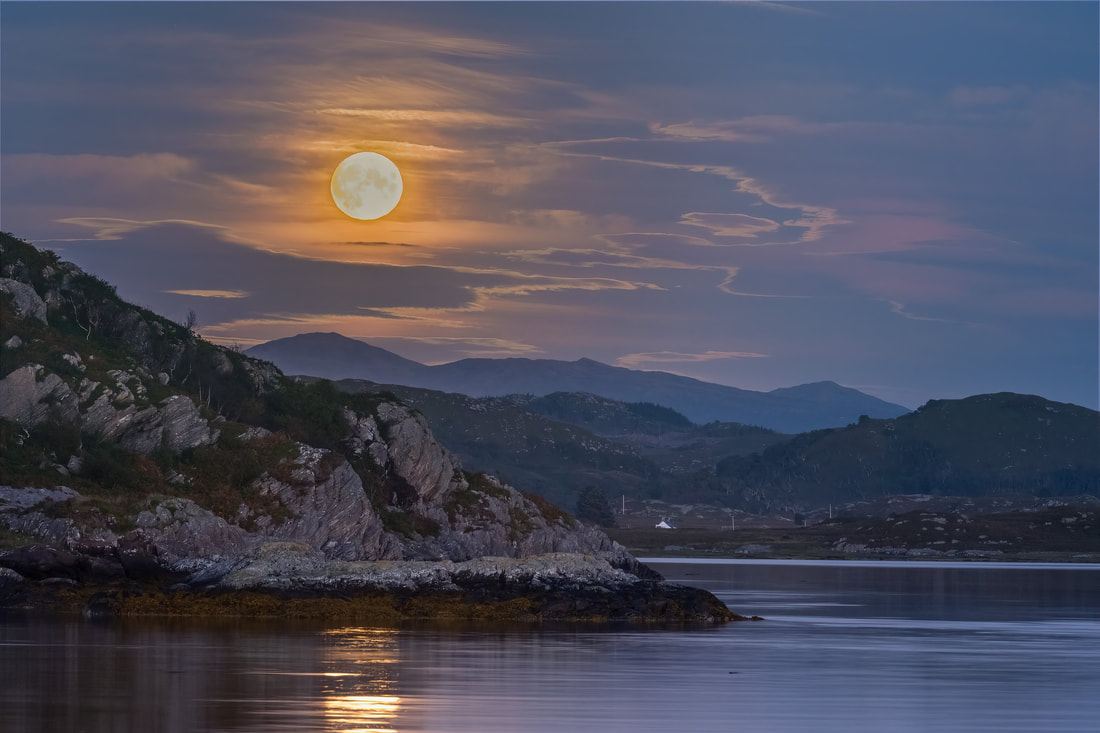 Harvest Moon Reflections - Ardtoe Pier, Kentra Bay, Ardnamurchan Super Hunter’s Moon: 17 October at 12:26 pm
Following the Harvest Moon, the Hunter's Moon was associated with the time to hunt and prepare for winter. It provides additional light for hunters pursuing game in the waning light of autumn. Super Beaver Moon: 15 November at 9:28 pm November is when beavers actively build their winter dams in preparation for the colder months and the Beaver Moon recognises this industrious activity. Cold Moon: 15 December at 9:01 am As December brings the coldest temperatures of the year in many places, the Cold Moon emphasises the chill in the air and the onset of winter's full force. You’ll also see that four of the full moons will be supermoons. It’s when the Moon is at its closest to us in its elliptical orbit and will appear bigger and brighter than normal, so do look out for them then. From early July to late September, we have been treated to the sight of four full supermoons rising in the east at sunset and with two full supermoons happening in August, much was made of them on the television and radio and in the newspapers. In addition, social media was full of people’s photographs of what were truly magnificent spectacles. However, something that we hear a lot less of is the rising or setting of a crescent moon which, in my opinion, is a far more beautiful and beguiling sight and one that has deep symbolic significance in various cultures and spiritual traditions around the World 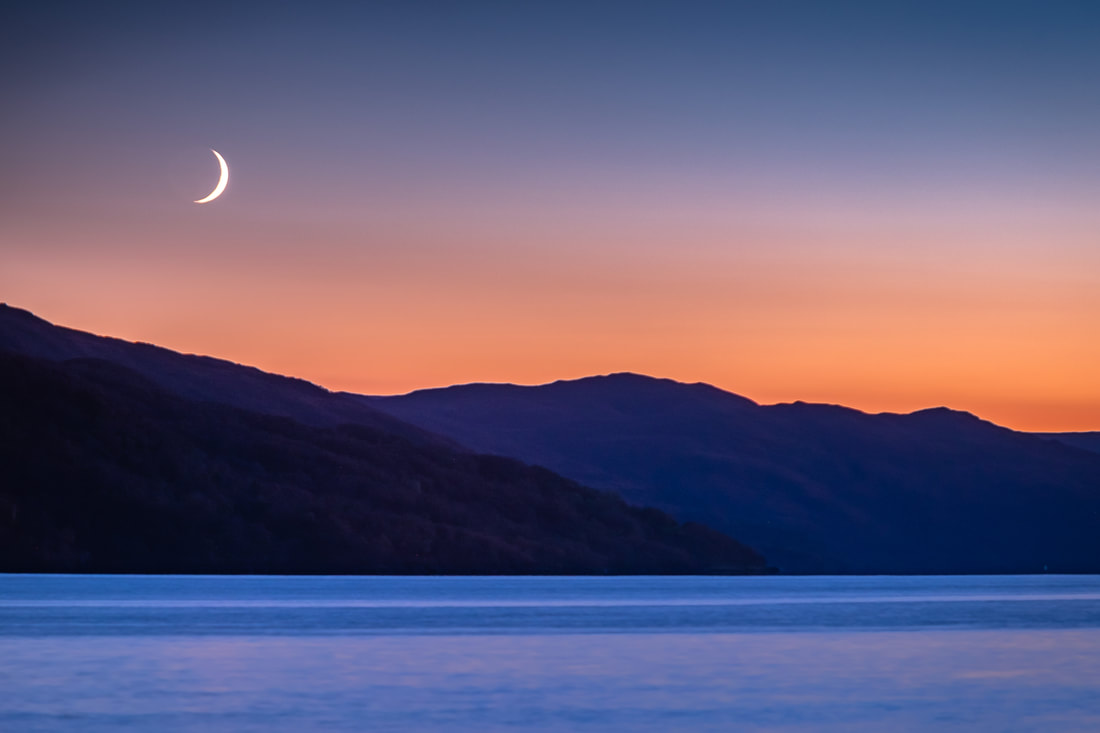 Waxing above Orange - Loch Sunart, Resipole, Sunart The beauty of a crescent moon is very subjective and is very much down to personal preference, but I do find it particularly captivating when the Moon is visible at sunset or sunrise. This timing allows a crescent moon to appear against the backdrop of the colourful twilight sky and create a striking visual contrast just like it did on the evening when I took this month’s photograph. I was absolutely captivated by the sight of it hanging in the sky just above the hills of Morvern and the orange glow from a setting Sun.
This captivating and beautiful celestial sight has been historically associated with various myths and cultural beliefs and predominant themes seem to be ones of renewal and transformation. In various religious contexts, a crescent moon holds specific meanings. In some pagan and Wiccan traditions, the crescent moon is considered a symbol of the feminine divine, representing cycles, intuition, and the ever-changing nature of life, while in Hinduism, it is associated with various deities, including Shiva and Parvati and the waxing and waning of the Moon is said to represent the cycle of life, death, and rebirth. However, it is in Islam where the crescent moon perhaps features most prominently and is seen on top of minarets and mosques, and on the flags of many Muslim countries. Representing the beginning of the lunar month, it is used to determine the timing of important Islamic events and holidays, such as Ramadan, the ninth month of the Islamic lunar calendar. This month is a time of fasting, prayer, reflection, and community for Muslims worldwide and the crescent moon plays a crucial role at its beginning and end. The sighting of the new crescent moon marks the end of the month of Sha'ban and the beginning of Ramadan, while the sighting of the crescent moon at the end of Ramadan signifies the end of the fasting period and the celebration of Eid al-Fitr, a festival that marks the end of Ramadan. 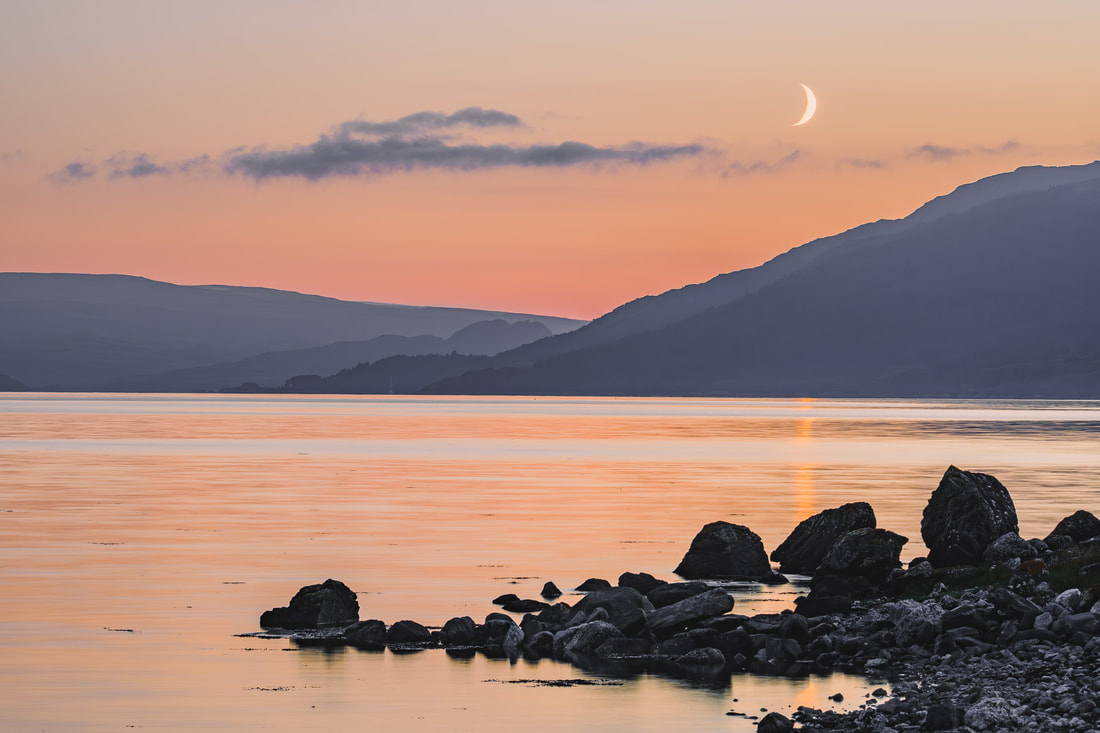 Waxing Orange - Loch Sunart, Resipole, Sunart Given how captivating the sight of a crescent moon can be, it is perhaps little wonder that it plays a role in several of the World’s cultures and religions, but whatever your beliefs are, it is certainly a sight worth seeing. So, if you are an early riser, look out for it in the east at sunrise on the mornings just before a new moon and if you are a night owl, look for it in the west at sunset a few days later. You won’t be disappointed.
When I moved to the Peninsula, after living for almost 30 years in and around Glasgow, I was immediately blown away by the number of stars I could see in the sky on a dark, clear night. Seven years have passed, and I still get awestruck by the sight above me when I am out under a night sky. This is especially true at this time of the year, when our planet is facing inwards to the core of our galaxy, the Milky Way. So, this month, I thought I’d share a few tips for exploring our night sky, which is so dark that you can see over 7000 stars with the naked eye. 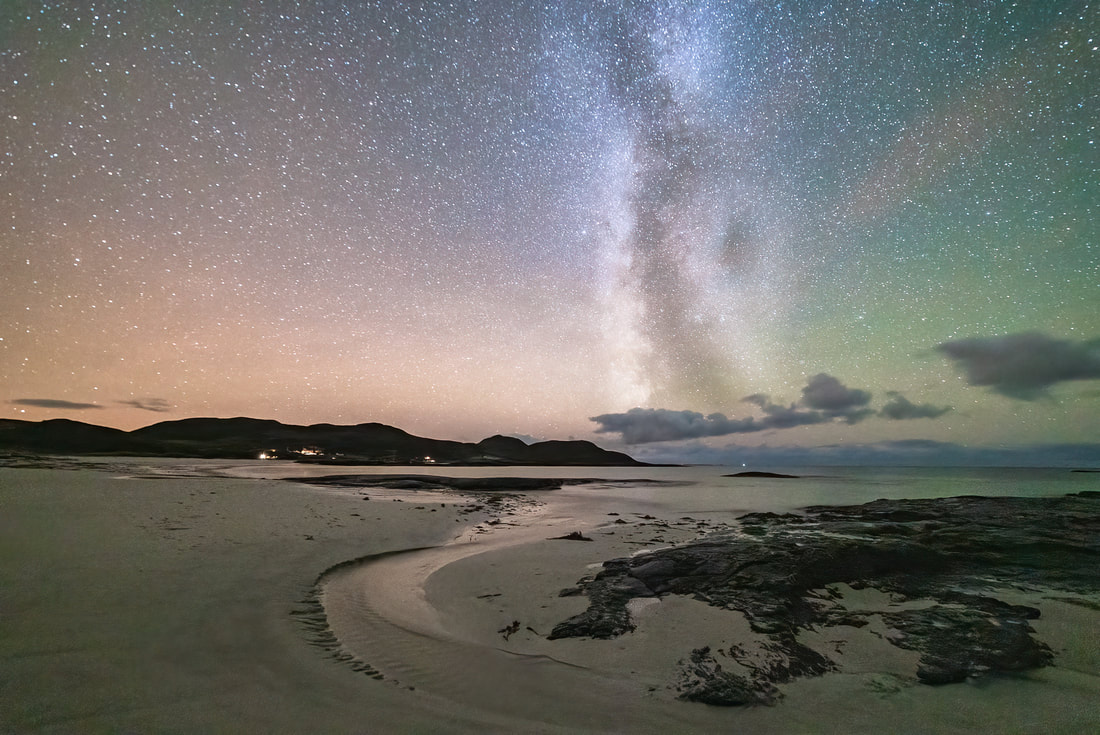 Flowing to the Stars II – Sanna, Ardnamurchan So how dark is a dark sky? Well, I have measured the darkness of the sky at various locations on the Peninsula using a device called a Sky Quality Meter (SQM) and obtained readings of between 21 and 22.5. To give you an idea of what this means, you would get a reading of around 8 in the middle of a major city such as Glasgow or Edinburgh and a reading of 24 would be measured in a photographer's dark room. So on some night, we are very near to total darkness, meaning that the Peninsula is a great place to enjoy a spot of stargazing. Where to Go
Castle Tioram, Moidart: Turn off the A861 just north of Acharacle and 2 miles down a narrow single track which should be driven with care. Once there you get good lines of sight in all directions except East. From the shore a little north of the car park, you can look out south and west to see the Milky Way and look North to catch the Northern Lights. Do not go out to the Castle as you may get caught out with the tide. Old Boat House, Ardtornish Estate, Morvern: A flat area of hardstanding, located between the shore and the track to Ardtornish Castle about 200 metres before the Old Boathouse on the shore of Lochaline. Park in the Estate Farm Courtyard where their Gift Shop is located and walk to the area near the boathouse from there. Ardnamurchan Lighthouse: Anywhere within the grounds of the Lighthouse Visitor Centre complex, but stay on the designated paths, picnic areas and carparks as this will keep you away from cliffs and sharp drops into the sea, which you must avoid in the dark. Clear views of the sky in all directions and the darkest place on the Peninsula due to its most westerly location. Bear in mind that overnight parking is not permitted on the site. When to GoThe best time to start stargazing is from 2 hours after sunset, when the sky is as dark as it gets. Also, it is best to do it in the week either side of a new Moon, when there is little or no moonlight to spoil the show. You can check the Sun and Moon times at www.thetimeandplace.info to decide what time is best and if you do go out: Use your naked eyes – You can see a lot with just your naked eyes, just give them 10-15 minutes to adjust fully to the dark and you’ll suddenly find that you’ll see twice as many stars. Use a red torch – Once your eyes have adjusted, avoid using bright white lights because it is very easy to lose your “night vision”. Instead use a red headlight or torch because this doesn’t affect you night vision. Stay warm – Clear, dark nights are often very cold, so wear plenty of layers, a hat and gloves and think about using heat wraps or charcoal hand warmers. Use Star Charts – These can be downloaded free from www.skymaps.com. You can also use one of the many smartphone apps that are available. I find Pocket Universe very good. 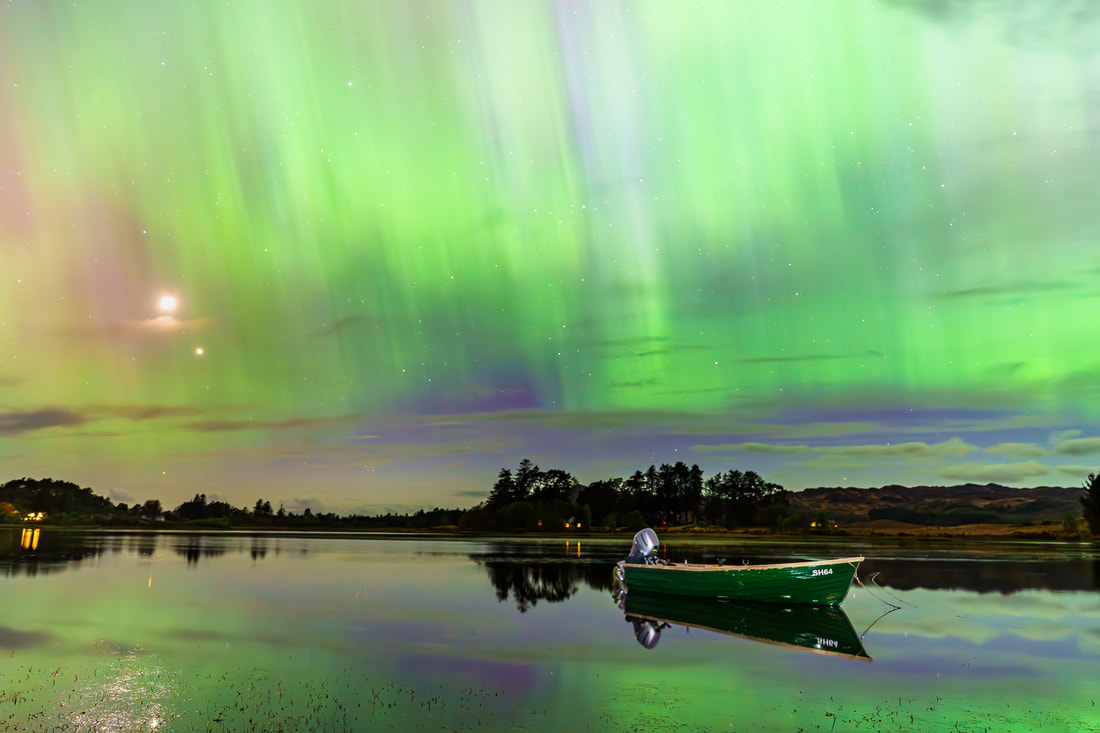 Unforgettable Aurora I - Loch Shiel, Acharacle, Ardnamurchan What to SeeWhen you are out, the things to look out for are:
Milky Way – Look directly overhead during autumn and early winter evenings and you'll see this shimmering river of light streaming through the constellations of Cassiopeia and Cygnus. Northern Lights – They can happen at any time of the year, but the best time is around the autumn and spring equinoxes because the geomagnetic activity that causes them hits the Earth’s atmosphere at just the right angle. Check the AuroraWatch UK website for alerts. Stars and Constellations – Look south in the next few months and you’ll see the grand constellations of winter: Orion, Taurus, Auriga, Perseus, Cassiopeia, Gemini, and Canis Major. They are rich with stars and star clusters, with the most brilliant stars being Capella, Castor and Pollux, Procyon, Sirius, Rigel, Aldebaran, and Betelgeuse. Planets – You’ll be able to find each of the visible planets of Mercury, Venus, Mars, Jupiter and Saturn at some point throughout the year. However, their position in the sky each month varies from year to year, so do check a night sky guide to find out which ones you will see. Meteor Showers – They happen at predictable times throughout the year. Look out for the annual Quadrantids (January), Lyrids (April), Perseids (August), Orionids (October), Leonids (November) and Geminids (December). When looking for them, spend at least an hour outside doing so because they tend to happen in fits and starts and beforehand, check the meteor shower guide at www.earthsky.org for the best times to look. Finally, you can learn more about what to look for by checking out my monthly night sky guides on this website, which you can find by clicking here. Have you ever found yourself wandering in a place where you feel as if you are walking a fine line between this world and another? I ask because it is a feeling I often have when walking among the ancient oaks and between the moss-covered boulders of Ariundle Oakwood. I don’t know what it is about the place, but I feel that I am never too far away from the mystical realm inhabited by the faeries that gives the nearby village of Strontian or Sròn an t-Sìthein (nose of the fairy hill) its name. In my mind, it is one of the “thin places” that can be found here on the Peninsula. 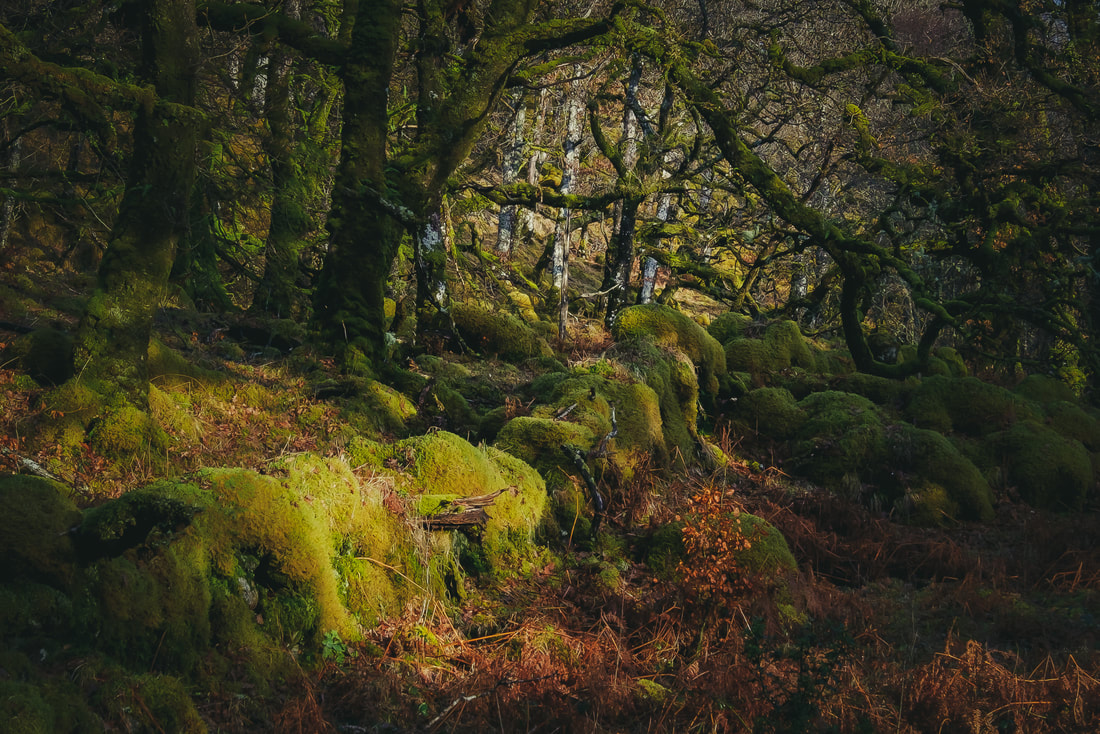 Light on the Past - Ariundle Oakwood, Strontian, Sunart The concept of “thin places” has been woven into the tapestry of Celtic folklore and spirituality for centuries, being used to describe places where the boundary between the physical world and a mystical, historical or spiritual world is believed to be exceptionally thin, thus facilitating a sense of connection between the two.
In thin places, you might feel a sense of awe and heightened awareness of being in the presence of something greater than yourself and, as such, they are often characterised by an otherworldly atmosphere, where the ordinary and the extraordinary intermingle. This is certainly something I can say about Ariundle Oakwood, a place where each ancient tree and each moss-covered boulder seems to harbour mystical beings waiting to be unveiled. When you stand in a thin place you may instead find your imagination ignited by thoughts of what has been before you. This historical imagination can transport you to a different era, picturing scenes from the past as if they were unfolding right before your eyes. Camas nan Geall is a place where I get this feeling. This “Bay of the Strangers” is a fascinating place because it contains evidence of human presence that covers a period of several millennia of human history. This ranges from a Neolithic chambered cairn to deserted clearance dwellings and includes a number of things in-between. The chambered cairn in the centre of the bay may seem quite innocuous, but when you stand next to it and consider that people buried their dead there some 5000-6000 years before, you cannot help but feel a sense of what has gone before. Perhaps more poignant though, are the ruins of Torr na Mòine up on the slopes of Ben Hiant which was the settlement that was the home to the people of Camas Nan Geall before they were forcibly evicted in the 18th century so that the land could be used for a sheep farm. It’s hard to comprehend the hardship and trauma that these people suffered from being suddenly cleared from their ancestral lands by the landowner for primarily economic reasons. Finally, the Old Parish Church in Kilchoan is a place where I feel that there is a thin veil between our physical world and the spiritual world. It is a hauntingly peaceful place that seems to compel you to tread carefully and with due deference to ground that has played host to a place of worship from some 700 years. Giving Kilchoan its name, this Church of St Comghan must have been incredibly important to the local community as a place where they could come together not only to worship but to also seek fellowship and support. Indeed, a walk around the graveyard that surrounds the church to look at gravestones that date from as far back as the 14th century and as recent as the 1990’s, pays testament to just how long this “thin place” has provided spiritual succour to the community. There are many other places on the Peninsula to which I have felt a sense of the mystical, historical or spiritual and this most likely stems from my photography encouraging me to slow down and take time to get a real sense of a place before I ever think of pressing the shutter button. However, you don’t need a camera to experience the profound ways in which certain locations can inspire feelings of connectivity to a different realm. You can just slow down, look, listen and feel when you next find yourself in a place that you sense you might be connected to. I took the image below at the end of an August day when sitting above the old crofting settlement of Smirisary situated just to the west of Glenuig. It is a place that is blessed with a fantastic view of the Small Isles of Eigg and Rùm and a place that is perfect for watching the Sun go down at this time of the year. After the harsh light of Summer, I find that the light softens as we get into August and sunsets become longer and more dramatic. It is this that drew me to Smirisary on that evening, but as I sat there watching that “perfect sunset”, I had no idea that August was also the perfect month for “tying the knot”. 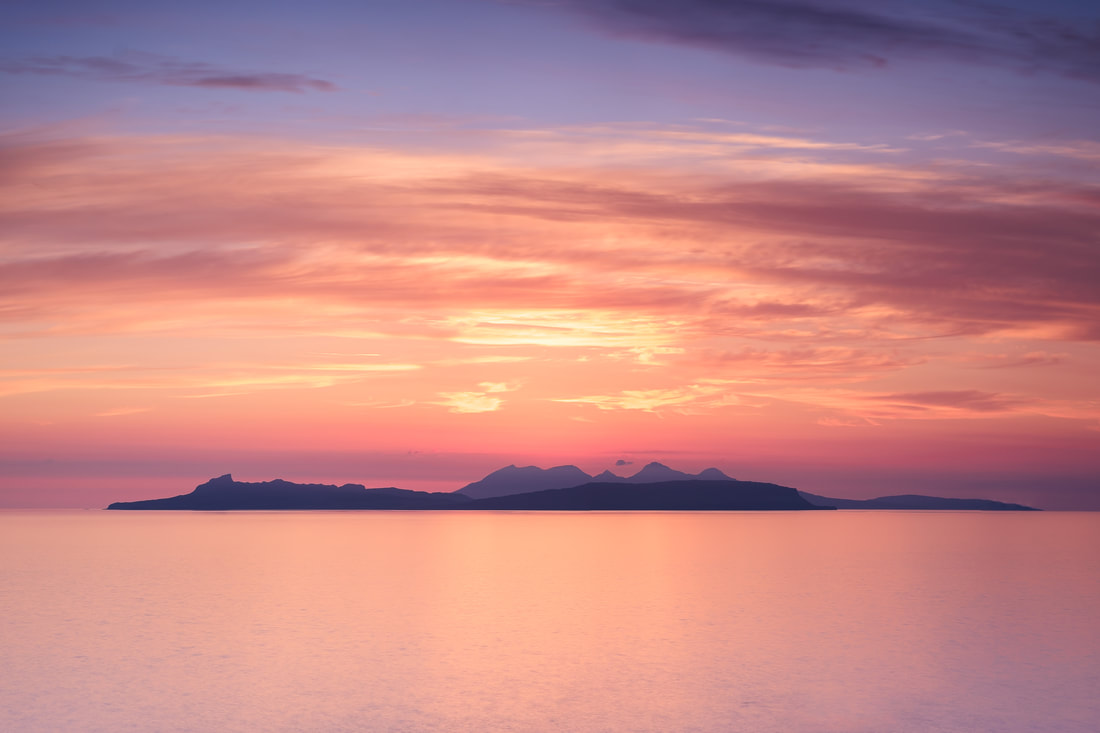 Summer Tranquillity II - The Small Isles of Eigg and Rùm viewed from Smirisary, Moidart As well as being a month of beautiful sunsets, August has traditionally held a special place for those that work the land. As the crops ripened and fields were abundant with the fruits of their labour, communities would come together to celebrate and give thanks for the bountiful harvest by holding a harvest festival.
In Scotland, harvest festivals known as Lughnasadh or Lammas were celebrated around the first of August to mark the beginning of the harvest season. Lammas has its roots in ancient Celtic and Pagan traditions and one of the key customs was the cutting of the first sheaf of grain, which was often made into a corn dolly, symbolizing the spirit of the harvest. This corn dolly was usually kept in the home until the following spring when it would be ploughed back into the fields to ensure a good harvest for the next year. Traditionally, Lammas Day Fairs were held across the length and breadth of Scotland and were marked by bonfires, races, dancing and games. ‘Feeing Markets’, where the farm labourers would seek out new employment were often held at these events, but the big attraction was the “Marriage Market” at which people would be handfasted. Handfasting has its roots in Celtic tradition and is the symbolic binding or betrothal of two people. Conducted by a priest, the ceremony itself typically involved a couple holding hands and having them bound together with cords, ribbons, or a ceremonial cloth while they made their vows and commitments to each other. Hence the phrase, “tying the knot”. By “tying the knot”, the couple entered into a period of engagement, or trial marriage. This trial would typically last a year and during this time the couple were encouraged to cohabitate together (and consummate the relationship). After the year was over, they would return to the priest, declare their intent to be wed and be married soon thereafter. If they decided they were not a good match, the couple were allowed to dissolve their hand-fast and became free to choose another suitor and bride. In modern times, handfasting has been adapted and incorporated into various wedding ceremonies as a meaningful and unique ritual. Couples who choose to include handfasting in their weddings often see it as a way to add personal and cultural significance to their union. Reflecting on all of this, I find it fascinating that despite our modern-day year being predominantly based on the Gregorian calendar and Christian holidays, ancient Celtic traditions continue to influence and define significant events and ceremonies in the months of our calendar and our life. In today’s world of smartphones and digital cameras, photography has become more accessible than ever before, and we see social media full of images of places and events that people have chosen to share. It is fantastic that people can capture these images with a simple click of a button, but this act of taking a picture is quite different from the art of making a picture. It’s something I’m very aware of when making images such as the one below, which shows one of the most spectacular sunsets I’ve ever seen out at Ardtoe. This is because, in such moments, I’m not only trying to capture what my eyes saw, but also what my heart felt. 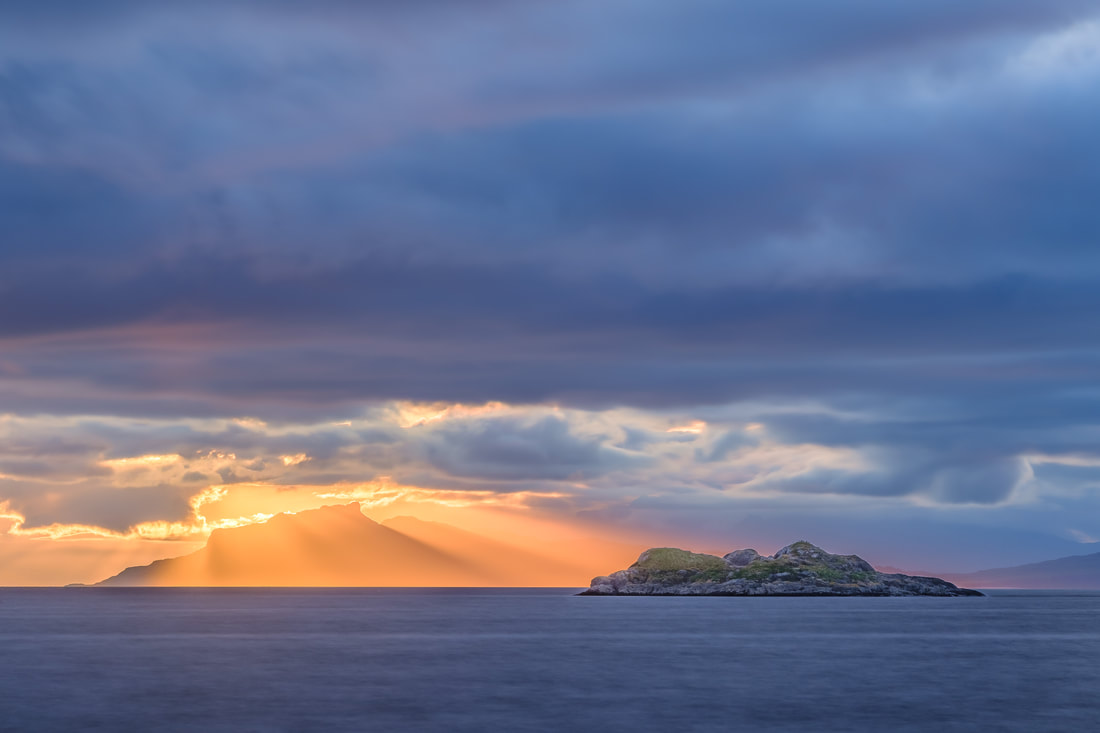 Enlightened - Isle of Eigg viewed from Ardtoe, Ardnamurchan For me, taking a picture refers to the act of quickly capturing a moment, scene, or subject without much thought or consideration. It can be spontaneous, casual, and primarily focused on preserving memories or documenting an event. The emphasis is on the subject itself rather than the photographer's creative interpretation. In this sense, taking a picture is often associated with casual photography, such as snapshots, selfies, or everyday moments captured on the go.
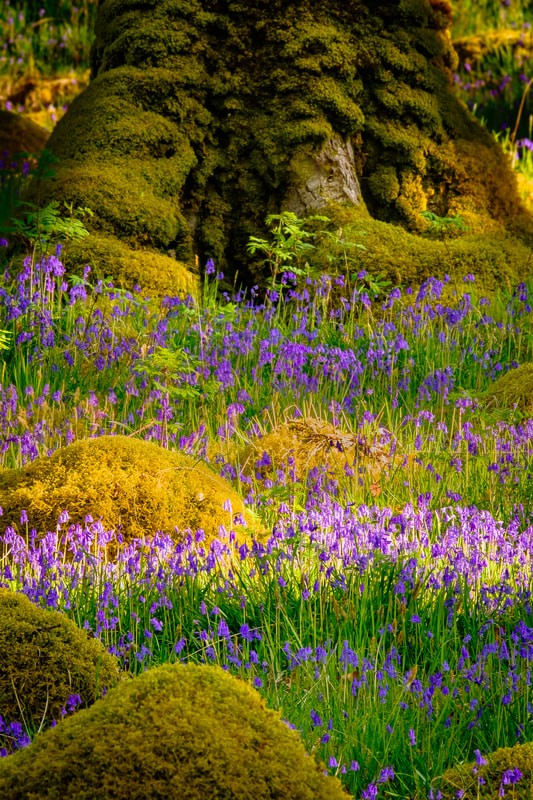
On the other hand, making a picture is a deliberate and intentional process in which the photographer uses their technical and creative skills to transform a scene or subject into a visually compelling image. The focus shifts from simply recording what is in front of the camera to crafting an image that conveys a specific message and evokes certain emotions. When taking a picture, you typically rely on the automatic settings of a camera or smartphone, allowing the device to make decisions about technical aspects such as exposure and focus. The priority is to capture the moment quickly and efficiently. In contrast, making a picture often involves a more involved manual approach, where you take control of the camera settings to achieve a desired aesthetic. In landscape photography, this typically involves selecting the right lens and focal length; adjusting the aperture, shutter speed and ISO; and reading the weather and light conditions to determine the best place and time to press the shutter button. Taking the image above as an example, I planned and made repeated visits to a particular spot at Ardtoe at this time of the year because I knew that I would see the Sun setting behind the Isle of Eigg from there. The specific days on which I made these visits were determined by the weather conditions, with me looking for low cloud directly overhead and gaps in the clouds on the western horizon through which light from the setting Sun would shine. I chose a lens with a long focal length, that would bring the distinctive silhouette of An Sgùrr on Eigg closer to the skerry of Sgeir an Eidigh. I set the aperture so that both would be in focus because they were key elements of the story. I set the ISO and shutter speed to let the correct amount of light into the camera when using a long exposure time to smooth out the sea so that it would not detract from these key elements. Finally, I waited with great anticipation for the rays of light to break through the clouds and light up An Sgùrr to create the perfect moment to press the shutter button. It was only then that I was able to make the image that I had in my mind’s eye. A simple but distinctive image that conveyed the dramatic beauty of a mid-summer sunset that featured the unmistakeable profile of An Sgùrr on the Isle of Eigg. So, although both picture taking and picture making have their place in photography, it’s the latter that I find the most satisfying. You have to be prepared for disappointments and failures along the way, but with planning, patience, and persistence, you will be rewarded with images that go beyond mere documentation to capture and evoke the emotions you felt at the precise moment you pressed the shutter button. My seventh Spring of living here on the Peninsulas has come to an end and I find myself reflecting on something that never ceases to mesmerise me during late May and early June each year. It is the sight of the delicate blue coloured, bell-shaped flowers of the bluebell creating intense blankets of colour in the woodlands, on the hillsides and along the verges throughout the length and breadth of the Peninsula. However, are these really bluebells I am seeing in this incredible wildflower spectacle, or are they something else? 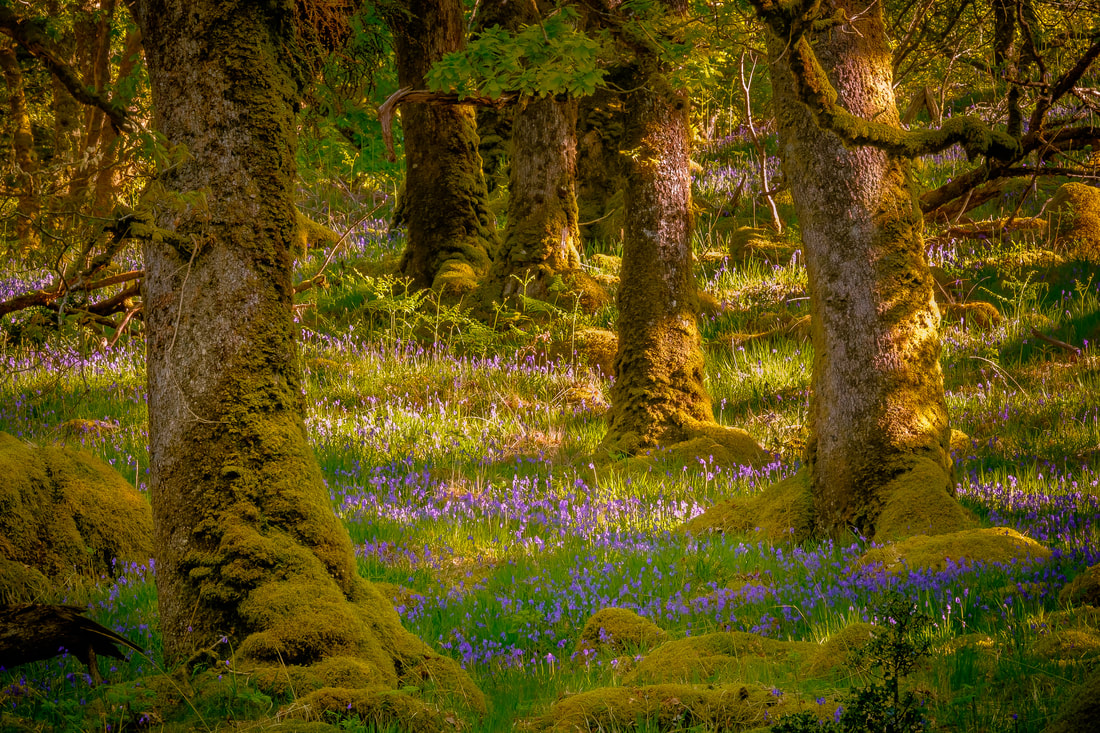 Patches of Blue - Ariundle Oakwood, Strontian, Sunart Well, it seems that these little plants that spend most of the year as bulbs underground in our woodlands and hillsides, are what botanists call ‘wood hyacinths’ or “Hyacinthoides con-scripta” and have been given the common name of “English Bluebell” because their flowers are indeed blue, and they are indeed shaped like a bell.
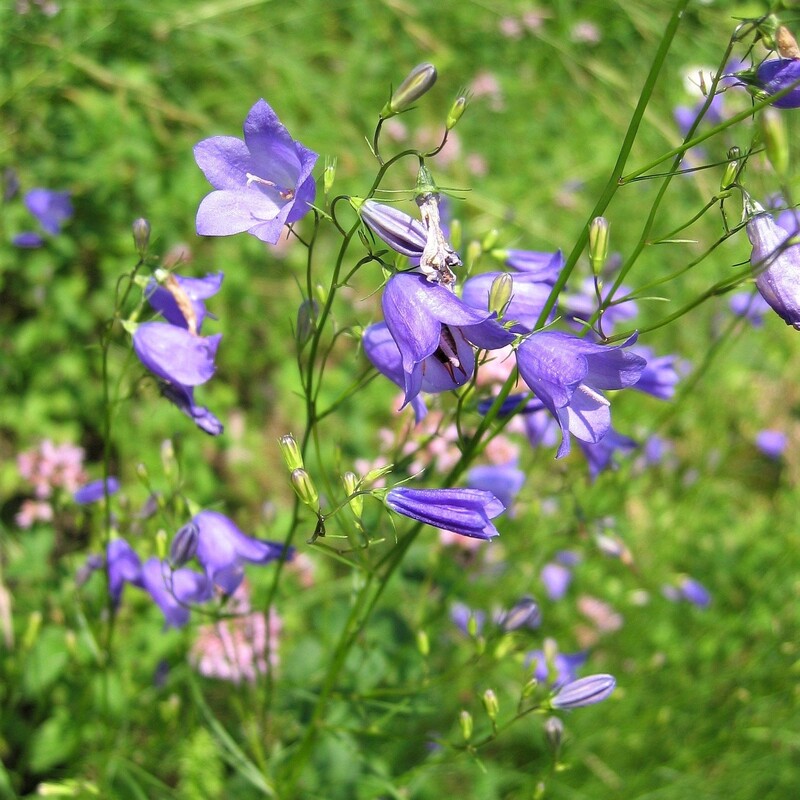
What about the Scottish Bluebell though? Well, do you remember Scottish Bluebell Matches and the delicate blue and bell-shaped flowers on the matchbox? These are completely different from the “blue bells” on the plants in our woodlands. They are in fact “Campanula rotundifolia”, a creeping, rooted perennial that flowers from July to September and more commonly known as the Harebell. It favours dry, grassy places, so you will find it in the dry land around our sandy beaches as opposed to in our damp, shady woodlands. Many English Bluebell tales involve dark fairy magic with bluebell woods being portrayed as scary, forbidding places that should be avoided. For example, if you do enter a bluebell wood, you should never pick or step on a bluebell for fear of breaking a spell that a faerie has hung on one of the flowers. If you do break a faerie spell, they will get extremely upset, seek you out and enchant you in such a way that you would be drawn further into the woods to wander lost for evermore. Folklore says that you also need to be careful with the Scottish Bluebell because its common name is rooted in magic. Some say that the name “Harebell” was given to the flower because witches would turn themselves into hares and hide among them. It may also be the reason why the names Witch's Thimbles and Witch Bells were used for the flowers.
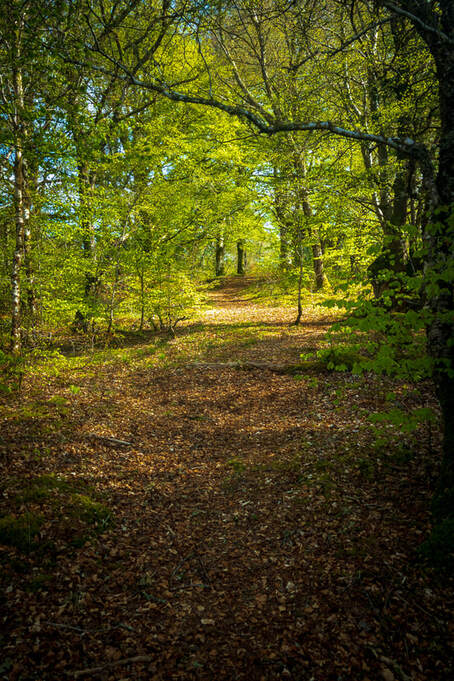
So, there you have it. Hyacinths or Harebells? English Bluebells and Scottish Bluebells? Different plants linked by a common name and a whole lot of myth and legend, both of which you should not damage for fear of being visited by angry faeries, witches or indeed, the Aul’ Man himself. 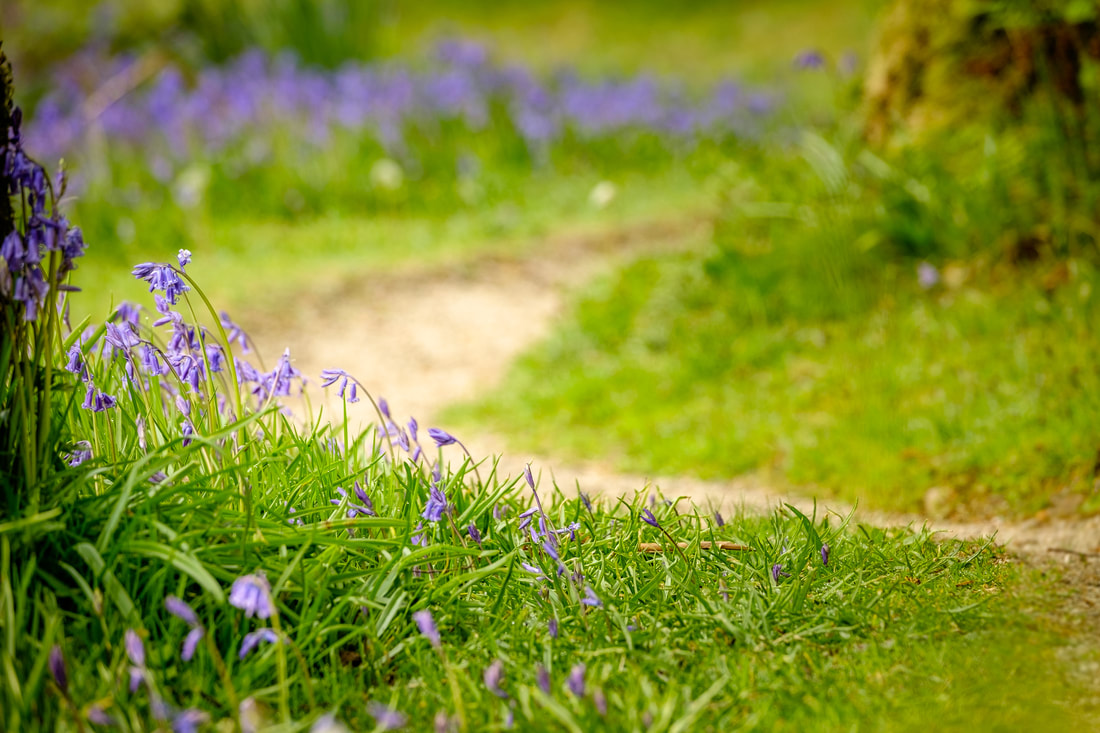 Winding Through Blue - Phemie's Walk, Strontian, Sunart May is probably the month of the year that I look forward to most because it is the month in which the landscape well and truly awakens from its winter slumber. The dawn chorus fills the early morning air with birdsong, spring flowers cover the ground with a multitude of bright colours and trees burst with new leaves to create beautiful and vibrant sights in our woodlands. So, on bright May mornings while walking at Sàilean nan Cuileag near Salen and Phemie’s Walk near Strontian, I was compelled to capture the scenes shown in the images below because the fresh, bright green colour of the grass on the ground and the leaves on the trees was such a beautiful and vibrant sight. This ‘spring green’ colour is such a potent sign of new life and renewal. So much so, that it’s little wonder that Beltane, an ancient Celtic festival celebrating joy, renewal, and community falls on the first day of May. 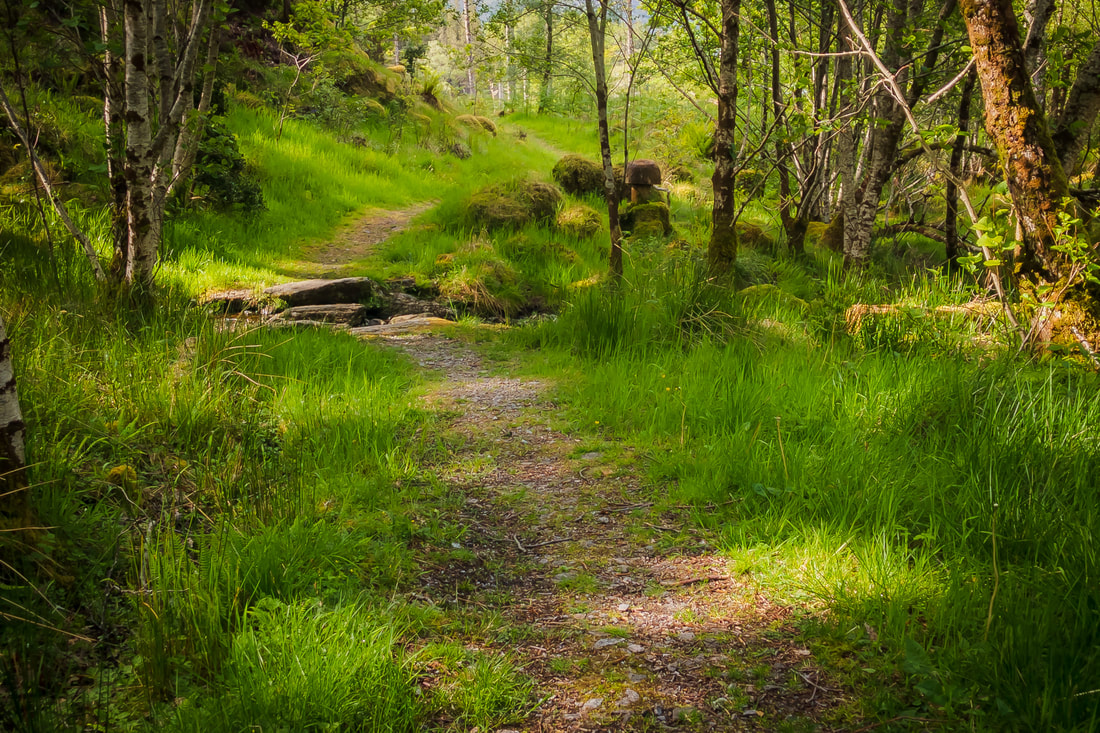 Image 1: Verdant spring grass covering the floor of the woodland at Sàilean nan Cuileag Beltane marks the beginning of summer in the Northern Hemisphere and is considered one of the four major seasonal Celtic festivals along with Samhain, Imbolc, and Lughnasadh. As well as joy and renewal, Beltane is often associated with fertility, abundance, and growth, and has been celebrated for centuries with feasting, dancing, and bonfires. In ancient times, bonfires would be lit on hilltops to honour the sun and promote fertility. The bonfire would be the centrepiece of the Beltane celebrations, symbolising the return of the sun and the warmth of summer. It was also believed to have protective and purifying powers, and people would jump over the flames or pass through them as a form of ritual cleansing and purification. They would also drive their livestock between the fires, believing that the smoke and ashes would protect them from disease and bring fertility to the animals.
I grew up in a large council estate called Burnfoot. It was built between the 1950s and 1970s and, in the early part of these years, a group of local people decided to revive the Beltane traditions and create a festival that would celebrate community and bring the people of this new housing estate together. Central to the festival was the crowning of a local girl as the Burnfoot Queen who, like the May Queens of the past, was chosen for her character and community spirit, and was considered to be a role model for other young people living on the estate.
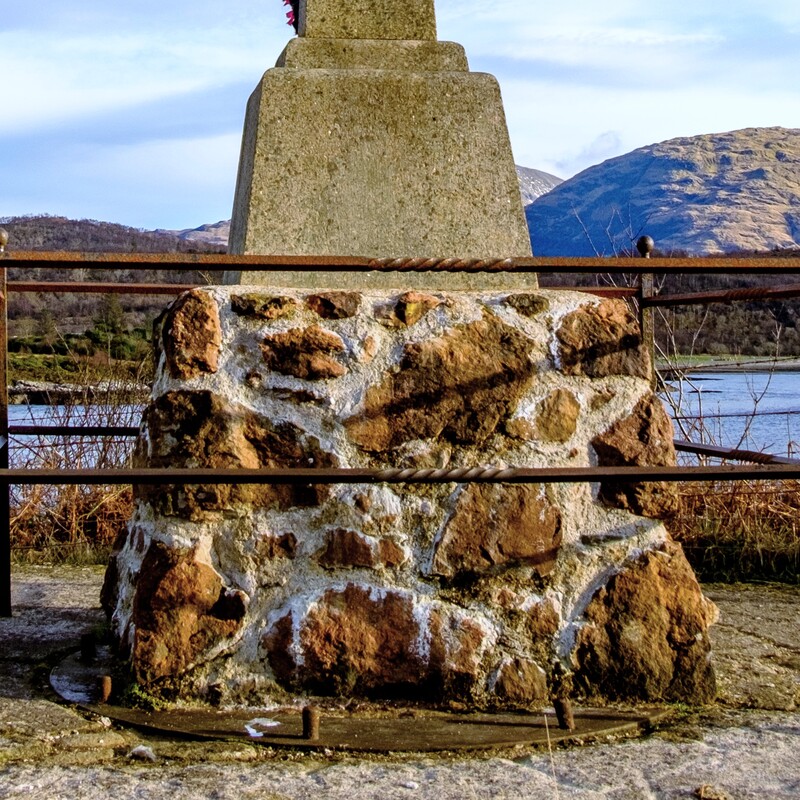
I remember the crowning ceremony to be a big occasion. It was attended by a large crowd of locals and visitors and once it had taken place, there would be procession through the estate, with the Burnfoot Queen at its head, on an elaborately decorated float. To the small boy that I was, the parade was a colourful and lively event, featuring floats and displays from local businesses and organisations. So much so, that it would bring together people of all ages and backgrounds to celebrate what was known as the Burnfoot Festival and ultimately the community of Burnfoot. As far as I’m aware, this Festival still takes place and I find it fascinating how this event from my distant childhood memories was a revival of Beltane traditions that can be traced back to pre-Christian times in Scotland. I wonder how often folk have driven past the Ardgour War Memorial and never paid it much attention. This was certainly the case for me, having passed it countless times on my way to and from the Corran Ferry, until one day when I found myself with some spare time at the marshalling area on the Ardgour side of the Corran Narrows. After deciding to go for a quick walk, I found myself up on a bank just south of the lighthouse, standing beside the War Memorial and looking southwards at an expansive view of Loch Linnhe. While standing there, I spotted something that I would later learn played a small part in a huge project that is thought to have been key in bringing World War I to an end. 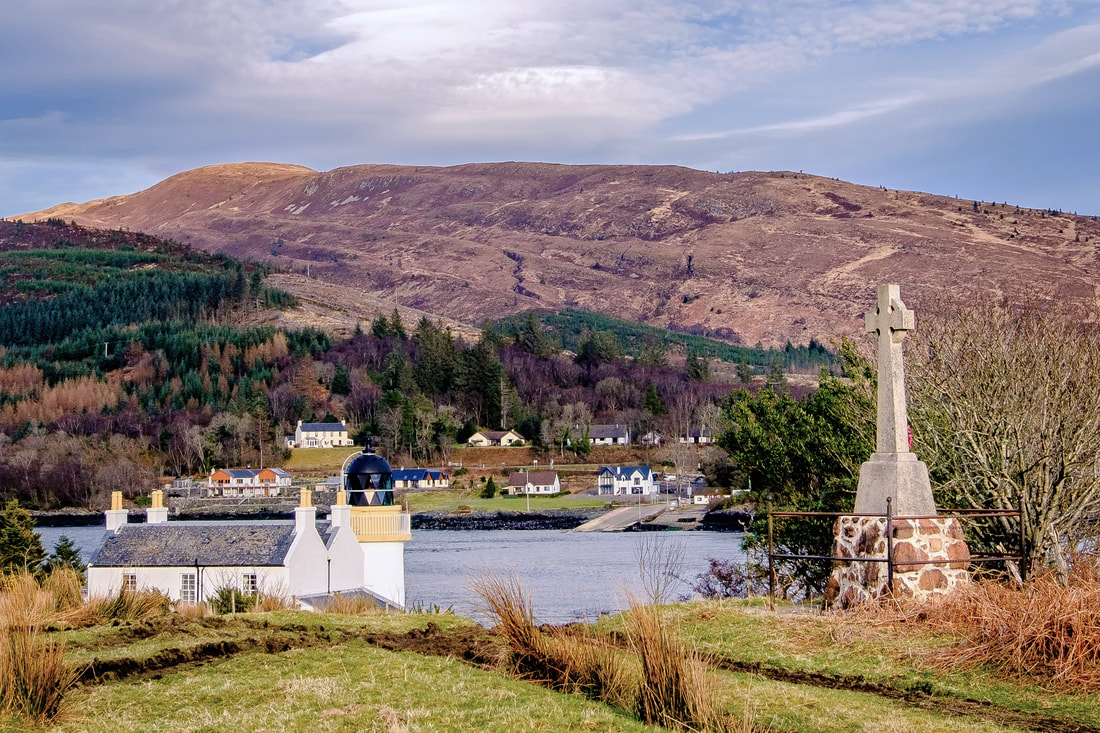 Image 1: Ardgour War Memorial near Corran Lighthouse The Ardgour War Memorial is typical of the many that you find scattered across the Highlands, consisting of a granite Celtic cross and plinth mounted on a base of what seems to be made of local stone. Whilst here, I took a moment to stand by it with my eye drawn to the wreath of red poppies that had been laid at the base of the cross and to the words inscribed on the plinth beneath it: IN MEMORIAM PARISH OF ARDGOUR THE GREAT WAR 1914-18 _____ DO'N GHINEALACH A RINN ÌOBAIRT SADH FHUILING CRUADAL, S A SHEALBHAICH BUAIDH _____ TO THE GENERATION WHICH BORE THE SACRIFICES AND BY SHARING IN THE HARDSHIPS, ACHIEVED VICTORY I then noticed that the Memorial’s stone base was sitting on what appeared to be a metal ring with several bolts protruding from it. I didn’t give them much thought at the time, but a day or two later, I couldn’t help wondering what they had been used for, so decided to try and found out.
The mines were being used in the North Sea Mine Barrage, a large minefield laid easterly from the Orkney Islands, right across the top of the North Sea to Norway with the aim of preventing the U-Boats based in Germany from making their way out into the Atlantic to attack the convoys that were bringing supplies from the United States to the British Isles.
I took these words for the image title from the seventh stanza of the poem, “For the Fallen” by Laurence Binyon, which reads:
“As the stars that shall be bright when we are dust, Moving in marches upon the heavenly plain, As the stars that are starry in the time of our darkness, To the end, to the end, they remain.” The poem is more commonly known for its third and fourth stanzas as they are often recited at Remembrance Day services as what is termed the "Ode of Remembrance", ending with the familiar words “We will remember them”. Despite the words of these two stanzas being extremely thought provoking, I find the words of the seventh stanza incredibly moving because there is such strong sense of poignancy to them. I guess that’s why I used them as the title for this image. The vernal (spring) equinox on 20 March heralds the arrival of spring and it is a great time of the year for observing one of the night sky’s most elusive phenomena: zodiacal light. This light will appear as a false dusk that is created by a triangular beam of light from the Sun being reflected off a fog of tiny interplanetary dust particles when it is beneath the horizon. It’s so difficult to see and many astronomers have never witnessed it, however, I was lucky enough to spot and photograph it at Castle Tioram on a dark moonless night on the first day of March last year. It should be visible on dark moonless nights over the next few weeks, so do keep an eye out for it. 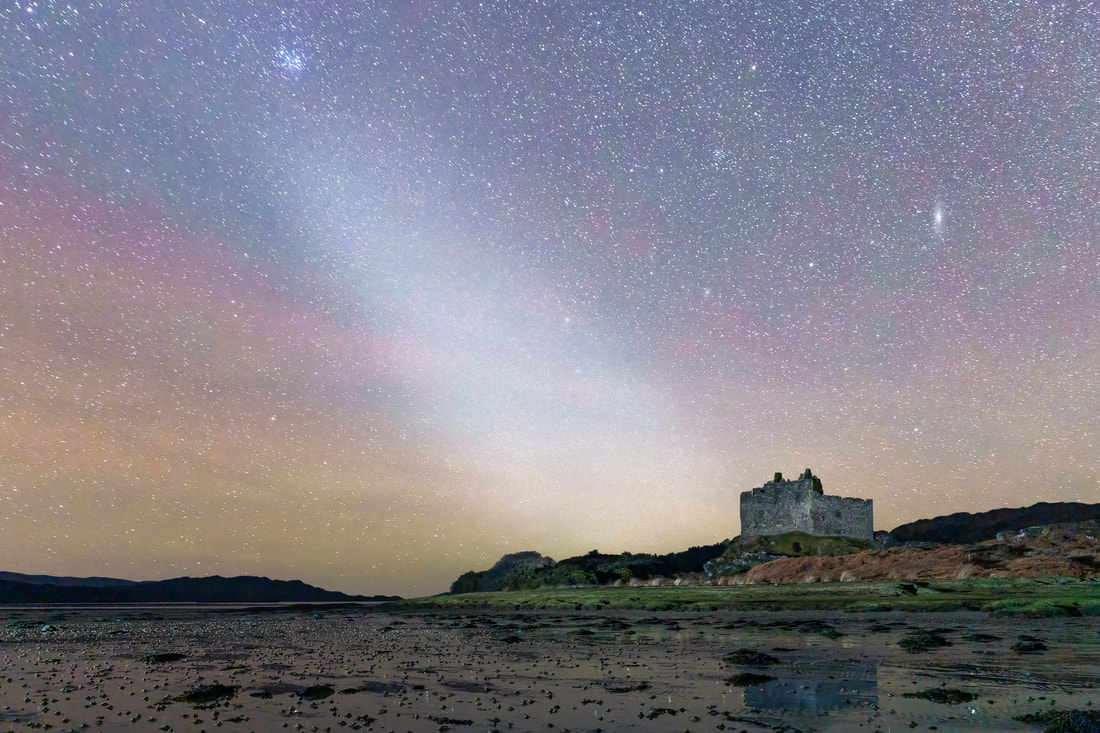 Image 1: Tioram and the Zodiac - Castle Tioram, Dorlin, Moidart Triangular zodiacal light, a feature of the night sky around the time of the equinoxes, shines up into the night sky above Castle Tioram Have you ever been outside at this time of the year, looking west and noticed what you think is lingering evening twilight, or the light of a nearby town shining up from the horizon? If so, you may well have seen zodiacal light in the sky and not realised. It is a triangular beam of light that shines along the line of the Zodiac, an 8° wide band that straddles the ecliptic, the invisible path that the Sun traces as it moves around the sky. It is the region of the sky where we can find the Sun, Moon and planets and is only 8° wide because most of the planets have orbits that are only slightly inclined to that of the Earth. The exception is Pluto, whose inclination of 17° takes it out of the Zodiac during part of its orbit. At this time of year, the Zodiac rises steeply from the horizon at dusk meaning zodiacal light does the same. People used to think that it originated somehow from phenomena in the Earth’s upper atmosphere, but today we understand it as sunlight reflecting off dust grains that circle the sun in the inner solar system, along the line of the Zodiac. The grains of dust were once thought to be left over from the process that created our Earth and the other planets of our solar system around 4.5 billion years ago, but in recent years, there’s been discussion about them originating from dust storms on the planet Mars. They are thought to be about a millimetre and less in size, densest around the immediate vicinity of the Sun and extending outward beyond the orbit of Mars and, when sunlight shines on these dust grains, it creates the light we see. 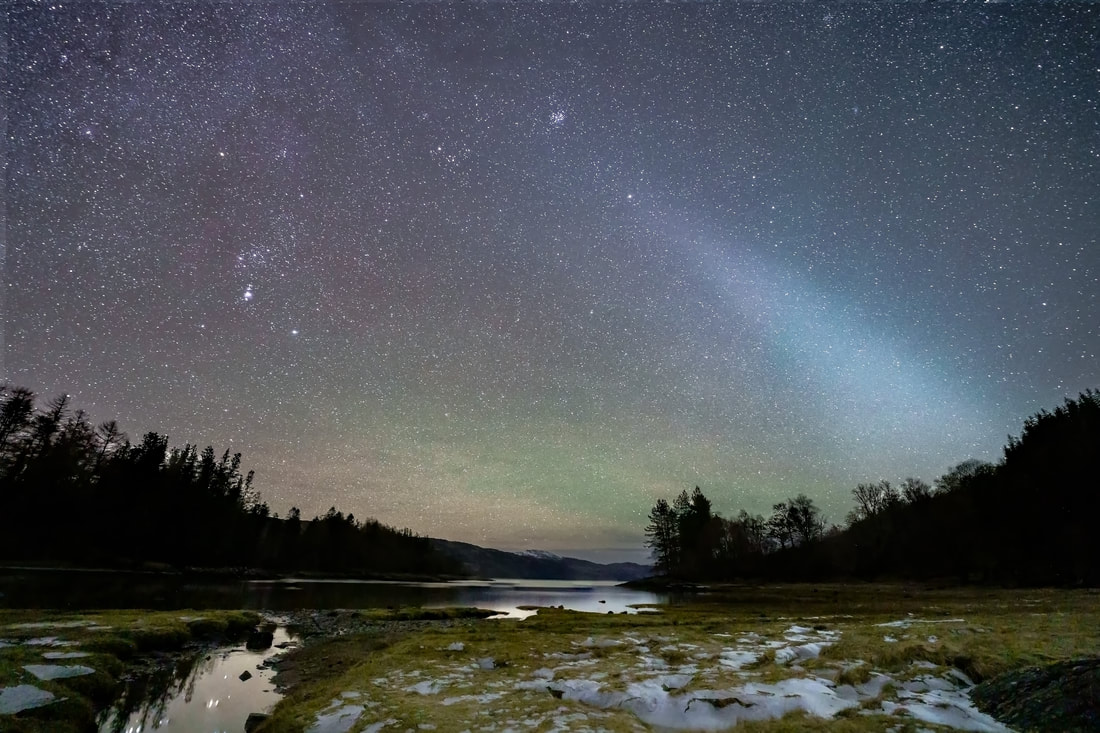 Image 2: Airglow and the Zodiac - Sailean nan Cuileag, Salen, Ardnamurchan Triangular Zodiacal Light extending from the western horizon, above a hint of airglow and up into the sky above Sailean nan Cuileag and Loch Sunart The light is fainter than the Milky Way, so the darker the night sky, the better chances of seeing it. It is best to go to a location with little or no night pollution, on a night when the moon is out of the sky and look for it in the west in the hour or two after sunset. If you are lucky, you may spot it as a ghostly pyramid of light rising steeply from the horizon.
The best time to look for it in the coming month will be on the days either side of the equinox (20 March) as this coincides with a New Moon, meaning that there will be no moonlight to drown it out. With Venus and Jupiter, our night sky’s two brightest planets, being low down in the west after sunset, they’ll be visible close to or in the zodiacal light. Shortly after, on 23 and 24 March there will also be a thin crescent Moon sitting in the midst of the triangular beam of light as it shines upwards from beneath the western horizon. If you don’t see it in the next few weeks, you can try again in the autumn, but instead of looking for it in the west at dusk, you need to look for it in the east at dawn. This is because the Zodiac elliptic rises steeply from the eastern horizon at dawn in the autumn instead of rising steeply from the western horizon after dusk in the spring. The image below shows Ardnamurchan Lighthouse shortly after Storm Eunice had swept across the southern part of the UK leaving a £360m trail of disruption in its wake. Thankfully, the Peninsula missed the worst of the storm, experiencing only moderate gale force winds and not the hurricane force winds that swept across the south of the UK. However, considering that the names of the 6 deadliest storms from UK history are called the 1607 Bristol Channel Flood, the Great Storm of 1703, the Eyemouth Black Friday Storm of 1881, the Blizzard of 1891, the North Sea Flood of 1953, and the Great Storm of 1987, I was left wondering why one of the most powerful storms to hit the south coast of England was simply called Eunice. Well, a little bit of research found that there is a lot of power in such a simple and innocuous name 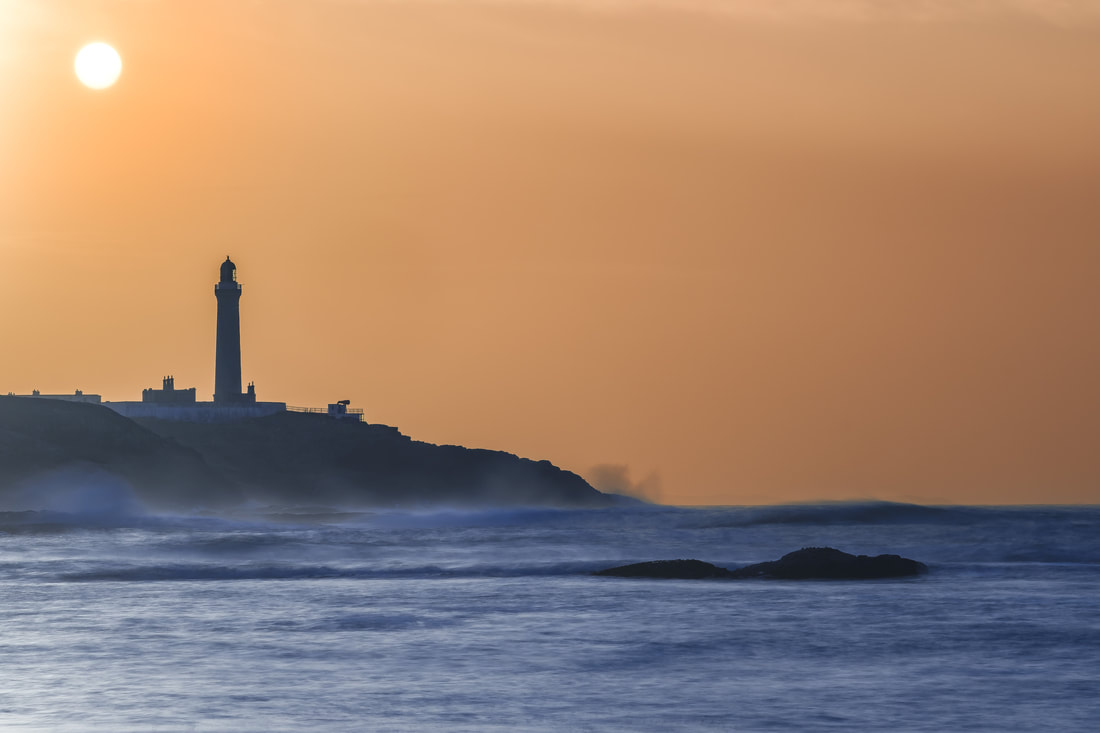 Image 1: After Eunice I - Ardnamurchan Lighthouse viewed from Port na Carraidh, Ardnamurchan On the evening that Storm Eunice left our western shore, the clouds beyond Ardnamurchan Point begin to clear to let the sun illuminate an orange sky. In 2015, the UK Met Office and its Irish counterpart Met Éireann launched the "Name Our Storms" campaign to raise public awareness of severe weather and to create a single naming system that could be used to aid the communication of approaching severe weather. The result was a list of names that could be used for the 2015/16 storm season, running from early September of 2015 to late August 2016, with further such lists for every year since then. This campaign proved to be particularly effective at gaining attention on social media and reaching groups of people that had previously been difficult to engage with, meaning that in general, the public became better placed to keep themselves, their property, and businesses safe during major storm events. Such was its success, that the Royal Netherlands Meteorological Institute (KNMI) joined the initiative in 2019, recognising that it made a lot of sense to give common names to such extreme weather events. So now, from around June each year, members of the public from all three participating countries are asked to suggest names for the coming storm season so that a list of selected names can be published on the first day of September. The list is made up of alternating male and female names for each letter of the alphabet, except for Q, U, X, Y and Z. The reason these letters are not used is that there are not many names that begin with them. Going back to 2015, the first ever name was used to name Storm Abigail, a storm that brought strong winds and heavy rain to much of the UK on 12-13 November 2015, with the most severe weather impacting the northwest of Scotland where power cuts affected up to 20,000 homes and many schools were forced to close for the day. Returning to this year, the first name for this current storm season was selected by KNMI. It is Antoni and along with Hendrika, Johanna and Loes, is named after an influential Dutch scientist. Met Éireann’s submissions include Cillian, Fleur, Íde, and Nelly and the Met Office’s names include Betty, Daisy, Glen, Khalid and Owain and show the breadth of names in use across the UK. In fact, Betty became the runaway winner of a public vote on Met Office Twitter, with over 12,000 votes cast to select it as the name for the letter B. Image 2: Distant Lighthouse I - Port na Carraidh, Ardnamurchan A stream flows through the sand at Port na Carraidh, catching the last of the light from the sky beyond Ardnamurchan Lighthouse Storms are named once they have the potential to cause medium (Amber) or high (Red) impacts to the UK, Ireland or the Netherlands with the effects of wind, rain and snow all being considered when deciding if a name should be used and this season things appear to have been relatively benign because it is mid-February and Antoni is yet to be used to name a storm.
This contrasts with last season when the first storm, Storm Arwen brought destructive winds rain and snow to the UK in late November. It was named on 25 November 2021 and on 26 November 2021, the UK Met Office issued what they described as a "rare red weather warning" due to a deep pressure system moving southwards from the Atlantic Ocean. When the system made landfall in Aberdeenshire, it brought extreme wind and waves all the way down the coast from there to the Tees Estuary. By the time the Storm Arwen had passed it had left more than a quarter of a million customers without electricity and three people dead. The damage it caused was compounded by sustained winds with gusts in excess of 90 mph that came unusually from the north-east and toppled around 16 million trees, the vast majority of which would have survived had the winds been from the prevailing south-west wind direction. Storms Barra and Corrie followed in December and January and then, between 16 and 21 February 2022, the UK was successively hit by storms Dudley, Eunice, and Franklin. Of these, Eunice was the most severe with South Wales and the southwest of England being worst hit. On 17 and 18 February 2022, the Met Office issued to two rare red warnings for much of southern England, south Wales and London effectively telling about a third of the UK population to stay at home. Eunice was one of the most powerful storms to impact the south coast of England since the Great Storm of 1987 and at its peak on 18 February, record gusts of 122 miles per hour were measured at the Needles on the Isle of Wight. By the time Eunice had passed, 4 people had sadly died as a result of it, over a million homes were left without power, a huge hole had been torn into the roof of London’s O2 Arena, a church spire in Wells, Somerset had been blown down, hundreds of train services and flights were cancelled, and many major roads were closed. The estimated bill for all the damage and disruption caused was £360 million. However, the Met Office said that things could have been a lot worse had it not been for the storm naming system ensuring that better messaging had been in place than that for the Great Storm of 1987. This meant that people had been more aware of Storm Eunice approaching, better prepared for it arriving and had heeded the warnings not to travel. This certainly shows that we should never underestimate the power of a name and simple messaging. I would never have thought that a seemingly innocuous slip on a wet rock at Ardtoe would have resulted in a debilitating injury requiring surgery, 4 months of immobilisation, 12 months of physiotherapy and a further 6-12 months of recovery time to get me back to a point where I can freely walk in and photograph the landscape here on the Peninsula. However, this was indeed the case, and I am thankful that I had my photography to use as the motivator to get active and aid my recovery. It also resulted in the creation of a collection of 72 images that portray the varying landscape and moods of the Peninsula throughout 2022. This blog contains 12 of these images, one for each month of the year, and I hope to share the remainder of them over the course of 2023. The BackstoryOn 6th July 2021, I slipped on some wet rocks at Ardtoe, dislocating my knee and tearing my patellar tendon in two. Following an operation to repair the damage, I found myself immobilised and in a knee brace until early November and unable to get out and do any photography. While laid up in the brace, I set myself the target of getting back out with the camera by the start of 2022 and the objective of taking 5 or 6 images each month that captured the varying landscape and moods of the Peninsula throughout the year. With limited mobility, especially at the start of the year, I had to think carefully about locations I could safely go that would provide me with opportunities to take the photographs that I had in mind. This was a bit of a challenge at first, but I found that this limitation helped me with my creativity. By the end of the year, I had visited enough locations and taken enough photographs to enable me to create a collection of 72 images, or six for each month to reasonably portray the Peninsula over the course of 2022. Twelve of these images, one for each month, are presented in this blog and I plan to share the rest of them over the course of the coming year in a new section on this website titled “A Year on the Peninsula”. As well as the collection of images, the project provided me with the motivation to get “out there” and get back into my photography and aid my recovery. When pulling these images together, I was certainly reminded of how far I have come since that day in January when I gingerly made my way down the jetty at Salen with the help of a crutch to take the first photograph in this collection. I still have a number of months left in my 18-24 month long recovery period and hopefully, as my ability to walk on uneven ground and also downhill improves, I’ll be able to range further afield and photograph locations that I have not been able to get to since that fateful day in July 2021. The Images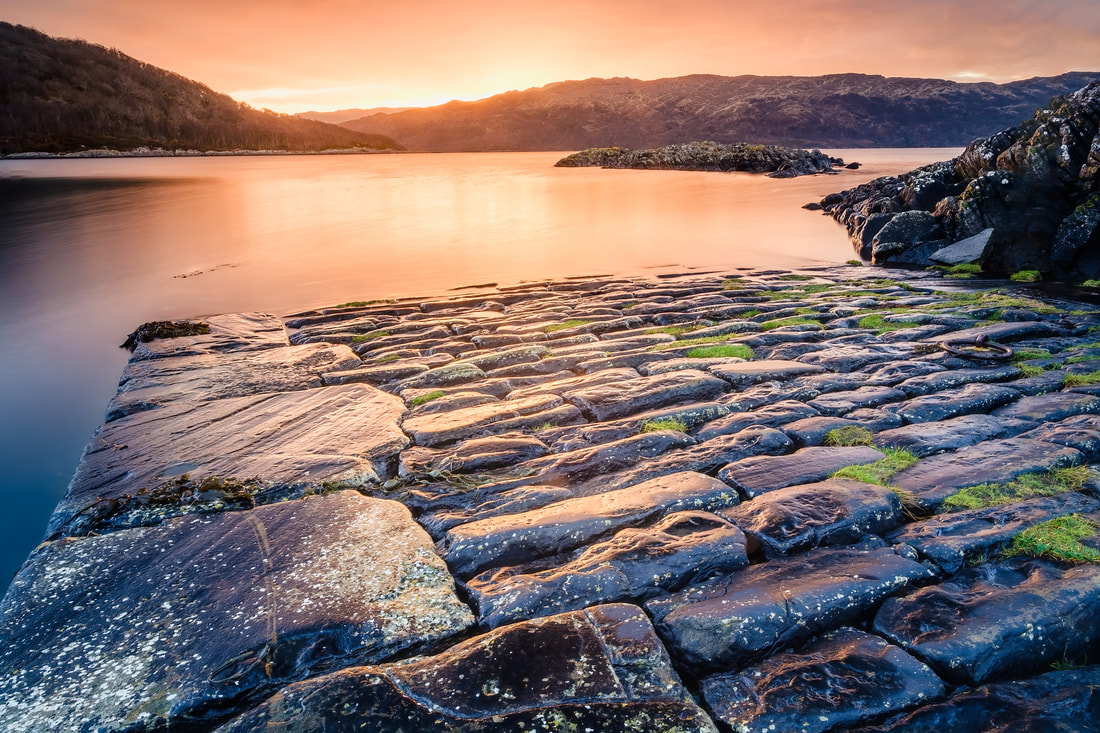
January
February
March
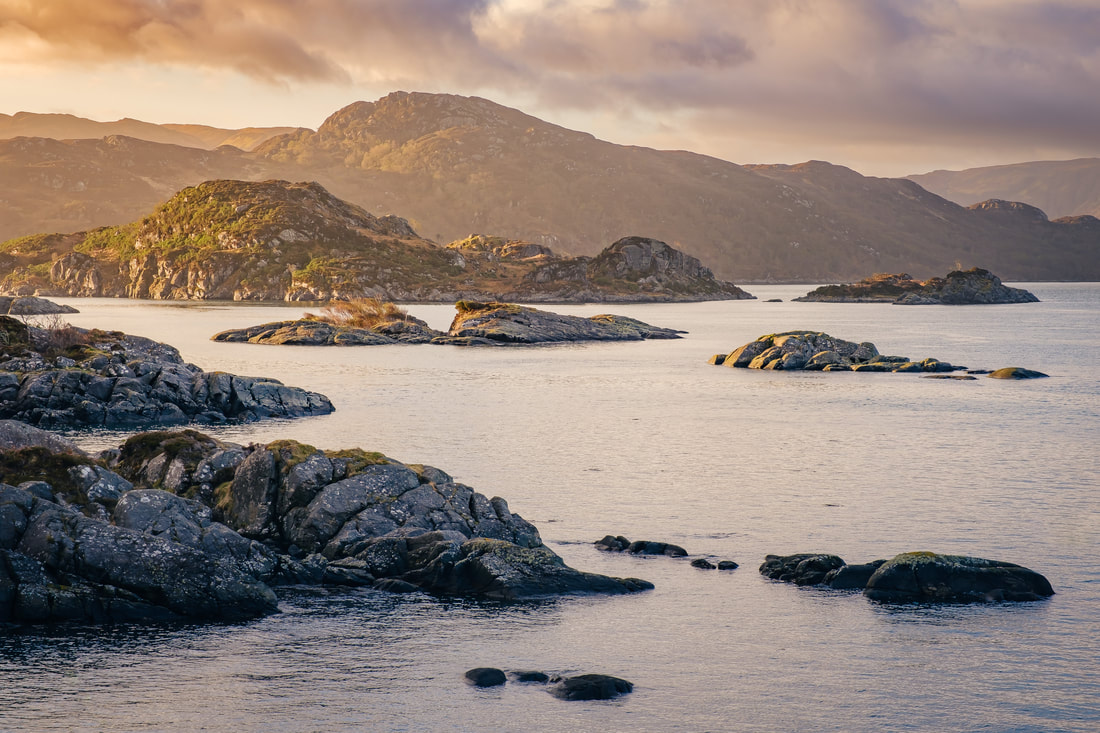
April
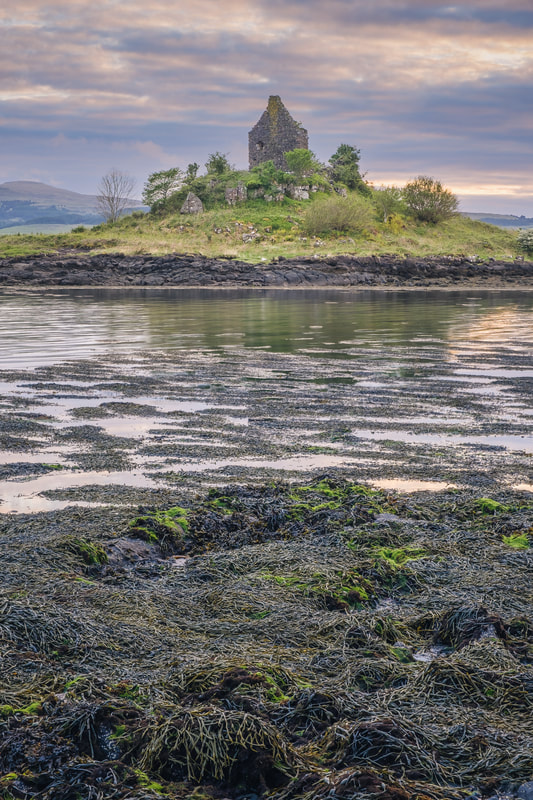
May
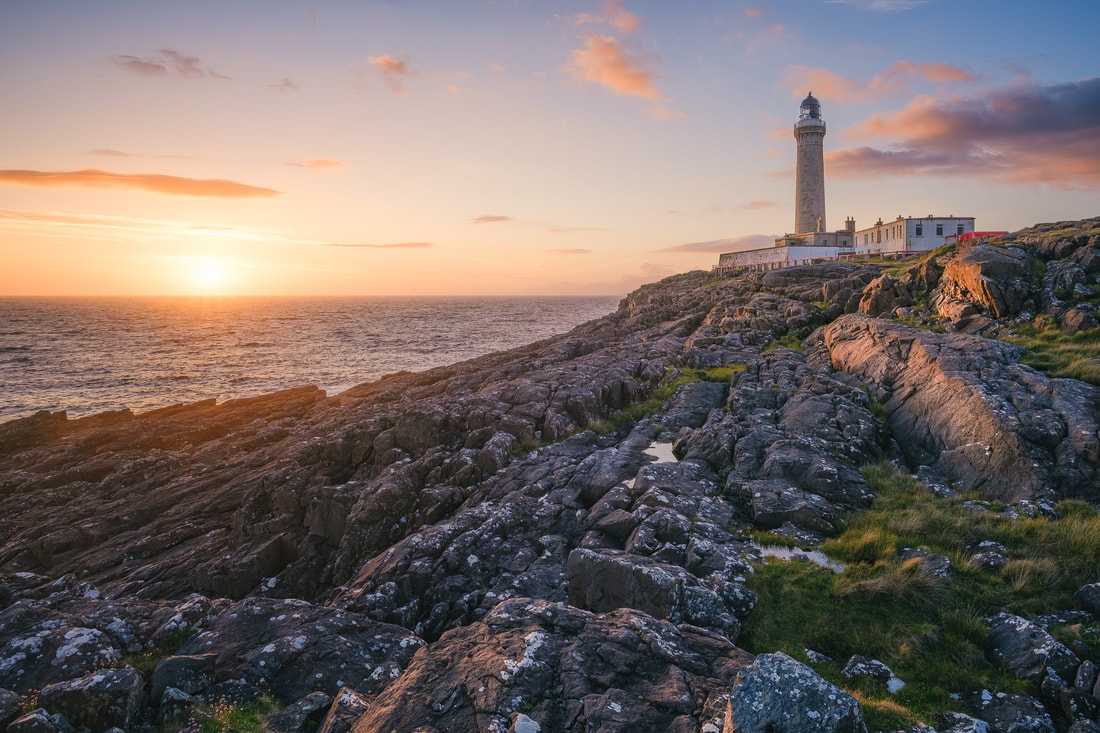
June
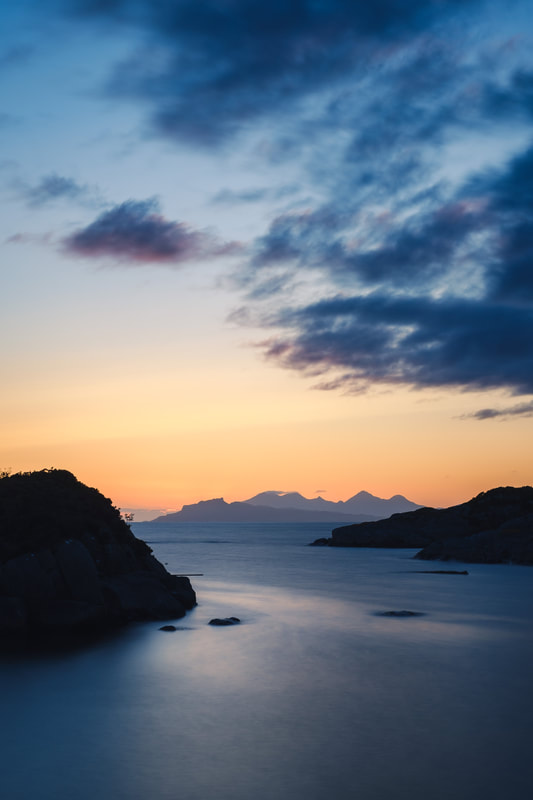
July
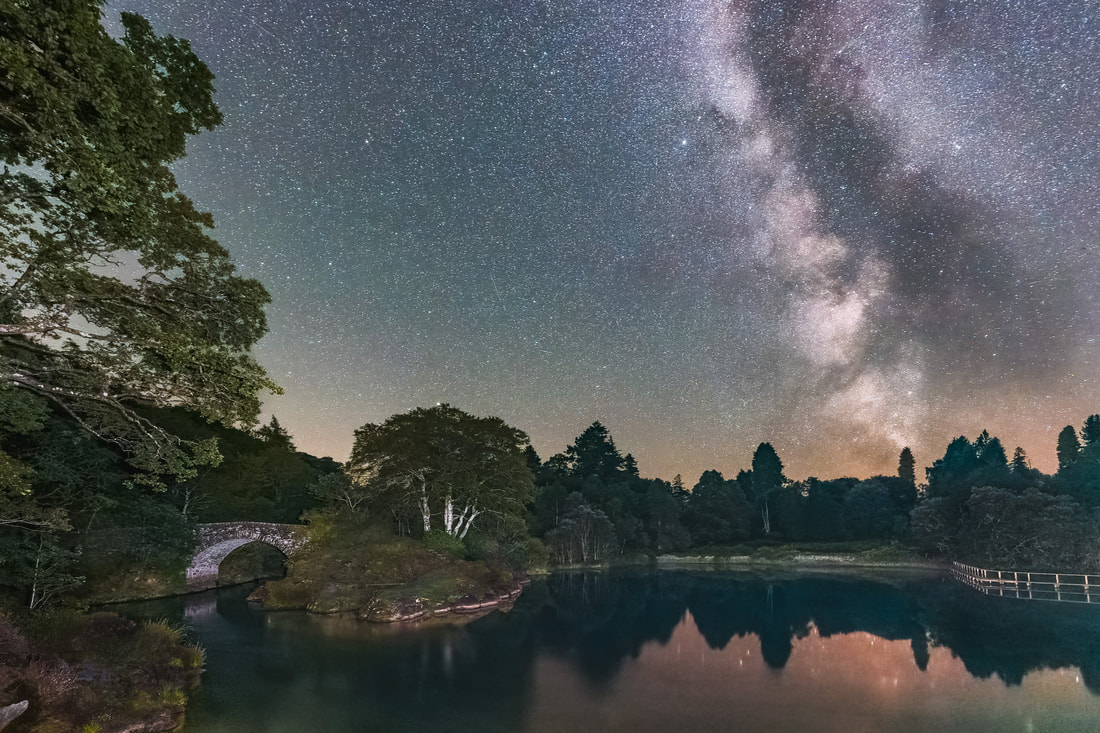
August
September
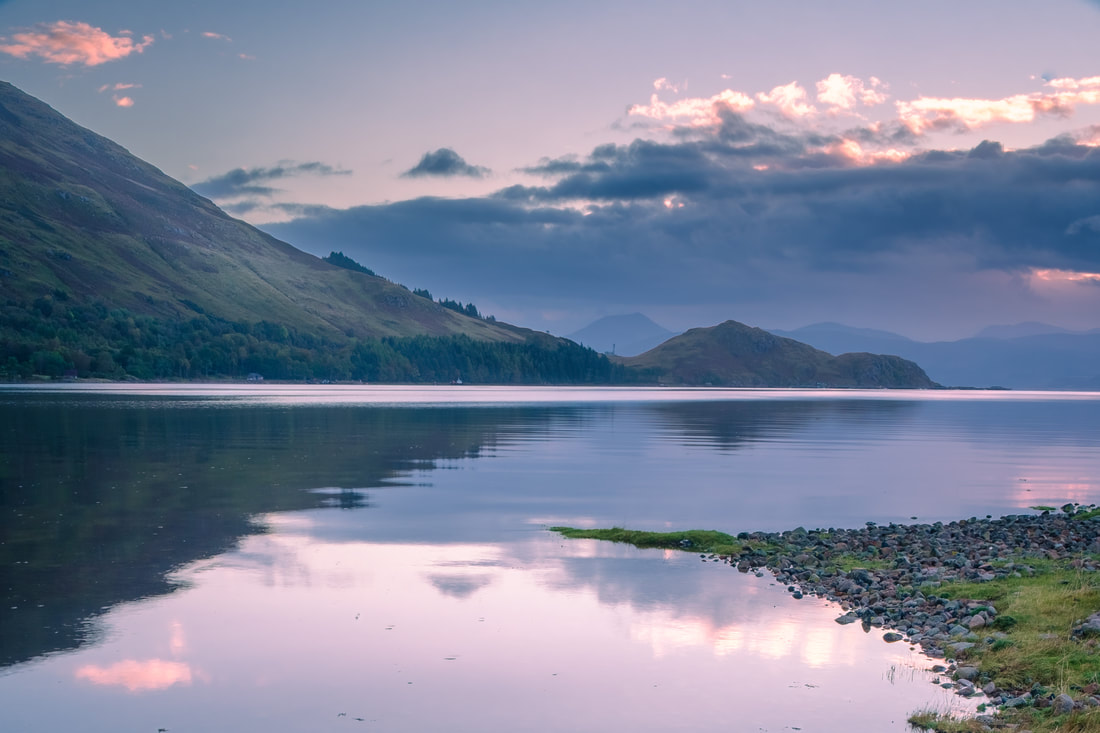
October
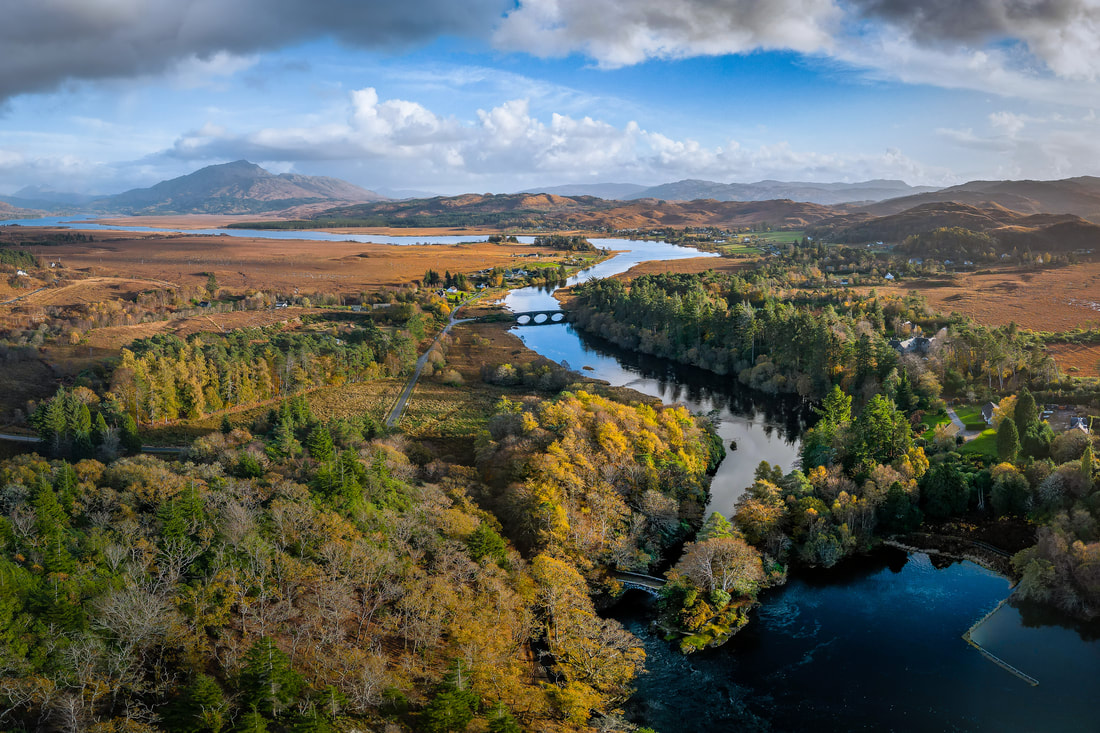
November
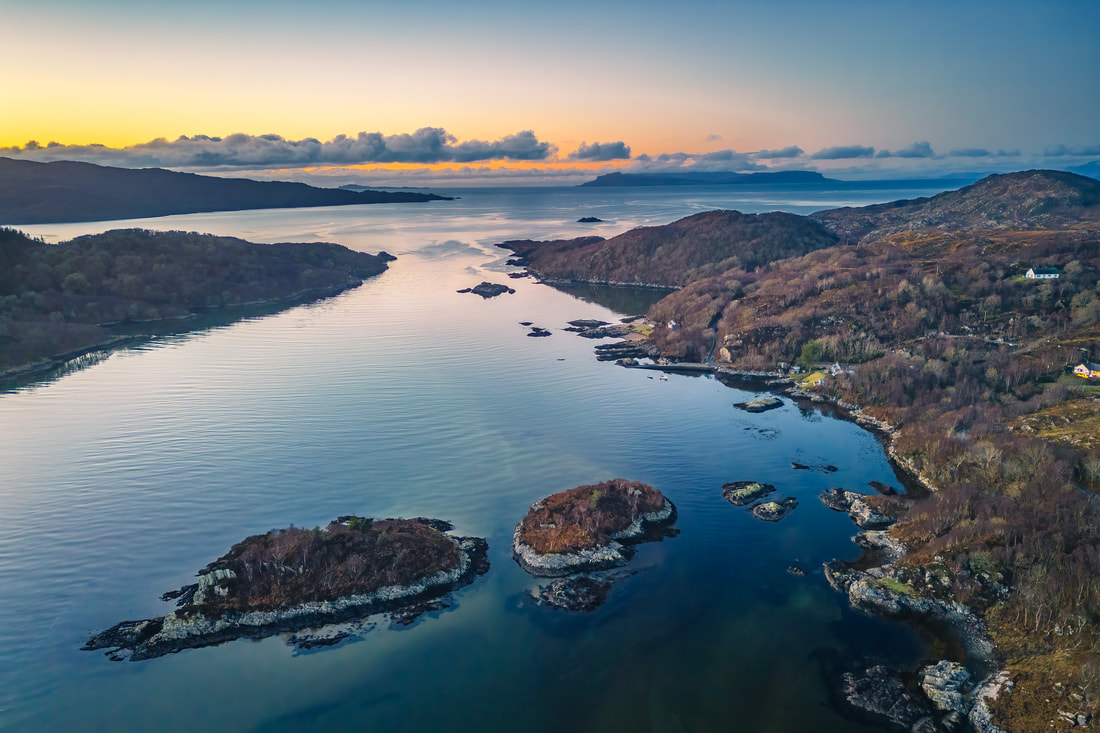
December
It’s December, the first month of winter and despite the temperate oceanic climate we have here on the Peninsula, we have had some pretty cold weather and some snow falling down at low levels, but not quite as much as shown in the image below featuring snow covered trees around the Old Shiel Bridge. It is also just over a week until Christmas Day and peoples’ attention has now turned towards the festive celebrations and making preparation for gathering with friends and family. However, you may be surprised to know that such celebrations are a relatively recent occurrence, and that Christmas was banned in Scotland for almost 400 years 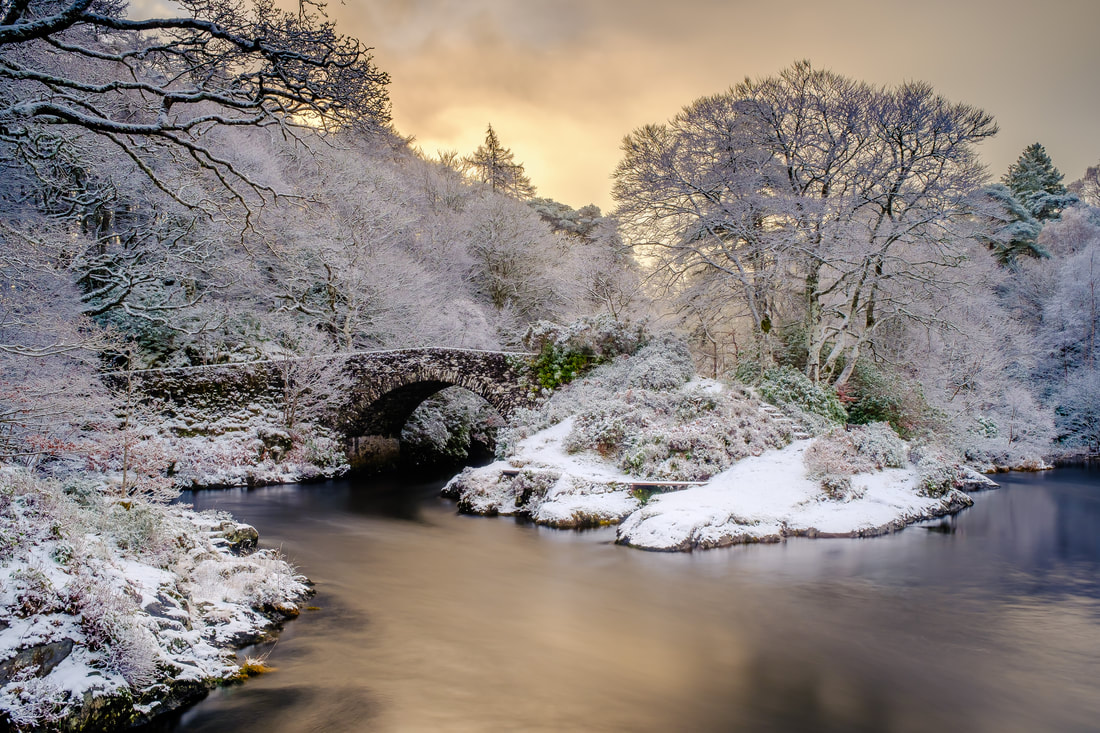 Image 1: Winter River of Gold I - River Shiel, Blain, Moidart The old bridge over the River Shiel at dawn after a fresh fall of overnight snow, with the golden light of the rising sun colouring the mist in the sky and the surface of the river as well. Celebrations at this time of the year all started back in the Neolithic period, or New Stone Age, when Celtic Pagans celebrated the Winter Solstice. It falls on, or around the 21st of December each year and marks the shortest day of the year and the celebrations were held to appease the gods to allow the sun to return and have the days get longer, warmer and brighter. About 3000 years later, in the late 700s AD, the Vikings began raiding Scotland, eventually beginning to settle here from the 8th century onwards. In doing so, they brought their own way of celebrating the Winter Solstice, which they referred to as Jól and became known as Yule. Their Yule celebrations would last for around 12 days, during which they would light bonfires, tell stories, drink ale and make sacrifices to the gods to earn blessing on the crops that would be grown when the warmer days returned. As Christianity arrived, Yule gradually became the Christian celebration that we now refer to as Christmas and Yule celebrations were held in all parts of Scotland where the Catholic Church held authority. Then, in 1560, Scotland split from the Catholic Church and formed the Presbyterian Church of Scotland (the Kirk) in what was known as the Scottish Reformation. With this, came a change in religious thought, and any activity that could be seen as extravagant, or as celebrating superstitious ideals, was heavily frowned upon. This included the celebration of Yule and finally, after years of increasing discord, the Scottish Parliament passed a law in 1640 that made celebrating the ‘Yule vacations’ illegal. 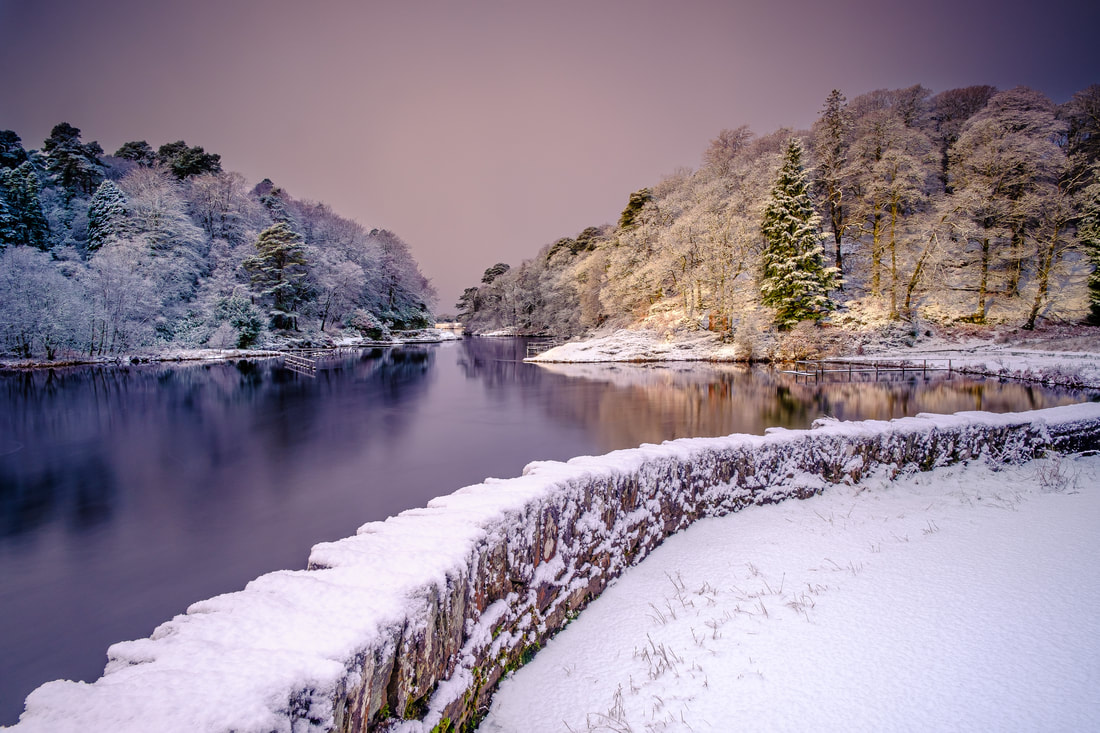 Image 2: Patch of Gold - River Shiel, Blain, Moidart The House Pool on the River Shiel at dawn after a fresh fall of overnight snow, with the golden light of the rising sun falling on a patch of trees on its northern bank. The ban remained in place until 1712, when it was officially repealed, but the powerful Kirk continued to frown upon any festive celebrations. In these times there was no public holiday on Christmas Day and punishments for singing Christmas carols, baking Yule bread and any other such things were extremely harsh. It was because of this that Hogmanay and New Year celebrations became so important in Scotland.
This situation continued for many years until a change in attitudes most likely caused by the commercialisation of Christmas, led to Christmas Day becoming a public holiday in 1958 and Boxing Day eventually becoming a public holiday in 1974. Some argue that this commercialisation was driven by the introduction of UK wide television broadcasting in the early 1950s and that that the pace of it increases year on year. It certainly does seem like we see Christmas decorations and sales promotions appearing earlier each year. The way we celebrate Christmas has also changed. It has moved away from religiously oriented traditions that were deeply rooted in Christianity and Viking culture, becoming more of a secular event in recent years, where the focus seems to be less religious and more about spending time with friends and family. However, whatever your views are on what Christmas should and shouldn’t be, the 25th of December 2022 will only be Scotland’s 65th Christmas holiday in 382 years, so I wish you all a Blythe Yule and hope that it brings happiness and joy to you and your family. With its ever-changing weather, dramatic landscapes, beautiful lochs and ancient woodlands, the Peninsula often seems to be a magical and mystical place to me and like much of Scotland, legendary stories used to explain the unexplainable and to warn us away from dangerous places, have been carried down through the generations. Indeed, photographing the Peninsula often leads me to uncovering links between legends and its landscape, just as it did when I photographed Loch Sunart one November day. 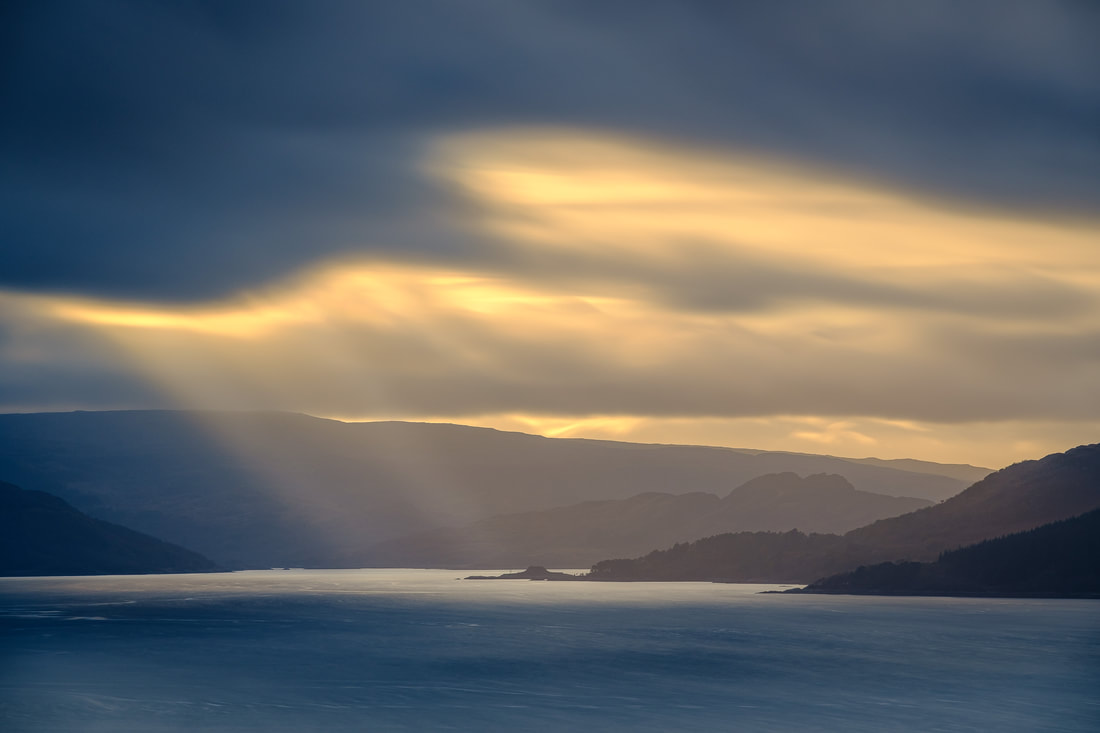 Dùn Light - Dùn Ghallain and Loch Sunart, viewed from Meall Mor, Resipole, Sunart Rays of afternoon sunlight break through the clouds over the western end of Loch Sunart to light up Dùn Ghallain, the small but distinctive shape that juts out into Loch Sunart from the northern slopes of Ben Laga. The image above was captured from the upper slopes of Meall Mor, a small peak that sits on the western flank of Ben Resipole. I have been up there many times because it is only a short distance from my house and the modest climb is rewarded with stunning views westwards over Loch Sunart to the Isle of Carna and the hills of Morvern beyond. While taking this photograph, I saw something that I hadn’t noticed before. A small promontory sitting in front of the silhouette of the Isle of Carna, which only caught my eye because it was lit up by rays of light that had broken through the clouds. Curious as to what it was, I did a bit of research when I returned home to find out that this knoll was both the site of a small Iron Age fort called Dùn Ghallain (Fort of the Storm) and the setting of ‘The Swan of Salen’, a mythical tale that seeks to explain why no swans are found on Loch Sunart. It tells of a Chieftain who fell in love with a maiden of low social status. The Chieftain’s mother disapproved of the match and turned the maiden into a swan. The Chieftain, not knowing this, killed the swan while out hunting and was heartbroken to see the swan’s body take the form of his love as it died. Inconsolable, he fell on his own sword, and the bodies of the two are said to lie beneath Dùn Ghallain to this day. It is said that this is why there are no swans on Loch Sunart, making it the perfect example of a tale to explain the unexplainable. If you travel a few miles east from there, you can find a location whose name is linked to a legend that warns you away from danger. It is Lochan nan Dunaich, the ‘Little Loch of Sadness’, where young children were supposedly lured into its waters by a Kelpie and never seen again. 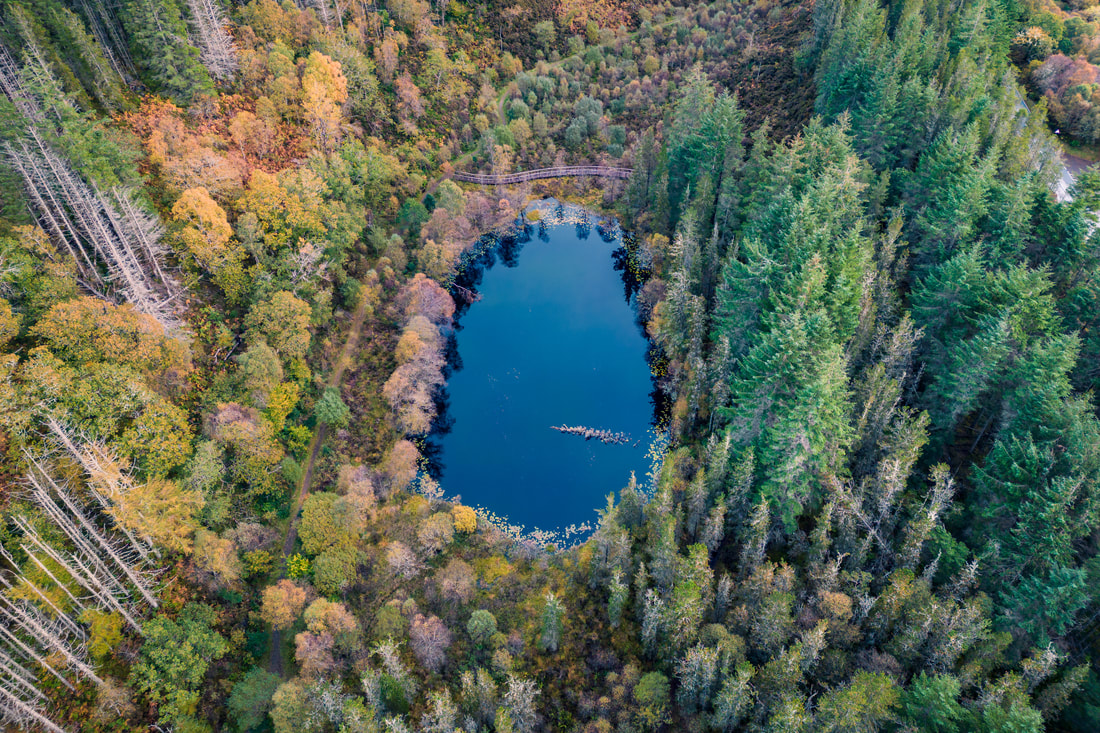 An aerial view of the dark waters of Lochan nan Dunaich near Salen, Ardnamurchan Kelpies are said to be water spirits that inhabit many of the rivers and lochs of Scotland. Although usually appearing in the form of a horse, they are capable of shape-shifting and can take human-form. When in horse form a kelpie will often stand near the edge of a river or loch waiting for its prey, which will often be young children. Kelpies have magically adhesive bodies, meaning that should a child choose to clap the supposed horse, they will become attached, allowing the Kelpie to drag its victim into the water and drown them.
It is also said that they can stretch the length of their backs to carry several children to their death at once. One tale involves a group of children, where all but one climbed onto the kelpie’s back while the last child stayed on the shore. This child petted the kelpie’s neck only to have their hand become attached to it. They freed themselves by cutting off the hand only to then watch their friends, who were stuck to the kelpie’s back, being dragged down into the depths of the water where they were devoured, and their entrails thrown to the water’s edge. When you look at Lochan nan Dunaich, a deep and dark pool of water with fallen trees around its boggy edges, you can well understand the need to warn children away from straying too close to it and with such gruesome tales about Kelpies, you can well understand how the local legend would have been to this effect. So, if you find yourself there, tread carefully, very carefully indeed. When you hear someone say, "Once in a blue moon …" you probably think that they are talking about something rare. In fact, this month’s image shows the blue moon of October 2020 sitting above the summit of Càrn na Nathrach in Ardgour, with the peaks of Druim Garbh, Sgùrr Dhomhnuill and Sgùrr na h-Ighinn to its left. So, what exactly is a blue moon and is it actually that rare? 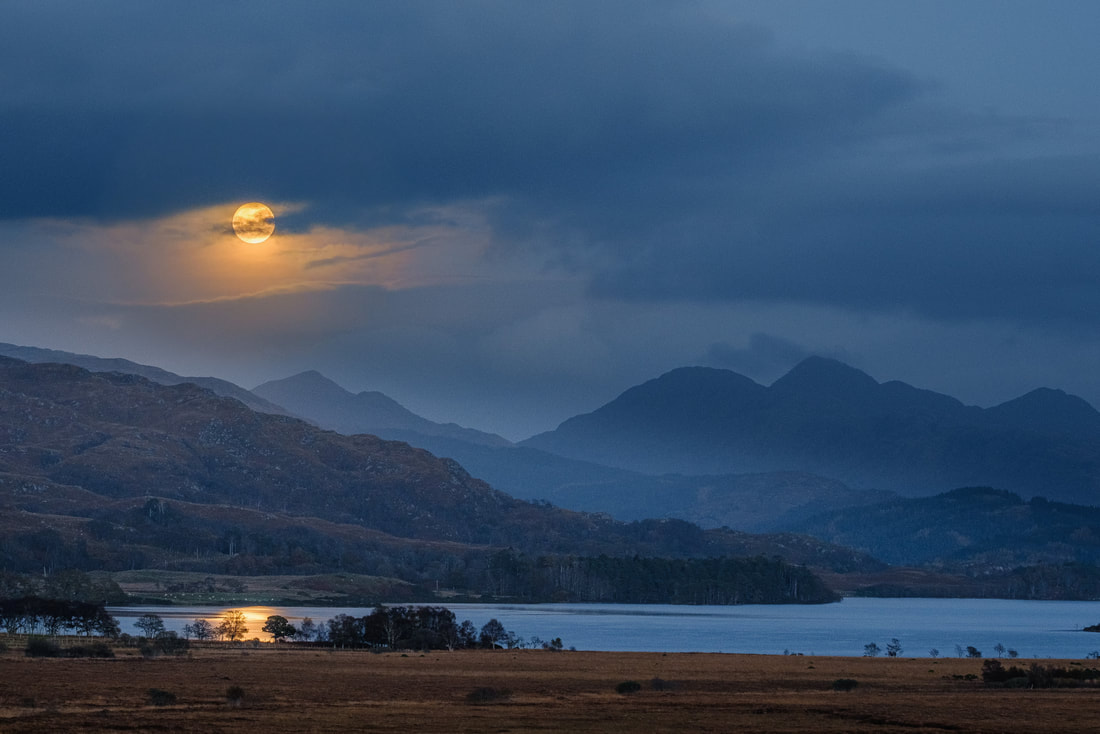 Hunter’s Blue Moon: Loch Shiel viewed from Cnoc Breac, Mingarry, Moidart The second full moon of October 2020, a Hunter’s Blue Moon, rising over the summit of Càrn na Nathrach, making its way south towards the peaks of Druim Garbh, Sgùrr Dhomhnuill and Sgùrr na h-Ighinn Most people will have watched a white coloured moon traversing the night sky and some people may have even seen a yellow or red moon at moonrise or moonset. On the other hand, very few people will have seen a blue coloured moon because it is a very rare occurrence indeed.
This rare event, when the Moon can naturally appear blue, is caused by the presence of dust particles in the atmosphere which, if they are the right size, can scatter the red part of the light spectrum and leave the rest untouched to cause the moon to take on a blue tint. Some of the events that have led to this include the eruption of Krakatoa in 1883 and the eruptions of Mount St. Helens in 1980 and the El Chichón volcano in Mexico in 1983. In fact, the eruption of Krakatoa reportedly caused blue moons for nearly 2 years. However, the bluish tint caused by these rare events doesn’t have anything to do with the phrase “once in a blue moon”. Instead, the words ‘blue moon’ are used to describe the second full moon in a calendar month. It is an event that is not that rare because there are 29.5 days between full moons, meaning that each year will have roughly 12.3 full moons. This gives us a 13th full moon once every 2.7 years, along with a month within which a second full moon, or blue moon occurs. In fact, the last blue moon to occur was the one that is shown in the image above, which I photographed in October 2020. The next one is in August 2023 and the one after that will be in May 2026. Considerably rarer than blue moons are double blue moons. This is when there are two blue moons in the same calendar year, and it is something that occurs about 3-5 times every hundred years of so. The last one was in 2018, the next is expected in 2037 and the one after that in 2067. Rarer still is what is termed a super blood blue moon. This is when a blue moon occurs when the Moon comes within 90% of its closest distance to Earth to make it a supermoon, while at the same time fully slipping into the Earth’s shadow to create a total lunar eclipse. This last happened in January 2018, just over 150 years since all three phenomena last lined up in March 1866. If you look at the frequency at which these three phenomena are expected to occur;
meaning that a super blood blue moon will occur 0.042% of the time, or once every 2,381 full moons. On average, that corresponds to once every 194 years! So, the next time you think about using the phrase “once in a blue moon” for something that almost never happens, you might want to consider using “once in a super blood blue moon” as an alternative!! I took the image below on a beautifully still late summer evening out a Dorlin, just as the sun was dropping behind Eilean Shona and as oystercatchers were returning to the mudflat on the opposite side of the River Shiel to roost. As they did so, their shrill calls, which are so evocative of the beautiful shores of western Scotland, filled the air. It is such a magical sound, and it is little wonder that the oystercatcher, and its call, features so much in the folklore of the West Highlands and Islands 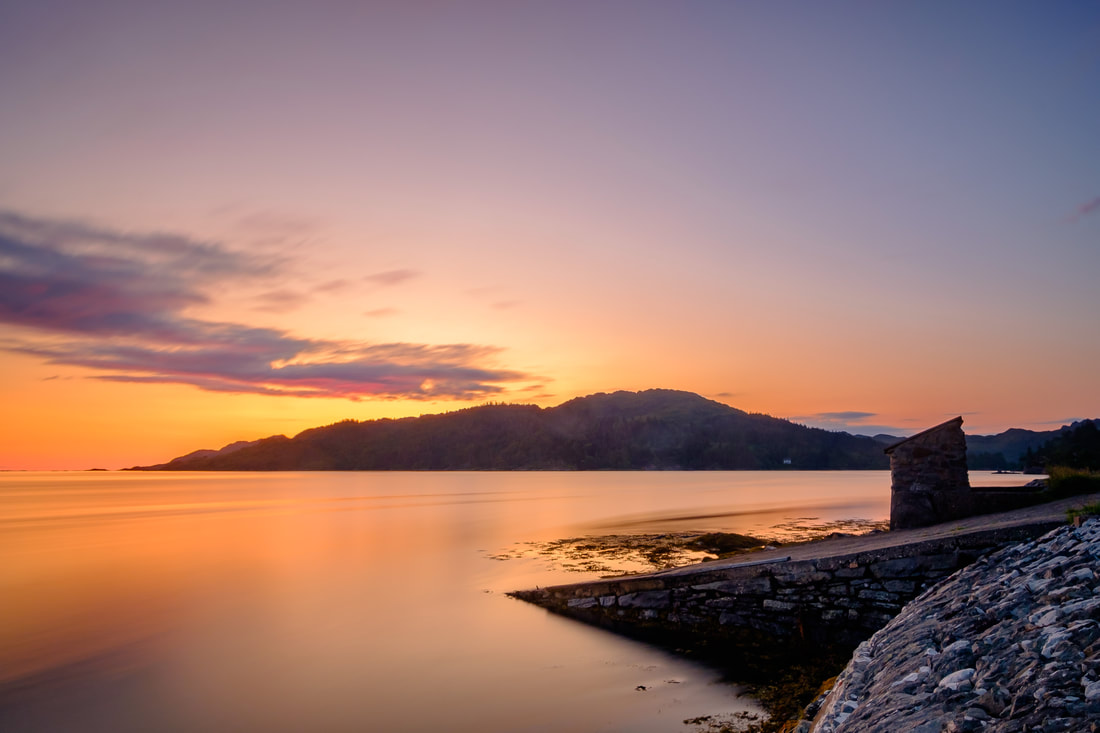 To Shona: Eilean Shona from Dorlin, Moidart Dusk at the slipway to Eilean Shona on a late summer's evening, with sky and water coloured by the sun as it sets behind the island Alasdair Alpin MacGregor, in his book “The Peat Fire Flame” describes how it was related in the Islands that, when Christ was being pursued from one Hebridean Isle to another, he was hidden at low tide by two oystercatchers, who covered Him with seaweed, and kept watch over Him until His enemies had passed. And that it is supposed that for this act of grace, the oystercatcher was chosen to be the gille or manservant of Saint Bridget, Christ's foster-mother. Hence the origin of gille-hridean, the oystercatcher's Gaelic name. An alternative story is that Saint Bride (Bridget) was running away from a band of evil men who were trying to kill her and, after being chased to a beach where there was no place to hide, she prayed to God to thank him for her life and lay on the sand to accept her death. However, before the men reached the beach, oystercatchers, who were patrolling the shoreline, saw her, recognised that she was in danger and covered her with seaweed, hiding her and saving her life. She blessed the species and since that day the oystercatcher has been the brìdean (Brìd-eun ‘Bride’s bird) or gille-brìde ‘servant of Bride’. These two very similar stories may well be pure myth, but there is much written about the bird in the folklore of the West Highlands and Islands. Indeed, they say in the Hebrides that the oystercatcher was originally completely black, and that, in recognition of the two oystercatchers saving Christ from His enemies, it was awarded white plumage on its breast causing it to look like a white cross when it is seen flying towards you. However, the oystercatcher’s most distinguishing feature must be its call and, more often than not, you will hear its shrill, insistent peep, peep, peep long before catch sight of any birds. In Gaelic the cry of the oystercatcher is " Bi glic, hi glic ; bi glic, bi glic! ", meaning ' be wise,' ' be prudent,' ' take care.' One story has it that Saint Bride followed this call across the sea from Ireland in her coracle to finally be guided to the shores of South Uist with an oystercatcher on each wrist. She is also said to have been able to call them to her hand and, in rough weather, send them out to sailors to guide them to safety. This may be why the cry of an oystercatcher was commonly regarded by West Highland mariners and fishermen as a warning of an approaching storm. Video: An Oystercatcher Sunset Chorus, Dorlin, Loch Moidart After hearing their call, you may well spot oystercatchers swooping low over the sea, making a dazzling flight pattern, before eventually landing on exposed sand and mud flats, where they feed on shore-dwelling bivalves such as mussels and limpets, along with other invertebrates like ragworms. I just love watching these gregarious and noisy birds as they quickly run up and down the tideline in an almost comical fashion. To watch this flurry of activity and boundless energy helps you understand why one of the collective nouns for the oystercatcher is a “stew”. The two others I’m aware of are “Rockefeller” and “parcel”, but they just don’t seem to fit the bill as well.
We are now in August, the best month of the year for looking at and photographing the cloudy core of the Milky Way, the galaxy that is home to our Sun and 200 billion other stars. I find photographing this vast cloud of other stars and worlds an extremely humbling experience, especially when you consider that this single galaxy may contain 300 million potentially habitable planets and that there are a total of 170 billion other galaxies in the Universe as a whole. With mind-blowing numbers like these, we surely must consider the possibility of there being life beyond Earth. At this time of the year, the sun sets at around 9:00 pm and the stars and the constellations become visible from about 10:00 pm onwards. So, if you spend some time outside around then and look south, you’ll see the core of the Milky Way beginning to appear in the lower part of the sky. Having risen above the horizon in the southeast at about 7:00 pm, this cloudy mass of dust and stars will have travelled upwards and westwards to become visible as twilight ends. At this point, it reaches its highest point in the night sky and begins to drop down towards the horizon while it continues westward. It will eventually set around midnight, giving a period of about two hours during which it can photographed in all its glory. I was pleased to be able to do this when I captured the image below on a beautifully still and clear night from the Ardtoe Jetty in Kentra Bay.
With each of these 170 billion galaxies containing an average of 200 billion stars, and with the current consensus among astronomers being that there should be at least as many planets as there are stars, it can be estimated that there are at least 34 sextillion (34,000,000,000,000,000,000,000) planets in the universe. This is an incomprehensibly large number of planets, and it does make you wonder if there is indeed life out there beyond Earth. Indeed, to date, astronomers have found 55 planets that are orbiting the habitable zones of stars and by extrapolating this to the number of stars in the Milky Way they estimate that there could be 300 million such planets in our galaxy alone. So, with this in mind, why don’t you go outside after dark on a clear August night and look south to see the cloudy core of the Milky Way, consider that someone may be looking back at you and remember this quote by Carl Sagan, the renowned astronomer and astrophysicist: “The universe is a pretty big place. If it's just us, seems like an awful waste of space.” 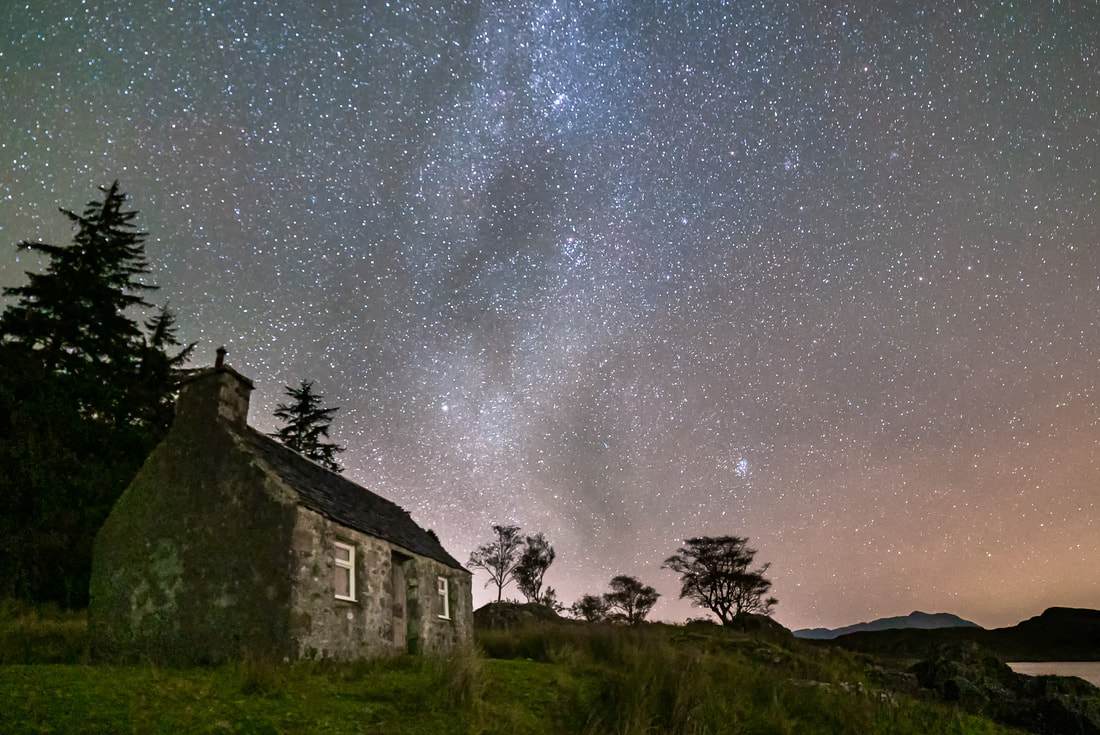 Life Beyond the Bothy III - Camas Chil Mhalieu, Kilmalieu, Ardgour When standing looking at the vastness of the night sky that lay beyond this small bothy, I couldn’t help but think about the probability of there being life beyond Earth Despite living on the Peninsula for several years now, it still often feels like it is a world away from the rest of the country and it is little wonder that summer brings a steady stream of visitors seeking to experience this beautiful, remote, and unspoilt corner of the Scottish Highlands. I often say to visitors that it has a bit of everything that Scotland has to offer, with rugged mountains, beautiful lochs and ancient woodlands, but it is its dramatic and stunning coastline that holds the biggest draw for me and features most in my photography 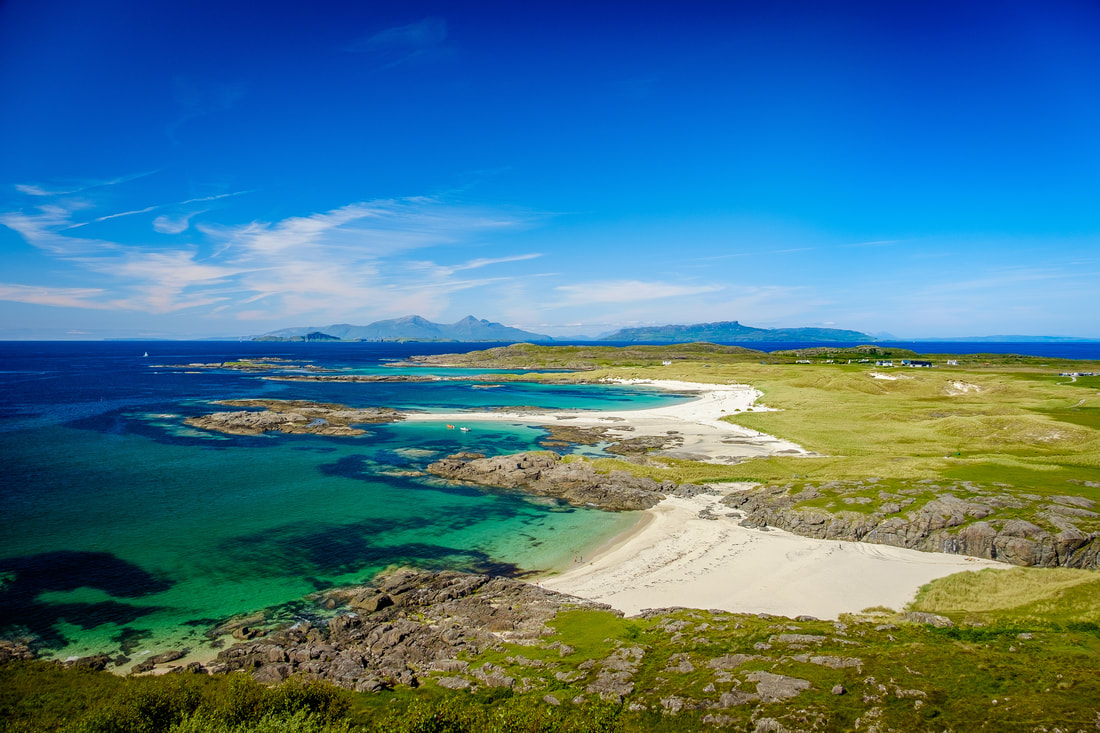 Summer at Sanna II - Sanna, Ardnamurchan Sanna on a glorious summer day, viewed from the hills to the South and with the Small Isles on the Northern Horizon Take this month’s image, which was shot on a beautifully sunny day in July out at Sanna, looking north across the bay to the Small Isles beyond. On days such as this, with bright sunlight overhead, the sea takes on an intense range of blue hues ranging from light blues of the shallow water to the dark blues of the deeper water, all caused by the way light interacts with the seawater.
You see, daylight is made up of many different visible colours, ranging from reds and oranges to blues and violets, with the reds and oranges having the longest wavelengths and the blues and violets having the shortest. As water molecules are better at absorbing light with longer wavelengths, they absorb much of the red, orange, yellow and green light. The bluer colours, with shorter wavelengths, are less likely to be absorbed and so are reflected by the white sand on the seabed to give the sea its blue hues. In shallow water, there are fewer water molecules to absorb the red, orange, yellow and green light, so more of it reaches the seabed to be reflected with the blues and violets and give either clear or slightly blue water. However, the deeper the water becomes, the more the reds, oranges, yellows and greens are absorbed and the deeper blue the colour of the water becomes, until you reach the point where no visible light can reach the seabed and the water becomes completely dark. I find something quite captivating about the aquatic blue hues of the sea at places such as Sanna and I’m sure that this is reflected in my affinity for water and for photographing the sea and the coastline. In fact, it has been documented that our affinity for water is reflected in our near-universal attraction to the colour blue and that we associate this colour with qualities like calm, openness, depth and wisdom. The link between the two has even been developed into something called “Blue Mind Science”, the study of aquatic environments’ health benefits that was first popularised by marine biologist Dr Wallace Nichols in his 2014 book, “Blue Mind”. Simply put, Blue Mind is a mildly meditative state that people fall into when they are near, in, under or on water and some of the physical and mental health benefits include:
So, if you’re seeing red, feeling angry, anxious, and stressed, then head to the coast for some “Blue Mindfulness”. I can highly recommend it. |