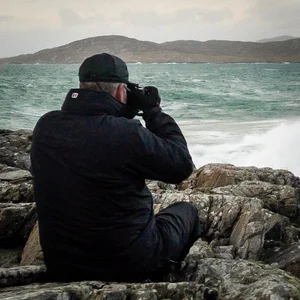
Seven Thousand Stars
When I moved to the Peninsula, after living for almost 30 years in and around Glasgow, I was immediately blown away by the number of stars I could see in the sky on a dark, clear night. Seven years have passed, and I still get awestruck by the sight above me when I am out under a night sky. This is especially true at this time of the year, when our planet is facing inwards to the core of our galaxy, the Milky Way. So, this month, I thought I’d share a few tips for exploring our night sky, which is so dark that you can see over 7000 stars with the naked eye.
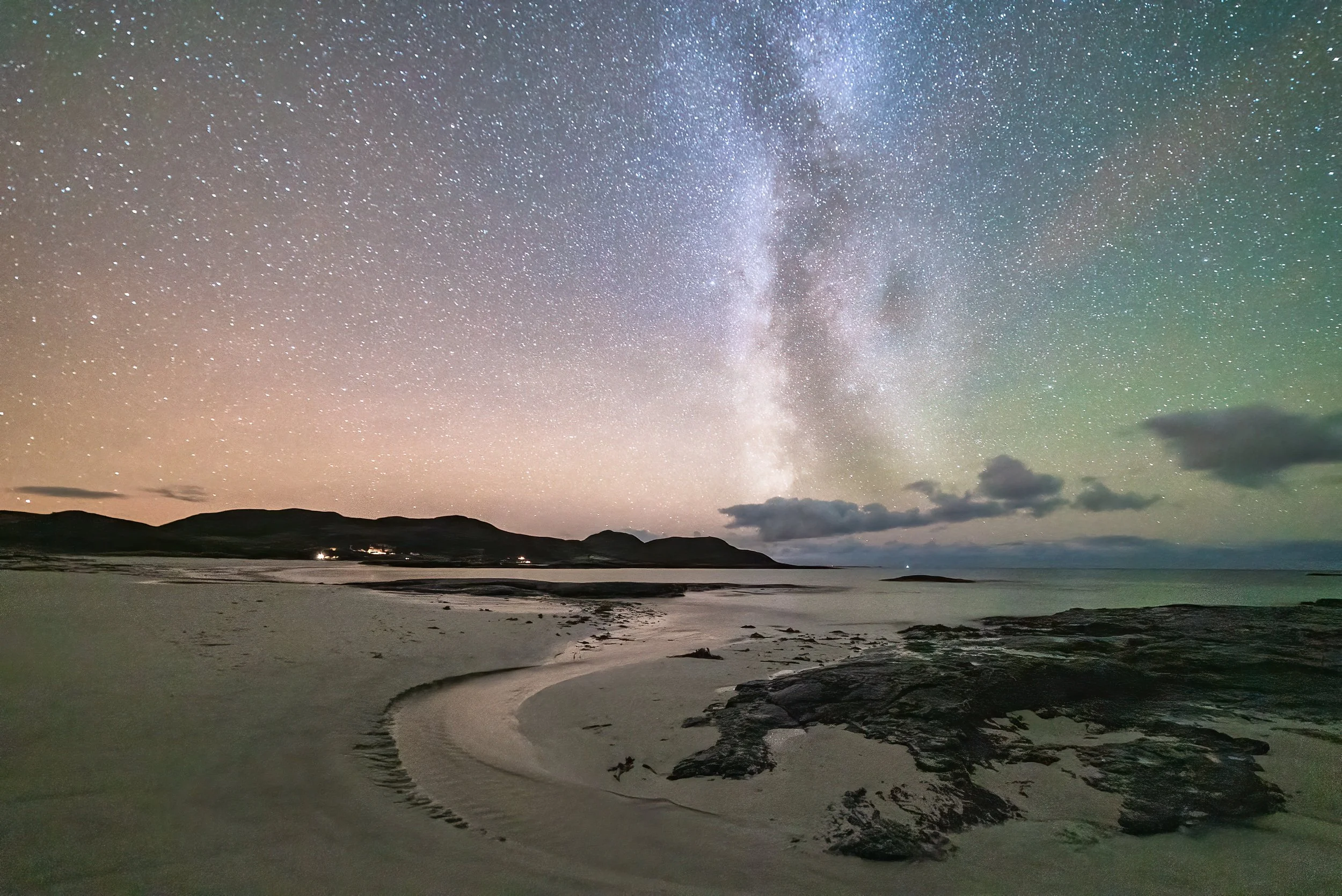
Flowing to the Stars II – Sanna, Ardnamurchan
So how dark is a dark sky? Well, I have measured the darkness of the sky at various locations on the Peninsula using a device called a Sky Quality Meter (SQM) and obtained readings of between 21 and 22.5. To give you an idea of what this means, you would get a reading of around 8 in the middle of a major city such as Glasgow or Edinburgh and a reading of 24 would be measured in a photographer's dark room. So on some night, we are very near to total darkness, meaning that the Peninsula is a great place to enjoy a spot of stargazing.
Where to Go
Corran Point, Ardgour: A fenced off area between the seashore and red brick building adjacent to Corran Lighthouse. As it is right next to the ferry, it is a great spot to stop for your first look at the night sky during your time here.
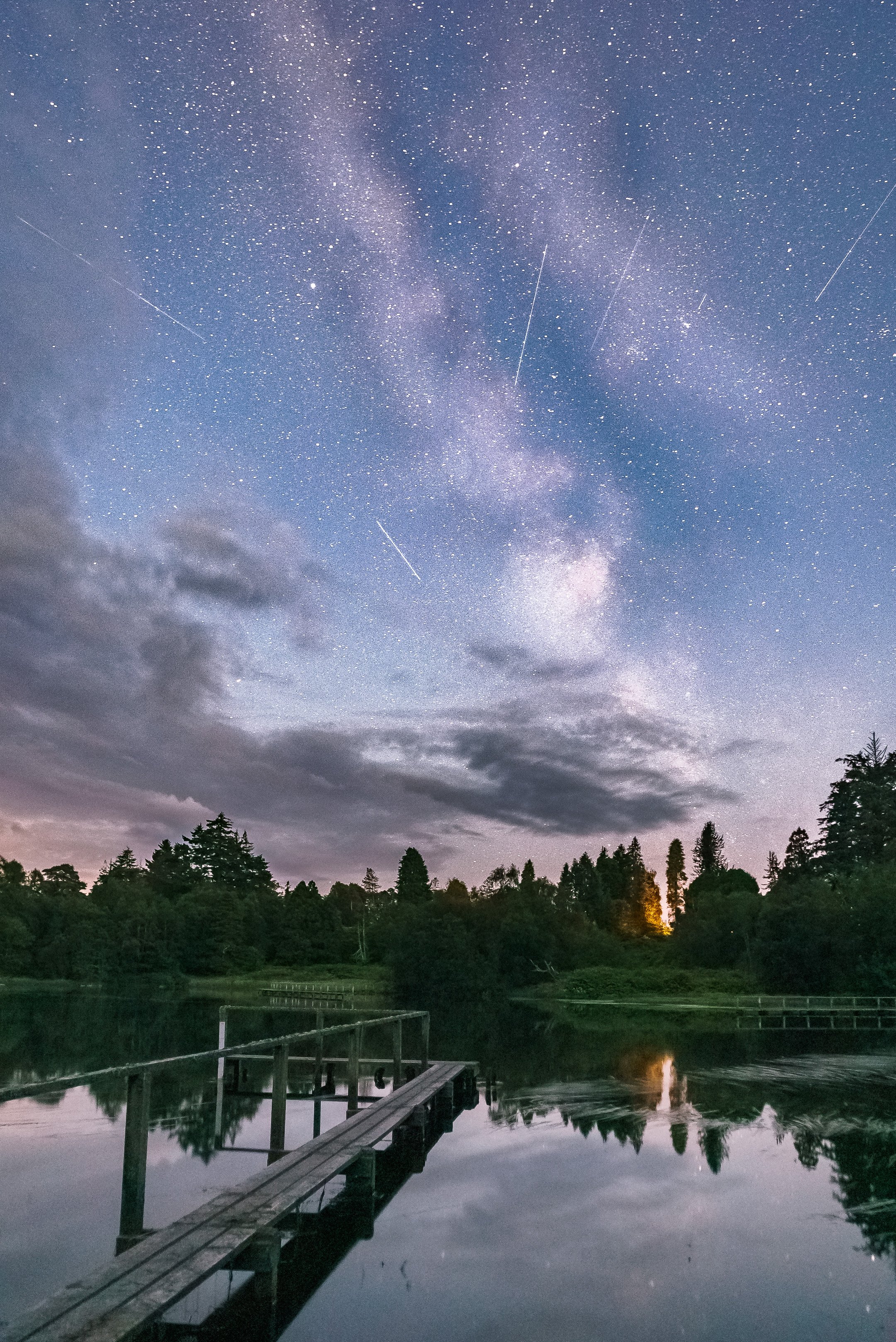
Capricornids - River Shiel, Blain, Moidart
Sallachan Beach, Ardgour: Just off the A861 road about 2.5 miles west of the Corran Ferry and because it is only a 5-minute drive from the ferry, it is another good spot to stop for your first look at the night sky during your time here.
Loch Shiel Jetty, Acharacle: Down a track just next to the Loch Shiel Hotel. You have a very clear line of sight looking North over Loch Shiel, making it a great place to watch for Northern Lights. Do not go onto the Jetty itself as it can be slippery and therefore dangerous.
Castle Tioram, Moidart: Turn off the A861 just north of Acharacle and 2 miles down a narrow single track which should be driven with care. Once there you get good lines of sight in all directions except East. From the shore a little north of the car park, you can look out south and west to see the Milky Way and look North to catch the Northern Lights. Do not go out to the Castle as you may get caught out with the tide.
Old Boat House, Ardtornish Estate, Morvern: A flat area of hardstanding, located between the shore and the track to Ardtornish Castle about 200 metres before the Old Boathouse on the shore of Lochaline. Park in the Estate Farm Courtyard where their Gift Shop is located and walk to the area near the boathouse from there.
Ardnamurchan Lighthouse: Anywhere within the grounds of the Lighthouse Visitor Centre complex, but stay on the designated paths, picnic areas and carparks as this will keep you away from cliffs and sharp drops into the sea, which you must avoid in the dark. Clear views of the sky in all directions and the darkest place on the Peninsula due to its most westerly location. Bear in mind that overnight parking is not permitted on the site.
When to Go
The best time to start stargazing is from 2 hours after sunset, when the sky is as dark as it gets. Also, it is best to do it in the week either side of a new Moon, when there is little or no moonlight to spoil the show. You can check the Sun and Moon times at www.thetimeandplace.info to decide what time is best and if you do go out:
Use your naked eyes – You can see a lot with just your naked eyes, just give them 10-15 minutes to adjust fully to the dark and you’ll suddenly find that you’ll see twice as many stars.
Use a red torch – Once your eyes have adjusted, avoid using bright white lights because it is very easy to lose your “night vision”. Instead use a red headlight or torch because this doesn’t affect you night vision.
Stay warm – Clear, dark nights are often very cold, so wear plenty of layers, a hat and gloves and think about using heat wraps or charcoal hand warmers.
Use Star Charts – These can be downloaded free from www.skymaps.com. You can also use one of the many smartphone apps that are available. I find Pocket Universe very good.
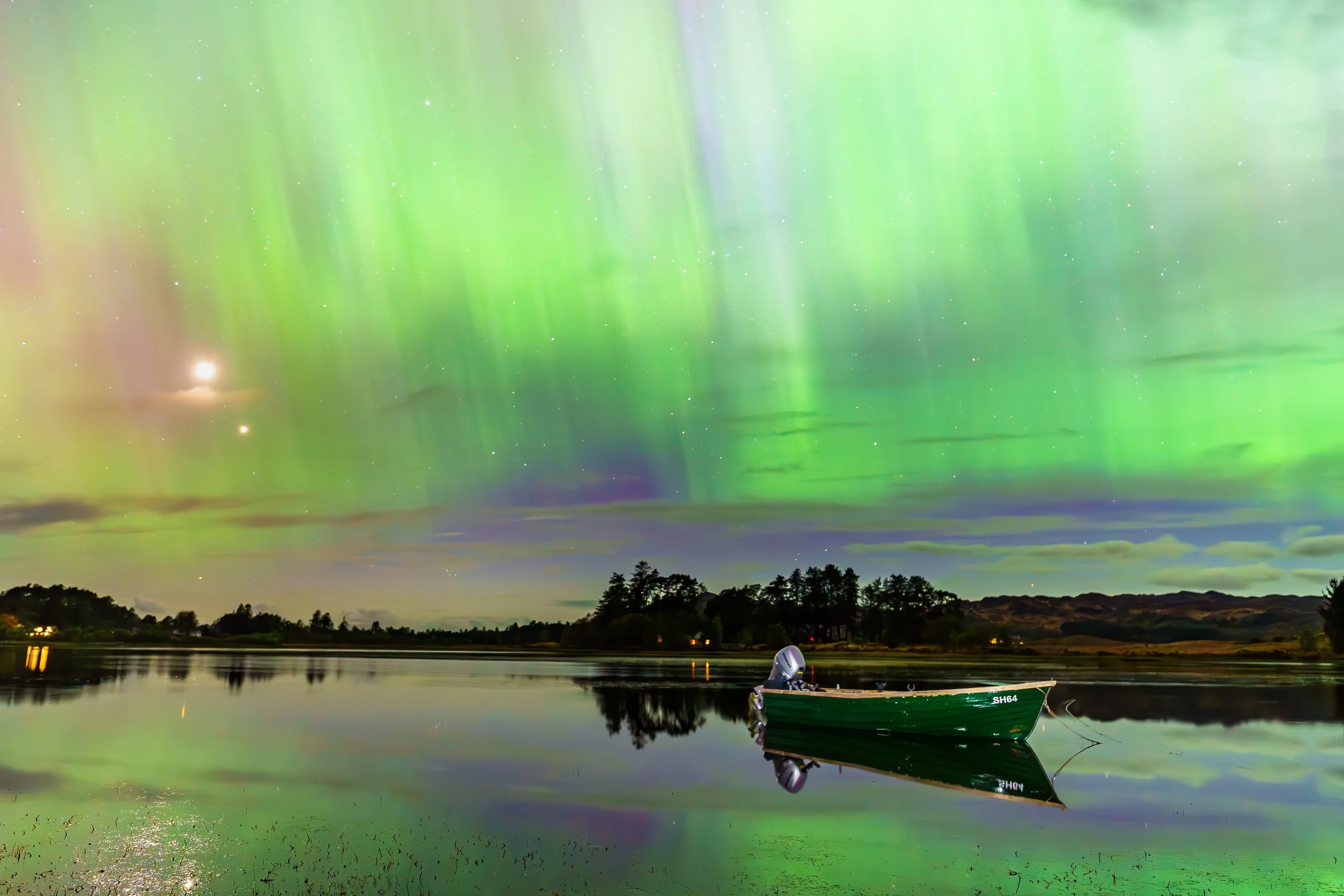
Unforgettable Aurora I - Loch Shiel, Acharacle, Ardnamurchan
What to See
When you are out, the things to look out for are:
Milky Way – Look directly overhead during autumn and early winter evenings and you'll see this shimmering river of light streaming through the constellations of Cassiopeia and Cygnus.
Northern Lights – They can happen at any time of the year, but the best time is around the autumn and spring equinoxes because the geomagnetic activity that causes them hits the Earth’s atmosphere at just the right angle. Check the AuroraWatch UK website for alerts.
Stars and Constellations – Look south in the next few months and you’ll see the grand constellations of winter: Orion, Taurus, Auriga, Perseus, Cassiopeia, Gemini, and Canis Major. They are rich with stars and star clusters, with the most brilliant stars being Capella, Castor and Pollux, Procyon, Sirius, Rigel, Aldebaran, and Betelgeuse.
Planets – You’ll be able to find each of the visible planets of Mercury, Venus, Mars, Jupiter and Saturn at some point throughout the year. However, their position in the sky each month varies from year to year, so do check a night sky guide to find out which ones you will see.
Meteor Showers – They happen at predictable times throughout the year. Look out for the annual Quadrantids (January), Lyrids (April), Perseids (August), Orionids (October), Leonids (November) and Geminids (December). When looking for them, spend at least an hour outside doing so because they tend to happen in fits and starts and beforehand, check the meteor shower guide at www.earthsky.org for the best times to look.