Naming Moons
The image below shows a full Moon way out beyond the entrance of Kentra Bay, hanging in the sky above the Isle of Eigg and the snow-capped peaks of the Rùm Cuillin in the hour or so before it was due set in the north-west. Taken on the extremely cold morning of 30 December 2020 and showing the last full Moon of the year, I decided to call the image “Cold Last Moon I” only to later find out that I was indeed looking at a Cold Moon.
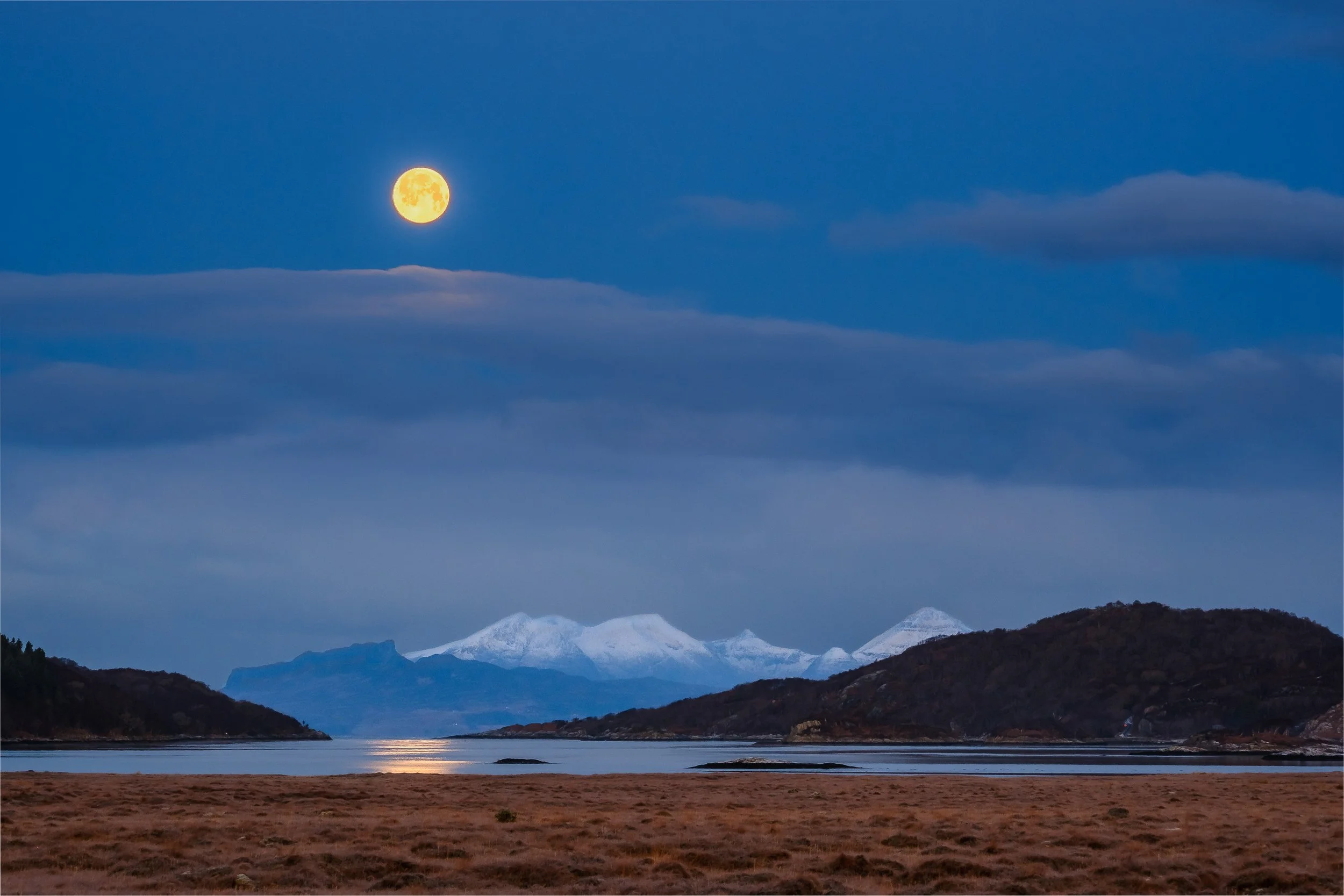
Cold Last Moon I - Kentra Bay, Arivegaig, Ardnamurchan
The names of full Moons come from early Native American culture because many tribes tracked the passage of time by using each full Moon and linking its name to the changes in the natural world as the months passed. In 2024, the names and timing of the full moons will be follows:
Wolf Moon: 25 January at 5:54 pm
This name originates from the howling of wolves that was often heard during the cold January nights. It symbolises the harshness of winter and the challenges faced by both humans and wildlife.
Snow Moon: 24 February at 12:30 pm
February tends to bring heavy snowfall in many regions, so this Moon was named after the deep snow covering the ground and reflects the often challenging weather conditions of midwinter.
Worm Moon: 25 March at 7:00 am
In March, as winter begins to wane and temperatures rise, earthworms become more active, and birds start feeding on them. The appearance of worms signifies the coming of spring and the renewal of life.
Pink Moon: 23 April at 7:00 am
Despite its name, the Pink Moon does not actually appear pink. Instead, it was named after the pink flowers, particularly the wild ground phlox, that bloom in April and signal the arrival of spring in North America.
Flower Moon: 23 May at 2:53 pm
May is a month of abundant flowers, and this full Moon was named to celebrate the colourful and fragrant blossoms that blanket the landscape.
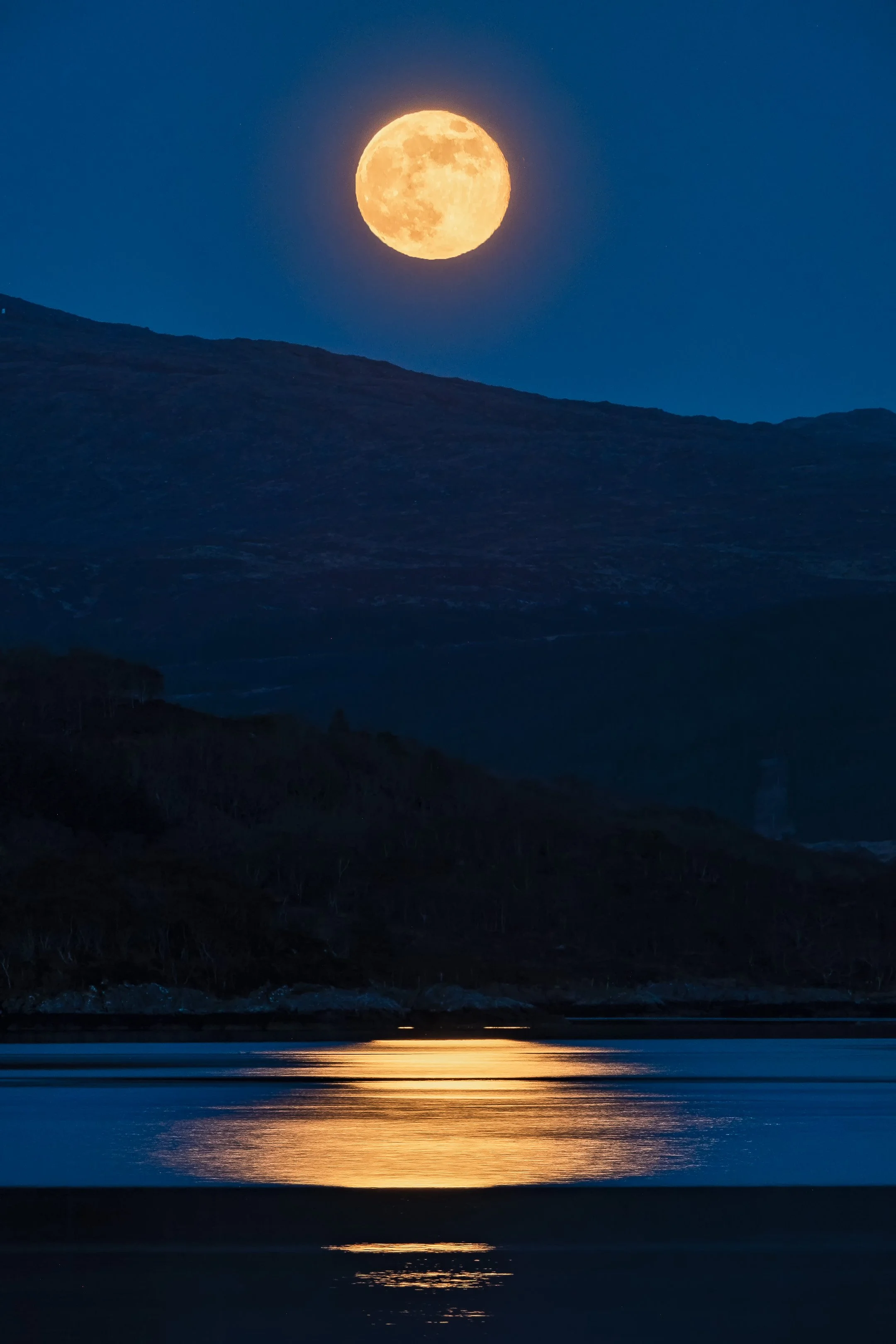
Golden Moonrise - Loch Sunart, Rockpool House, Resipole, Sunart
Strawberry Moon: 22 June at 2:07 am
June is the time for the harvest of strawberries, and this full Moon was named after this delicious and widely loved fruit and it marked the beginning of the berry-picking season.
Buck Moon: 21 July at 11:17 am
July is the month when the new antlers of buck deer grow larger. This full Moon was named in recognition of this phase of antler growth, indicating the maturity and strength of the bucks.
Super Sturgeon Moon: 19 August at 7:25 pm
August was associated with the abundance of sturgeon fish in lakes and rivers of North America and the Sturgeon Moon acknowledges the significance of this large fish in the ecosystems during this time.
Super Harvest Moon: 18 September at 3:34 am
This is the full Moon closest to the autumnal equinox. Its name comes from the extra light it provides during the evenings, allowing farmers more time to harvest their crops as the days shorten.
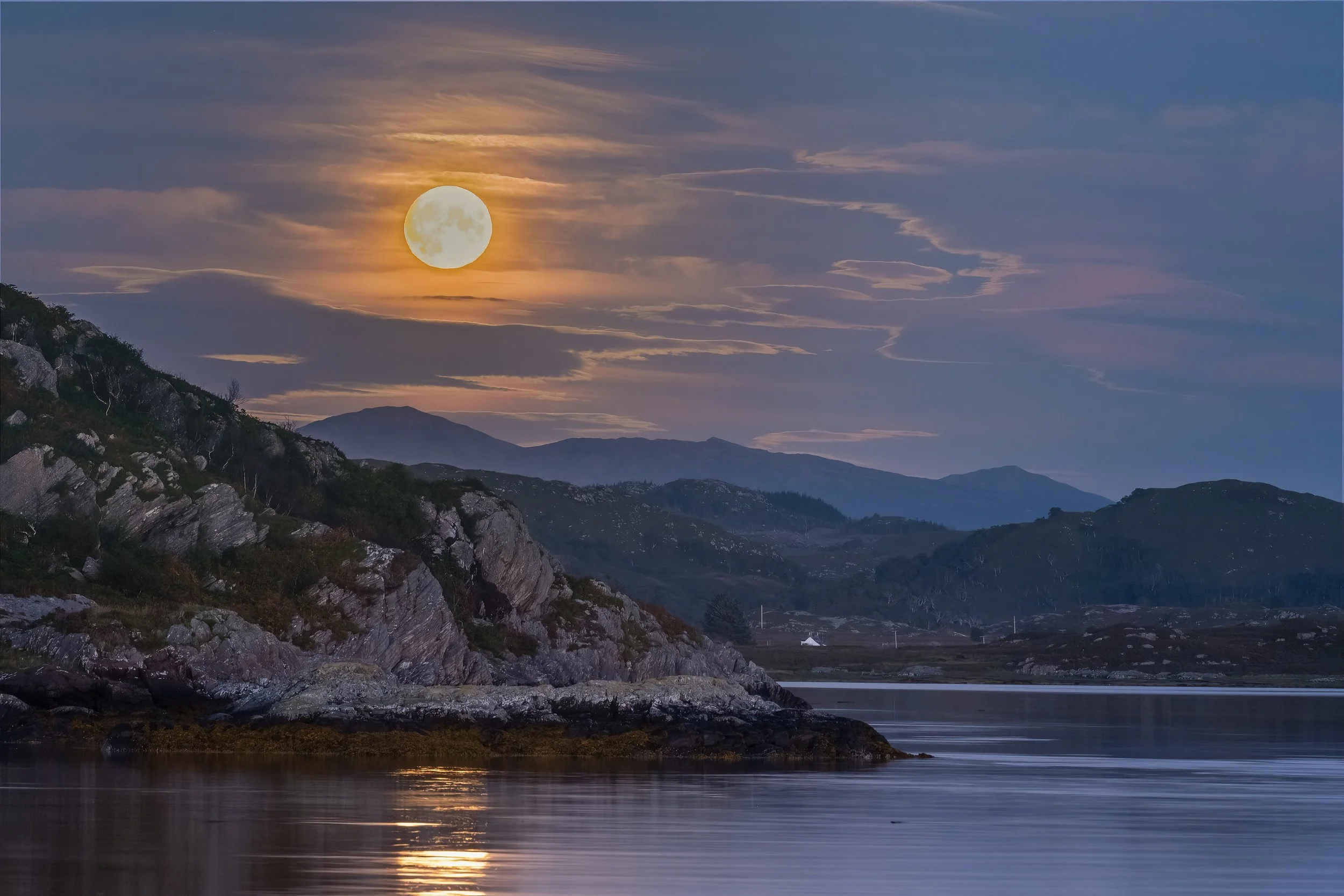
Harvest Moon Reflections - Ardtoe Pier, Kentra Bay, Ardnamurchan
Super Hunter’s Moon: 17 October at 12:26 pm
Following the Harvest Moon, the Hunter's Moon was associated with the time to hunt and prepare for winter. It provides additional light for hunters pursuing game in the waning light of autumn.
Super Beaver Moon: 15 November at 9:28 pm
November is when beavers actively build their winter dams in preparation for the colder months and the Beaver Moon recognises this industrious activity.
Cold Moon: 15 December at 9:01 am
As December brings the coldest temperatures of the year in many places, the Cold Moon emphasises the chill in the air and the onset of winter's full force.
You’ll also see that four of the full moons will be supermoons. It’s when the Moon is at its closest to us in its elliptical orbit and will appear bigger and brighter than normal, so do look out for them then.