Foxes and Faeries
Despite June being colder than normal, the greening up of the landscape we saw in May was followed by a profusion of wildflowers coming in to bloom to cover the landscape with a multitude of bright colours. This year, it seemed to me that the most prominent amongst them has been the foxglove, with its tall purple spire of bell shape flowers often found rising above dense blankets of bracken that cover the ground from late May onwards. Their size and colour make them visually striking plants and a pair that I found out at Dorlin one morning provided me with the ideal subject on which to anchor this shot of Castle Tioram.
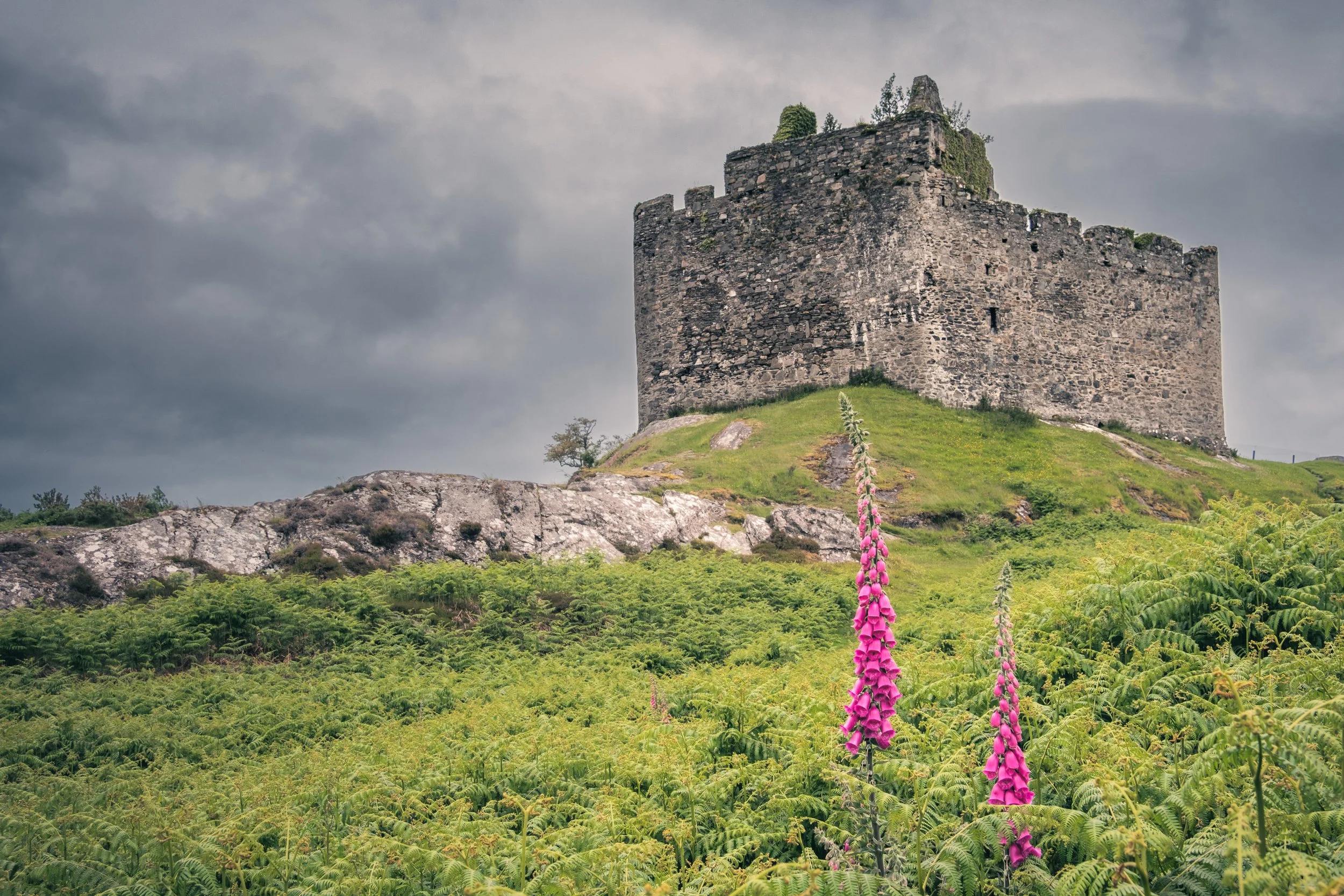
Duo Digitalis II - Castle Tioram, Dorlin, Moidart
While foxgloves, scientifically known as Digitalis purpurea, are undoubtedly striking plants, they are renowned for their potent medicinal properties and have played a key role in treating heart conditions. In the late 18th century, the English physician William Withering discovered that digitalis, an extract from the foxglove, contained digitoxin and digoxin. These two compounds help strengthen and regulate the force of the heart contractions and have been used to treat irregular heartbeats and manage the symptoms of heart failure.
In the past, digitalis has had other medicinal uses and was listed in Nicholas Culpeper’s 1652 herbal medicine guide, The English Physician, as a treatment for “the falling sickness”, or epilepsy. One famous person who may have been treated with digitalis for epileptic seizures was Vincent Van Gogh. Many art historians believe that the yellow haze that this would cause in the sight of patients receiving this type of treatment may be responsible for his “yellow period”. This was a time when yellow dominated many of his paintings, and particularly The Starry Night, a painting in which a yellow corona surrounded the moon and each star in it.
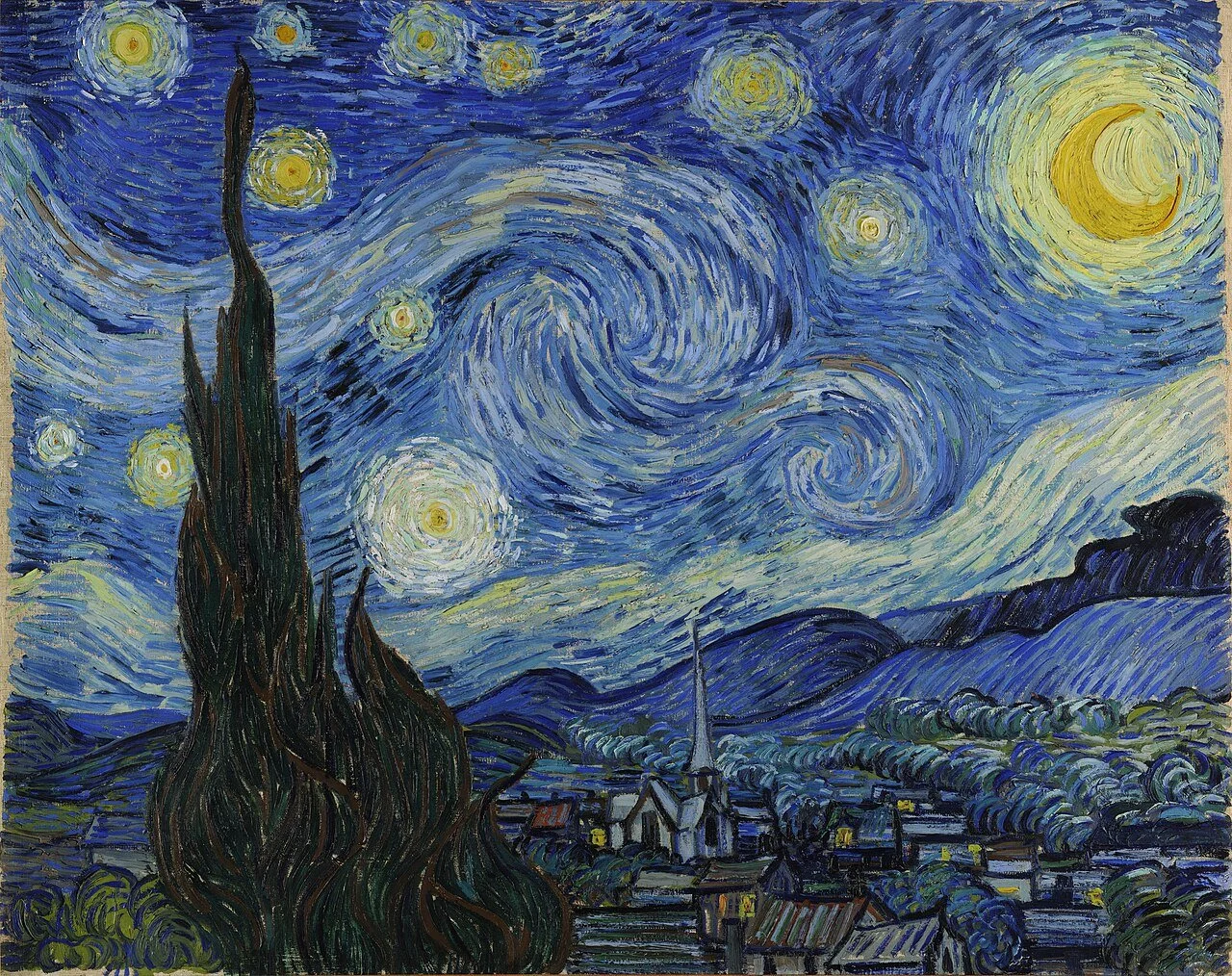
The Starry Night by Vincent Van Gogh 1889
Source: Wikipedia Commons
When it comes to folklore, views are divided on where the common name for Digitalis purpurea comes from.
In some parts of Scotland, there is a strong association between the plant and faeries, with foxglove seeming to be a corruption of “folksglove” thus implying that the flowers were the gloves of faeries. In this context it is believed that these gloves are worn by these mystical beings to help them avoid leaving fingerprints when meddling in human affairs.
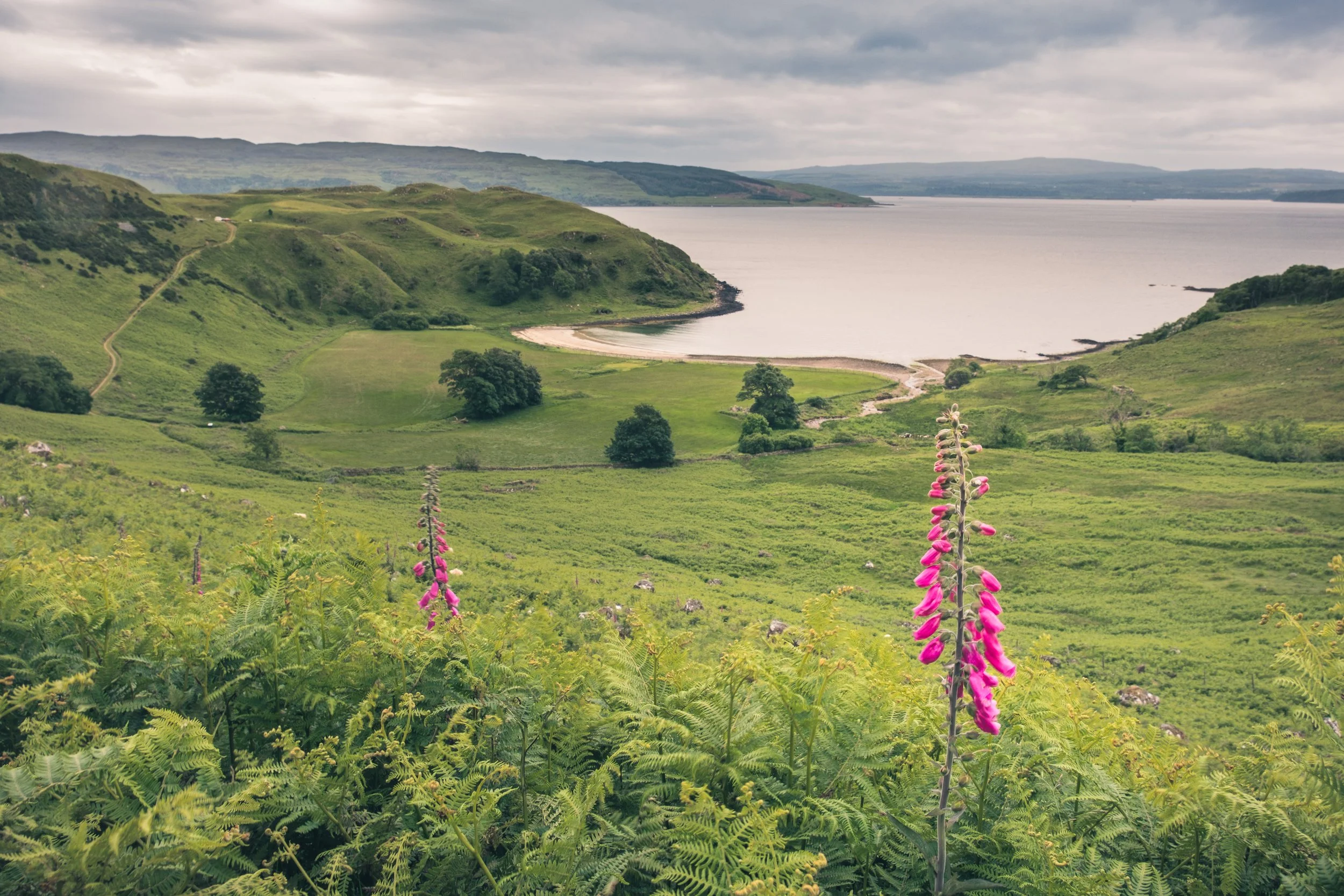
Duo Digitalis I – Camas nan Geall, Ardslignish, Ardnamurchan
Another myth tells of the foxglove’s bell-shaped flowers being used as little hats or homes by faeries, with children often warned against picking them to avoid offending the fairies who might live inside them and to not bring misfortune upon themselves.
Foxgloves were also thought to have protective properties and hanging a sprig of foxglove outside a house was believed to ward off evil spirits and protect the inhabitants from harm. While in some areas, foxgloves were planted around homes and barns to safeguard against witchcraft and to ensure the health and safety of livestock.
Alternative folklore suggest that the name “foxglove” comes from the idea that the flowers are the right size and shape for foxes to wear on their paws. According to this legend, foxes, known for their slyness and stealth, would put the flowers over their paws to muffle their footsteps as they hunted or avoided predators. This idea not only highlighted the fox’s cunning nature but also lent an almost magical quality to the foxglove plant, suggesting that it provided some supernatural aid to these clever animals.
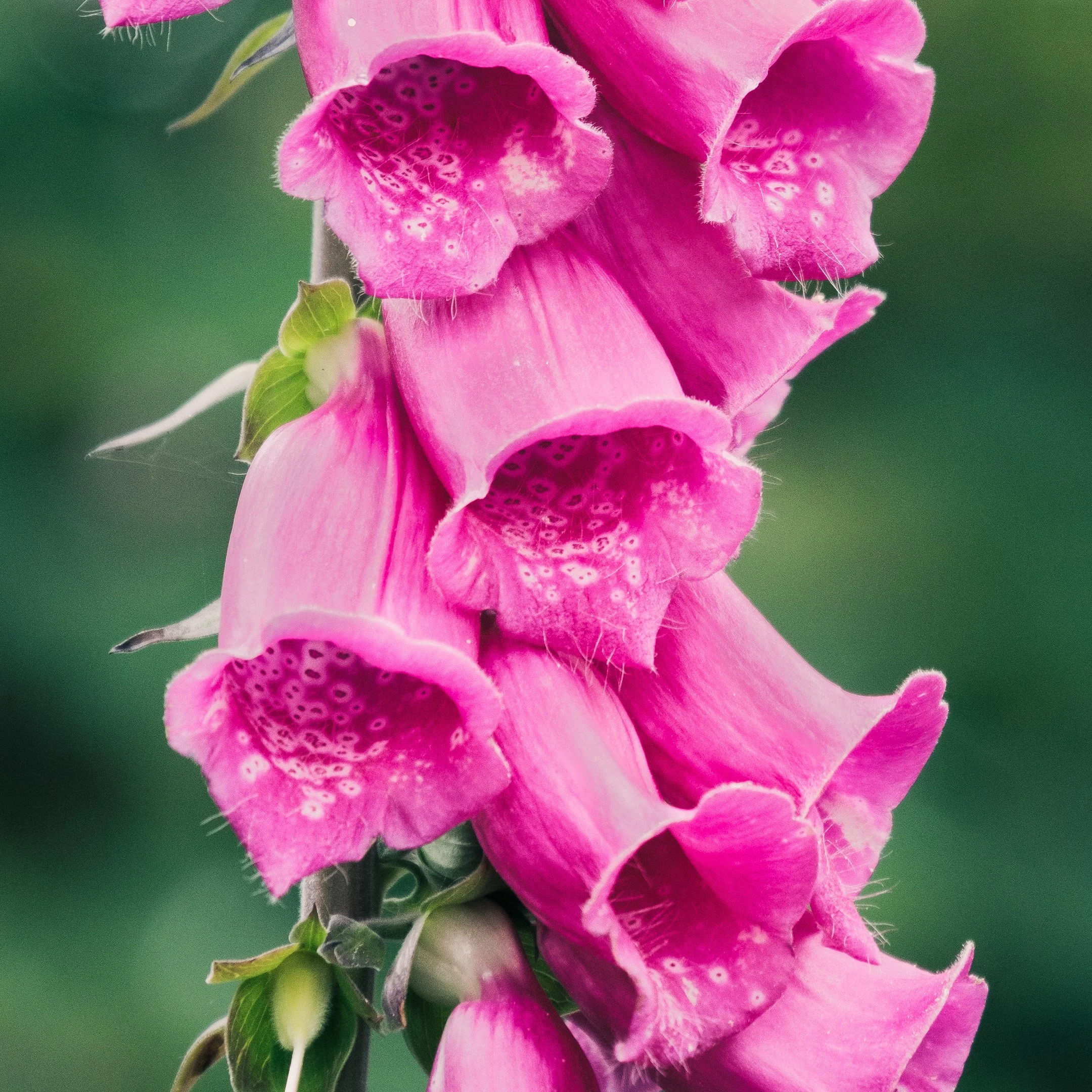
Faerie Footprints – Foxgloves, Kinlochmoidart, Moidart
In Norway, foxgloves are known as "Revbielde," which directly translates to "fox bell" and folklore has it that foxes were saved by the fairies from extinction when the fairies gave them the secret of how to ring the foxglove bells to warn other foxes of approaching hunters.
Either way, foxgloves, with their vibrant, bell-shaped flowers have long captivated the human imagination, inspiring a variety of myths and legends. However, I find myself drawn to those tales associated with the faerie folk. Afterall, have you ever looked closely at the inside of a foxglove flower to see all the small dots? They’re the footprints left by the faeries dancing on the petals.